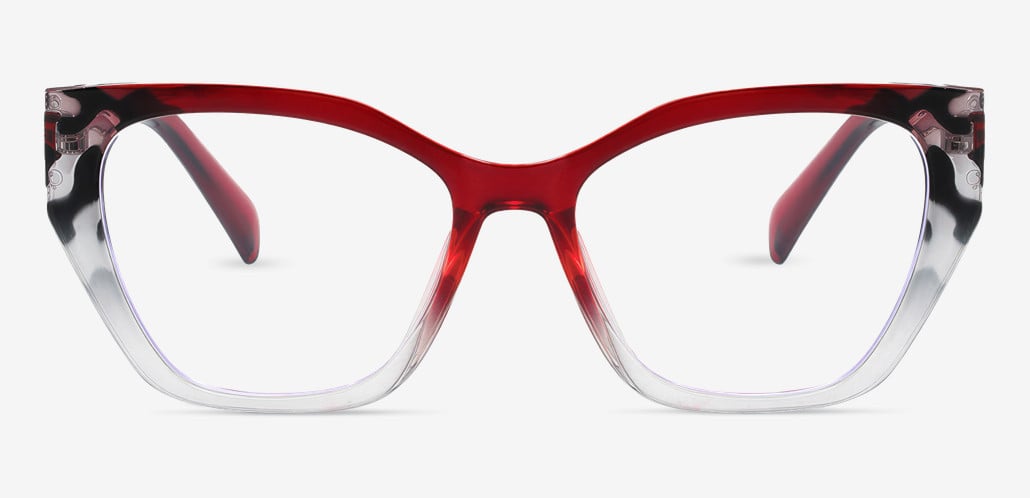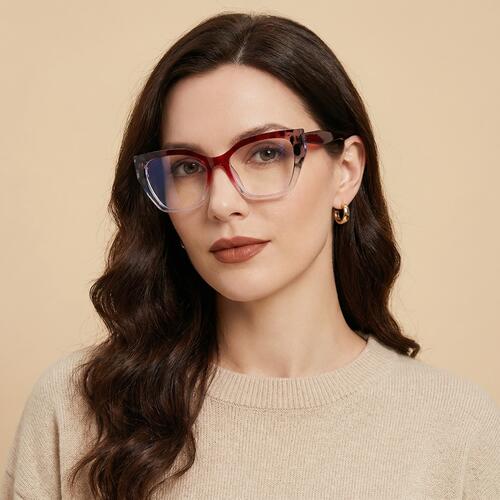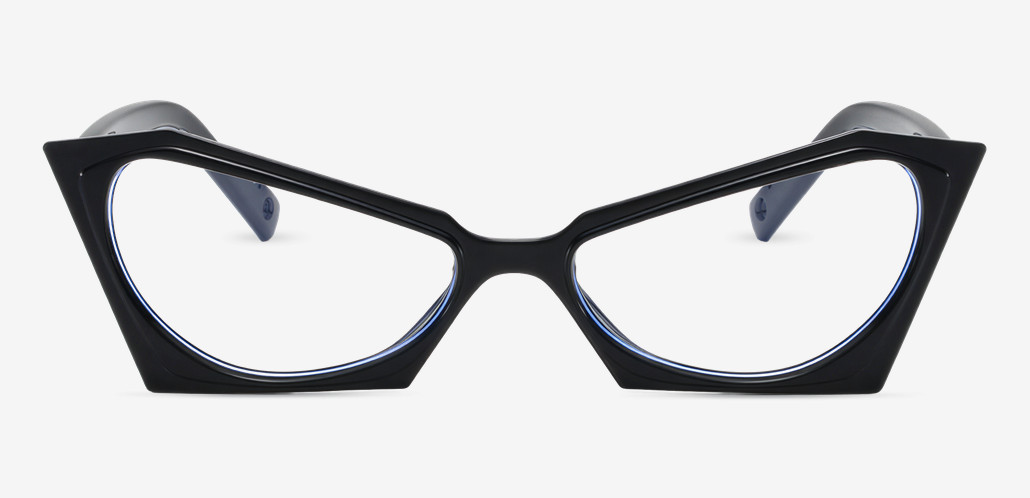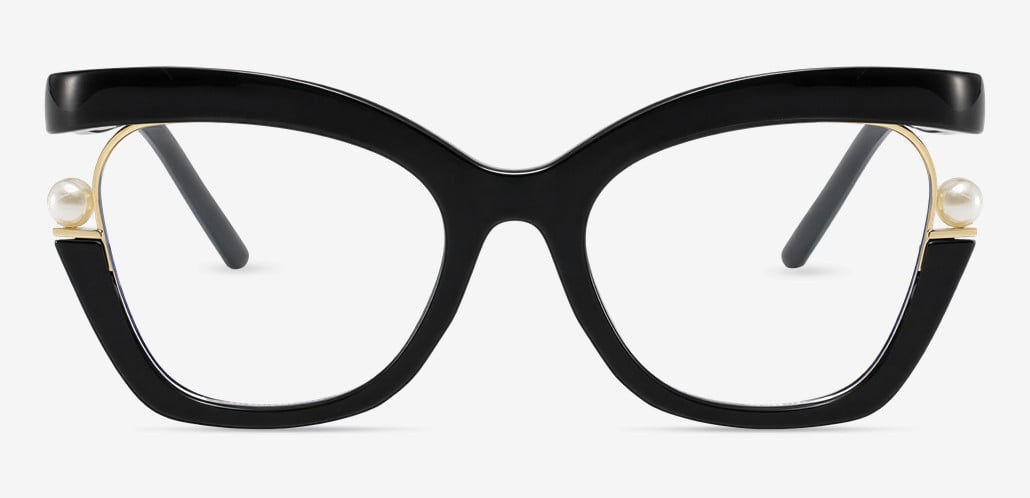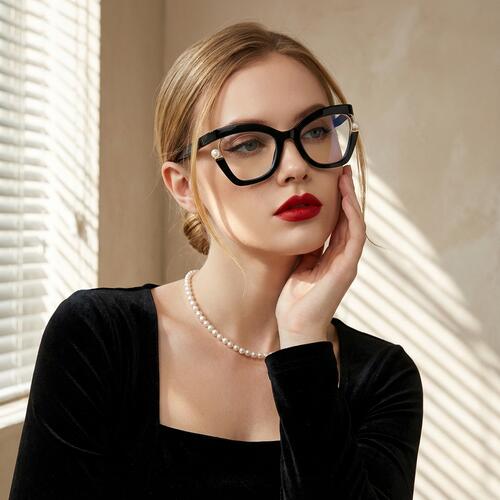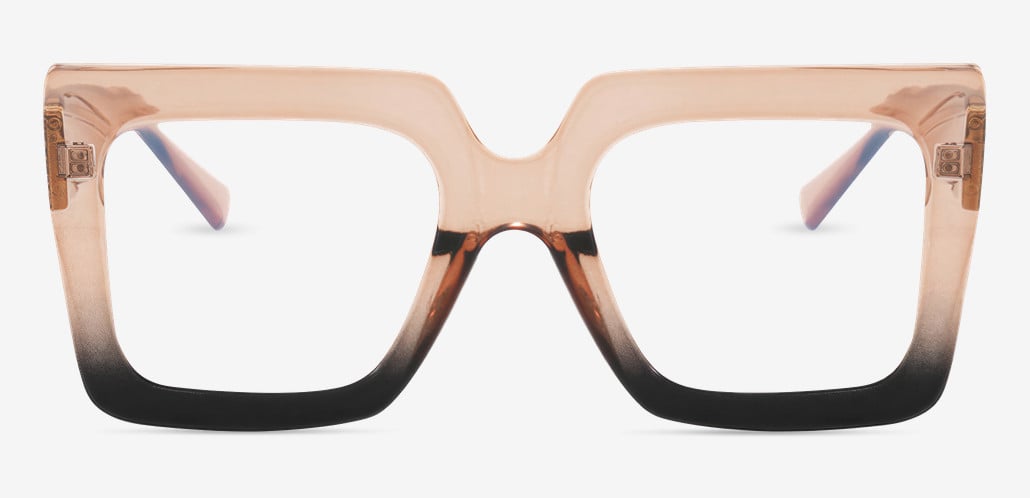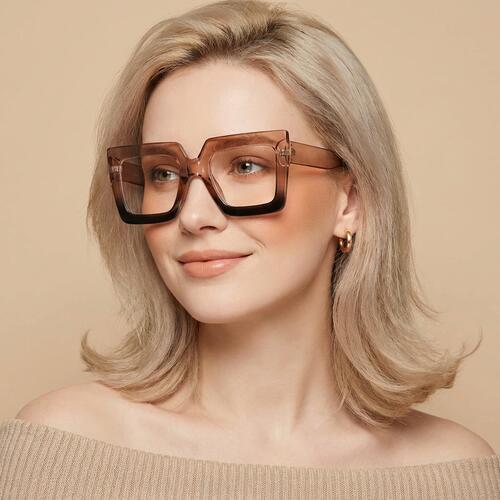

I'll let you in on something every optician knows but rarely says out loud: black is the most-requested sunglass color and the one people most often come back feeling weird about. Not because black is wrong — black is never wrong — but because they picked "black" the color when they should have been picking their black.
Here's the thing nobody tells you at the rack. A matte black square and a high-polish black acetate cat-eye are about as similar as a hoodie and a tuxedo. Same color on paper. Completely different person wearing them. After more than a decade of handing people black frames and watching their faces in the mirror, I've stopped thinking of black as a color at all. I think of it as a stack of three decisions. Get the stack right and black becomes the only pair you reach for. Get it wrong and it lives in a drawer.
So let me hand you the method I actually use at the bench.
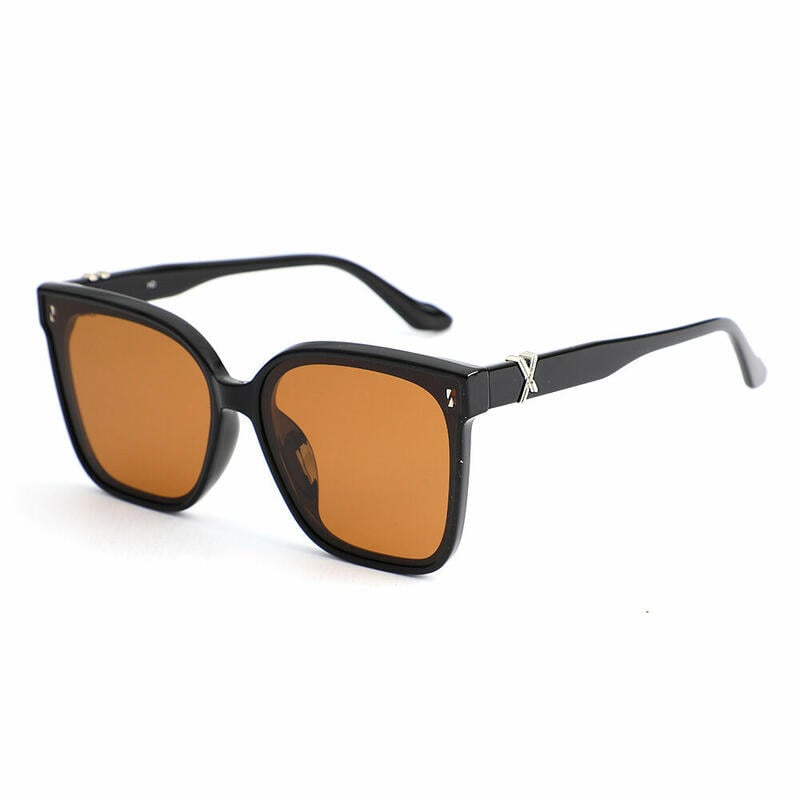
The 3-Layer Black
Every black frame is really three decisions sitting on top of each other. Tune each one on purpose and you'll never buy the wrong black again.
Layer 1 — The Finish (this sets the volume)
Finish is the loudest thing about a black frame, and almost nobody thinks about it.
Matte black is flat and non-reflective. It reads casual, modern, and quiet. It also hides fingerprints and minor scuffs beautifully, which is why it's the finish I push for anyone who lives with their sunglasses pushed up on their head all day. The trade-off: a deep scratch on matte shows as a shiny line, and matte can't be buffed the way gloss can.
High-polish black — usually deep acetate — is the opposite. It catches light like piano lacquer and reads dressy and deliberate. It's the black that makes a plain outfit look composed. The trade-off: it shows fingerprints and dust, and it photographs shinier than you expect.
Rule of thumb I give people: matte to disappear, polish to be put-together.
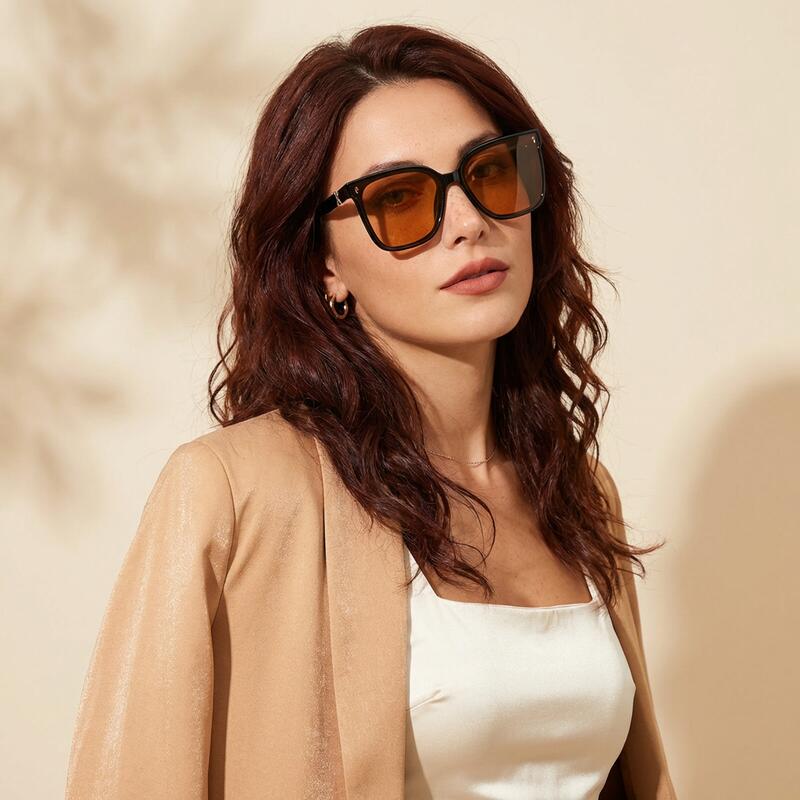
Layer 2 — The Material (this sets the weight and the attitude)
Black hides the material, so people forget it's a choice. It's the most important one.
Acetate (we carry 142 black acetate frames) is the richest, deepest black you can buy. It has heft and presence. This is your statement and your dress-up black.
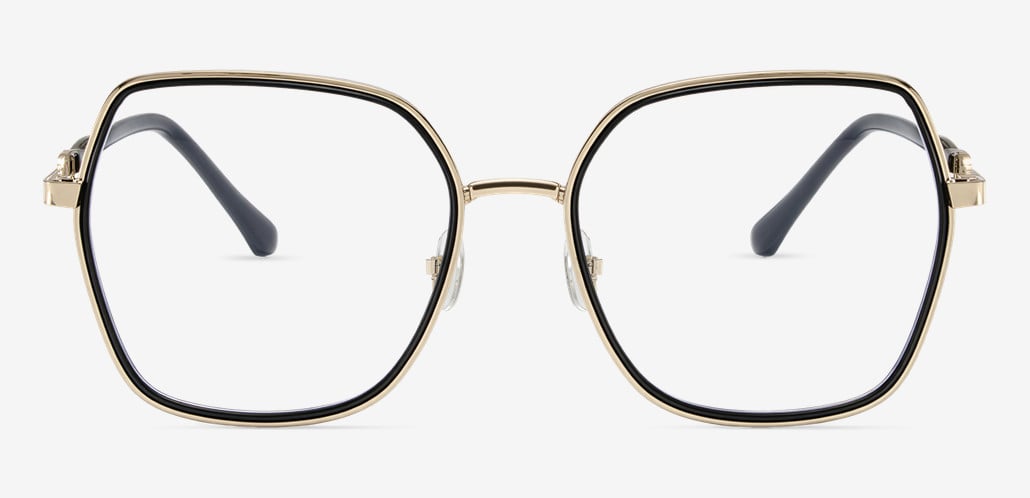
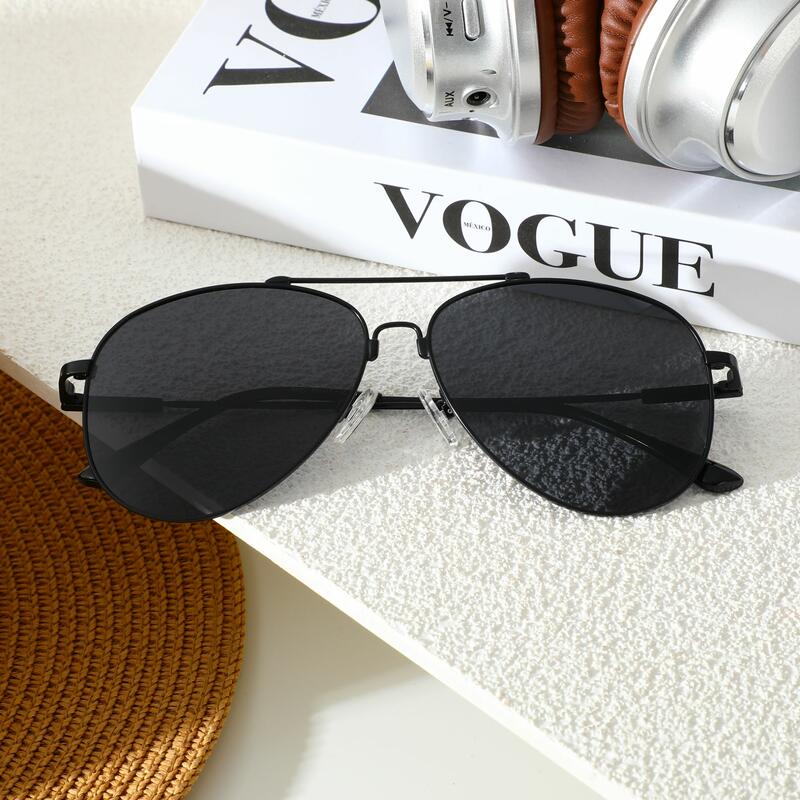
Metal and steel give you thin, blacked-out rims — architectural, minimal, unisex. This is "black without bulk," and it's where black aviators and slim rectangles shine.
TR90 is the featherweight. Barely-there on the nose, springs back when you sit on it. If you want a black pair you genuinely forget you're wearing, start here.
A heavy black acetate frame on a small face becomes the whole face. A thin black metal frame on a strong brow can disappear. Match the material's weight to how much you want black to be the look.
Layer 3 — The Lens (this sets the function and how much of you shows)
This is the layer people skip entirely, and it's the one that decides whether black sunglasses work.
Blackout (solid dark) lenses give maximum coverage and maximum anonymity. Great for glare, but they hide your eyes completely — which is fabulous on a beach and slightly antisocial at a patio lunch.
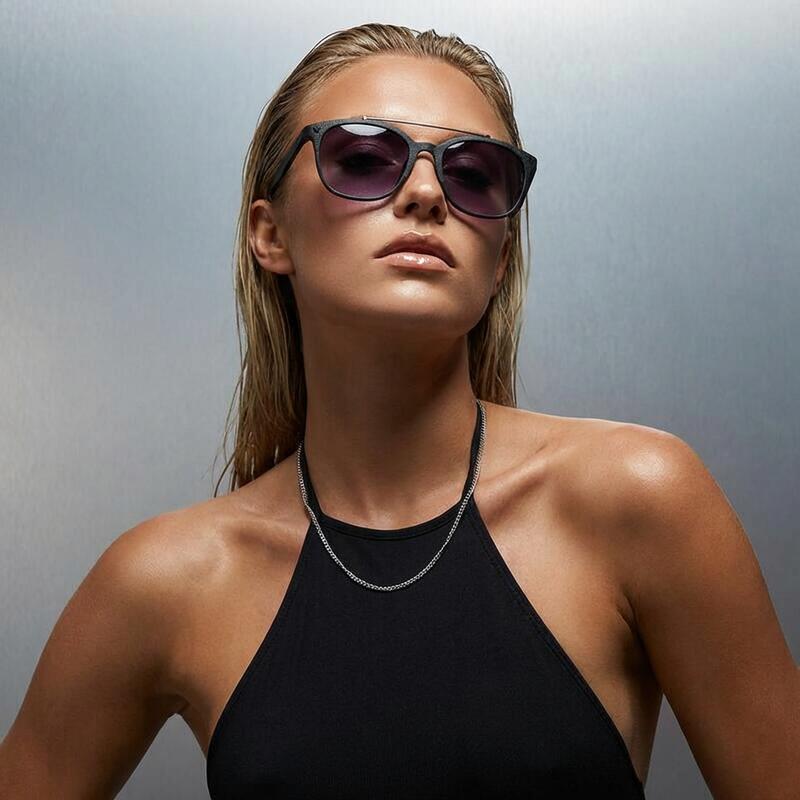
Gradient lenses are dark up top, lighter at the bottom. People can still catch your eyes. My default recommendation for anyone who wears black socially.
Polarized lenses cut horizontal glare off roads and water. If you drive daily or spend time near a lake, this is non-negotiable. On our black sunglasses page you can filter straight to Polarized → Yes (23 black styles come polarized), or add polarized lenses to most frames at checkout.
Every black frame we make is UV400 — 100% UVA and UVB — so the protection question is already answered. The lens choice is about glare and how visible you want your eyes to be.

Now Stack Them for Your Life
Once you see black as three dials, picking gets easy. Here's how I'd set the dials for four common lives.
The everyday "disappears into everything" black. Matte finish, light material, gradient lens. You want it neutral and forgettable in the best way. A clean black square like Leo ($42.95) or Bowen ($41.95), or the slim Gwendolyn black oval ($39.95), does this all day.
The "look more put-together" office black. Polished acetate, structured shape, gradient lens. This is the pair that makes you look like you have your life together in meetings. Reach for a defined square like Naomi ($53.95) or, if you want the premium hand-feel, Henry ($109.95).
The driving-and-water black. Function first. Aviator or wrap shape, polarized lens, blacked-out metal so it stays light on long drives. A black aviator like Verna ($43.95) or Ward ($45.95) is the classic shape here — add polarized lenses if you're on the road every day.
The statement black. Bold acetate, oversized or sculptural shape, the deepest polish you can find. Here's where black gets to be loud. A round like Aries ($63.95), a cat-eye like Augus ($72.95), or the architectural Gusta black aviator ($109.95) all read "I chose this."

The Black Mistakes I See at the Bench
These are the patterns that make people think they "can't wear black." They almost always can — they just made one of these calls wrong.
Picking the heaviest black for a small face. A chunky black acetate frame is gorgeous, but on a narrow face it eats every other feature. If your face is on the smaller side and you still want presence, go polished but slim, not thick.
Choosing matte when you wanted dressy. Matte black reads casual no matter how nice the shape is. If you're buying for weddings, work, and dinners, you want polish, not matte. I've had people return a beautiful matte frame purely because it felt "too sporty" with a suit — finish was the culprit, not the frame.
Going full blackout for a social life. Solid dark lenses are stunning and also make you look slightly unapproachable across a brunch table. If you mostly wear sunglasses around other people, a gradient lens keeps your eyes in the conversation.
Forgetting that black shows everything you do to it. Matte hides fingerprints but shows scratches as shiny lines. Polish hides scratches better but shows every fingerprint and speck of dust. Neither is "better" — just know which annoyance you'd rather live with.
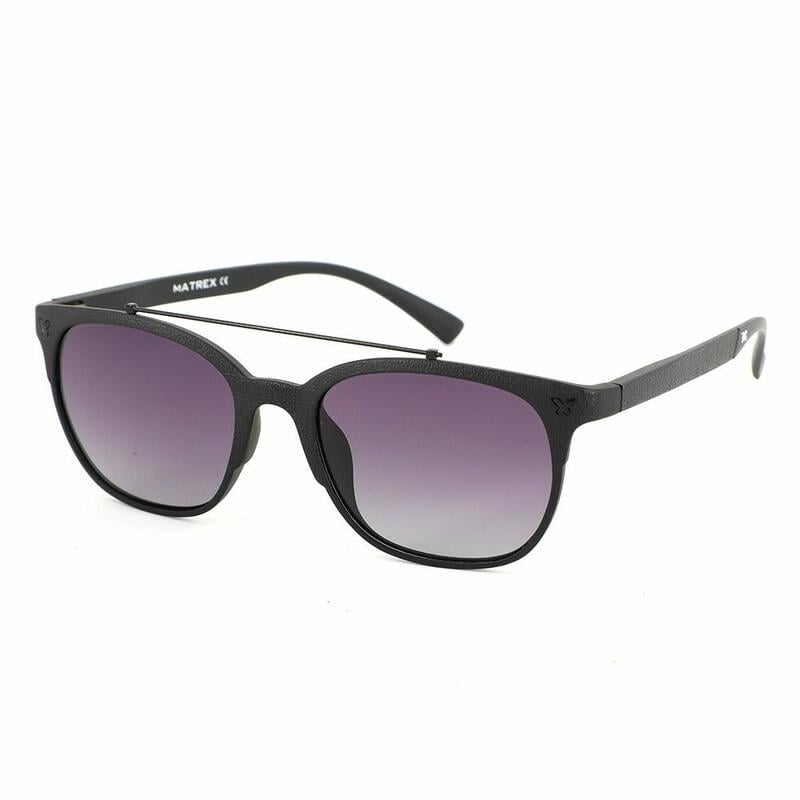
A Quick Word on Face Shape
Black doesn't change the face-shape rules, it just makes the contrast sharper. Round faces get definition from a black square or rectangle. Square faces soften with a black round, oval, or cat-eye. Oval faces can wear nearly any black frame. Heart-shaped faces balance beautifully under a bottom-weighted black aviator. Because black has the strongest contrast of any frame color, getting the shape right matters a little more in black than it does in, say, tortoise — so this is exactly the color where I'd use try-on before committing.
How to Actually Decide (the 60-second version)
You don't need to overthink this. On the black sunglasses page, do this:
1.Pick your finish — matte to disappear, polish to dress up.
2.Pick your material — acetate for presence, metal for minimal, TR90 for featherweight.
3.Pick your lens — gradient for social, polarized for driving and water.
4.Tap Try On on two contenders and compare them on your own face.
And one more Aoolia-specific tip: every one of our frames has a name, not a code. You're not deciding between SG40032 and SG40059 — you're deciding between Bowen and Leo. It sounds small, but it changes how you shop. You stop comparing spec sheets and start picking the one that feels like you.
FAQ
Do black sunglasses really go with everything?
Close to it — black is the most versatile frame color there is, which is why it's our most-stocked (241 styles). The catch is matching the finish to the occasion: matte for casual, polished for dressy.
What's the difference between matte and glossy black sunglasses?
Matte is flat and non-reflective — casual, modern, hides fingerprints. Glossy (polished acetate) is deep and reflective — dressier and richer-looking, but shows fingerprints. Same color, different attitude.
Are black sunglasses good for driving?
Yes, with polarized lenses to cut road glare. Choose an aviator or wrap shape in lightweight metal so they're comfortable on long drives.
Can I get black sunglasses in my prescription?
Almost every black frame here can be made into prescription sunglasses — upload your Rx at checkout for single-vision, bifocal, or progressive lenses (ships in 7–10 business days).
Ready to find your black? Browse all 241 black sunglasses for men and women — every frame optician-verified, UV400, and ready for try-on. Prefer warmer tones? Our brown sunglasses and tortoise frames are next door.