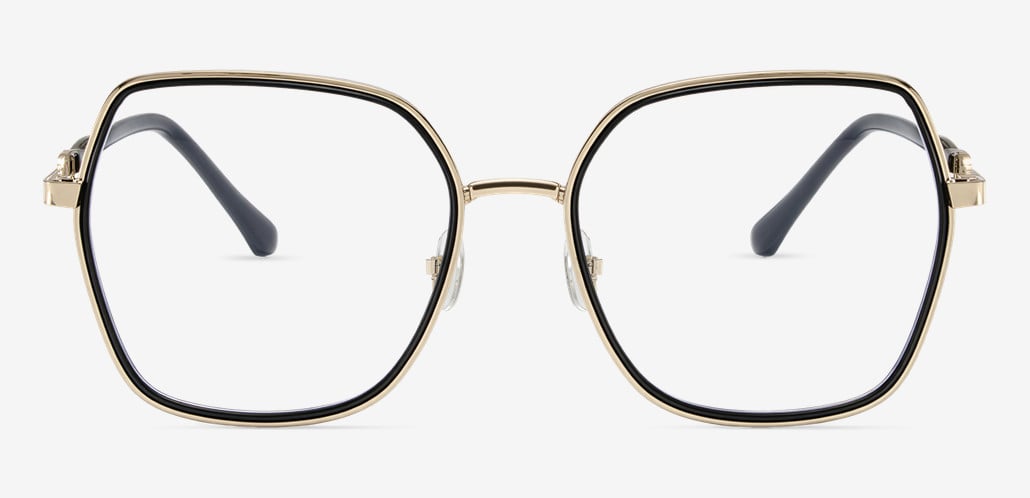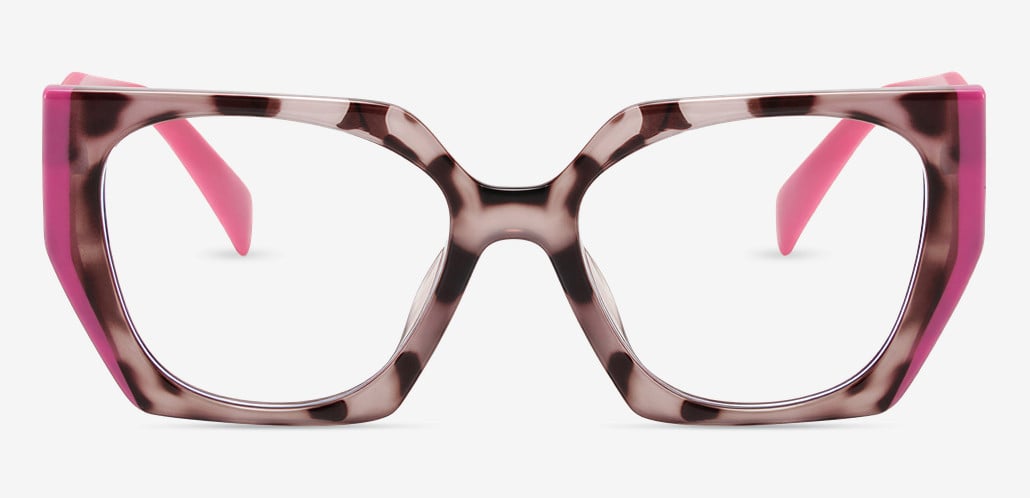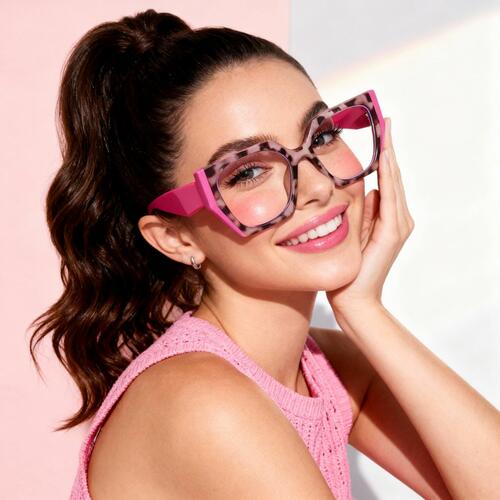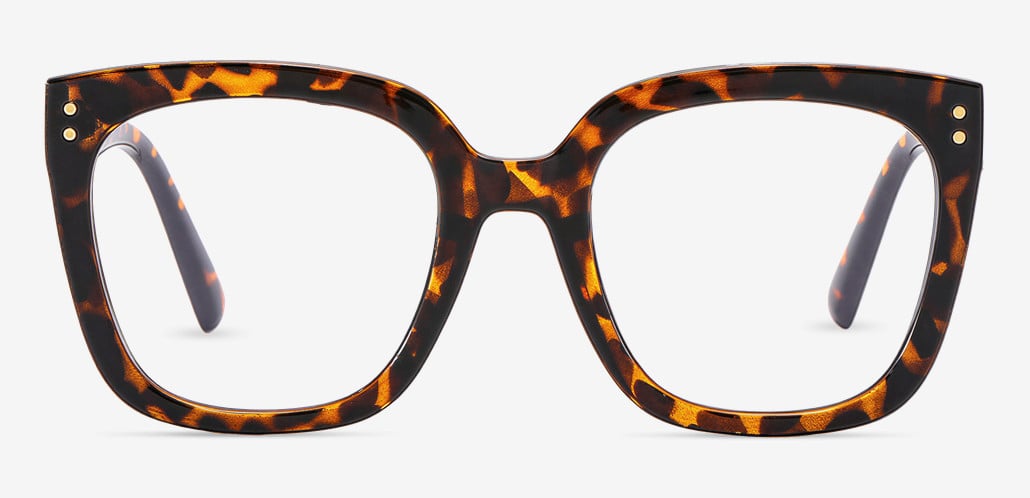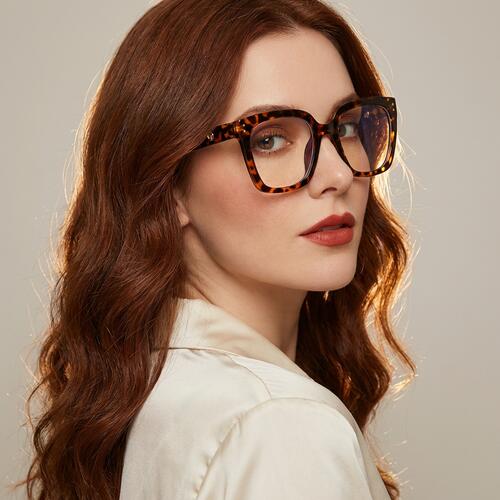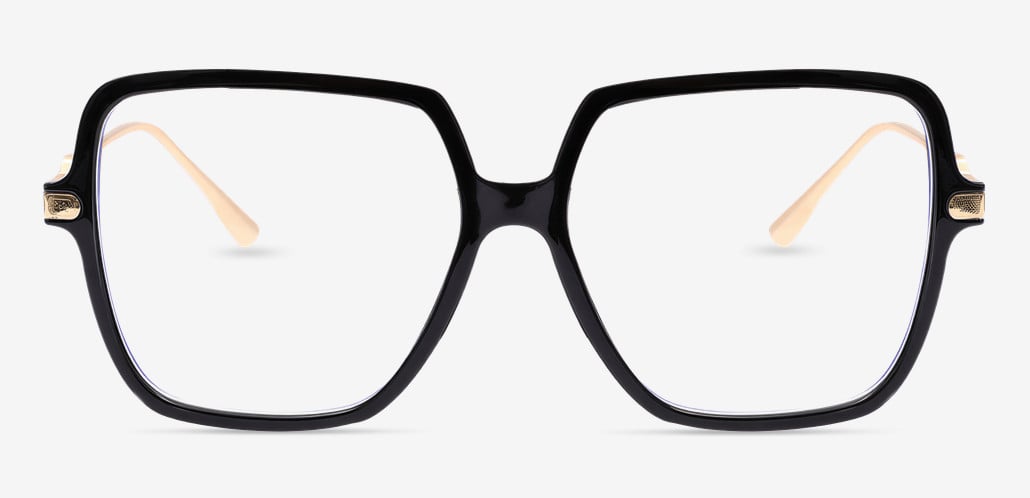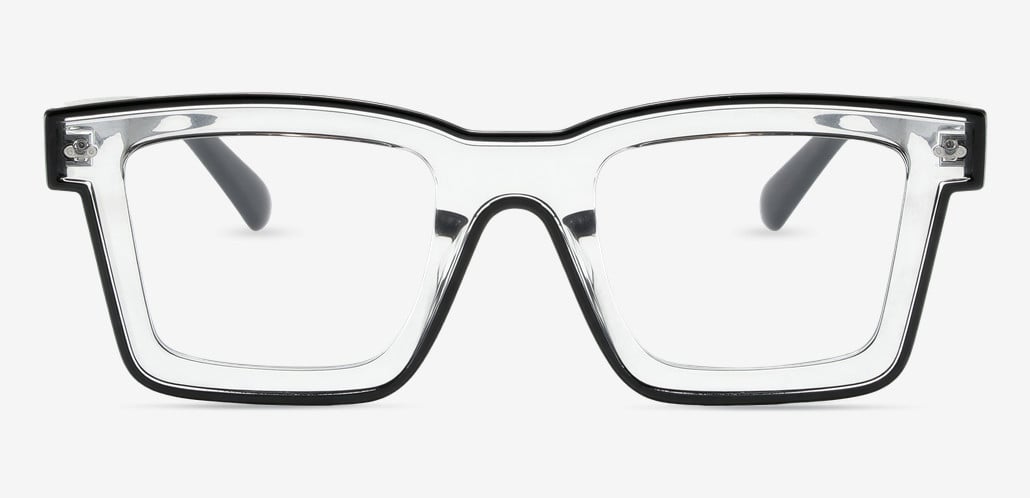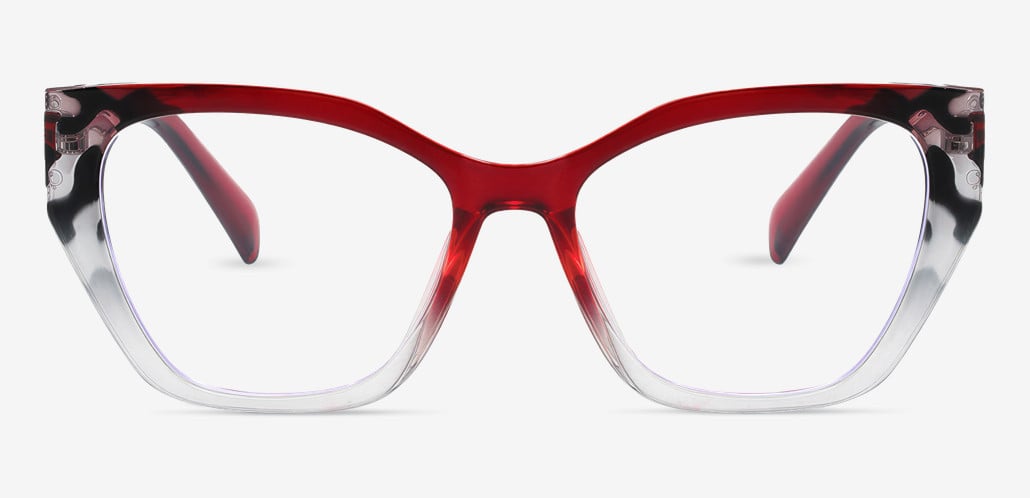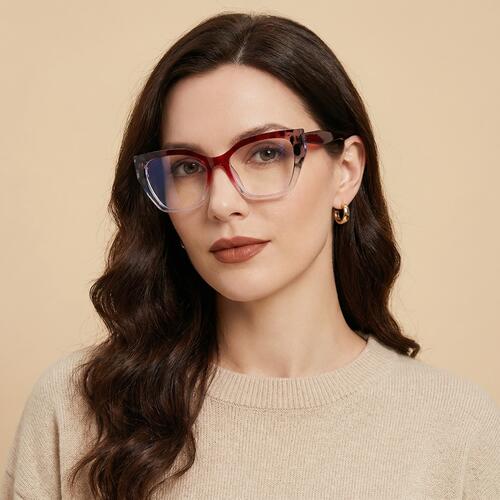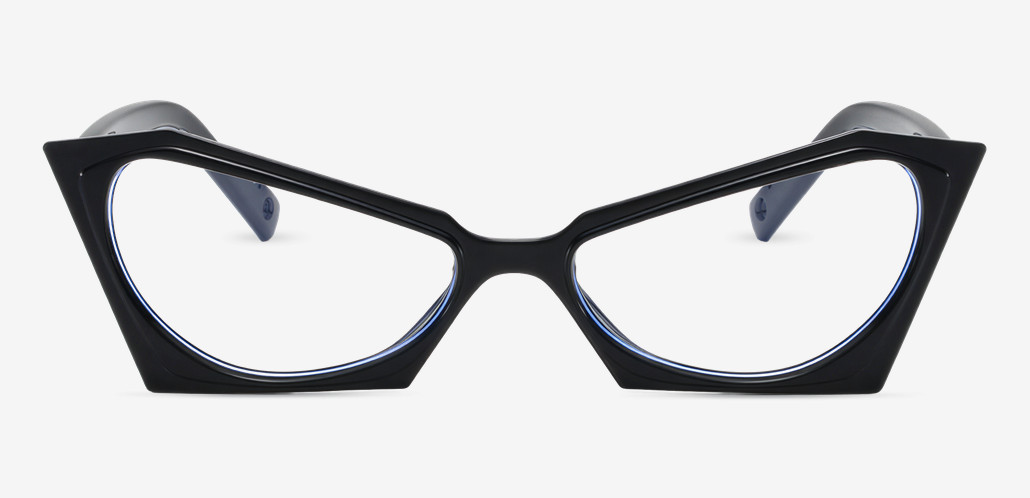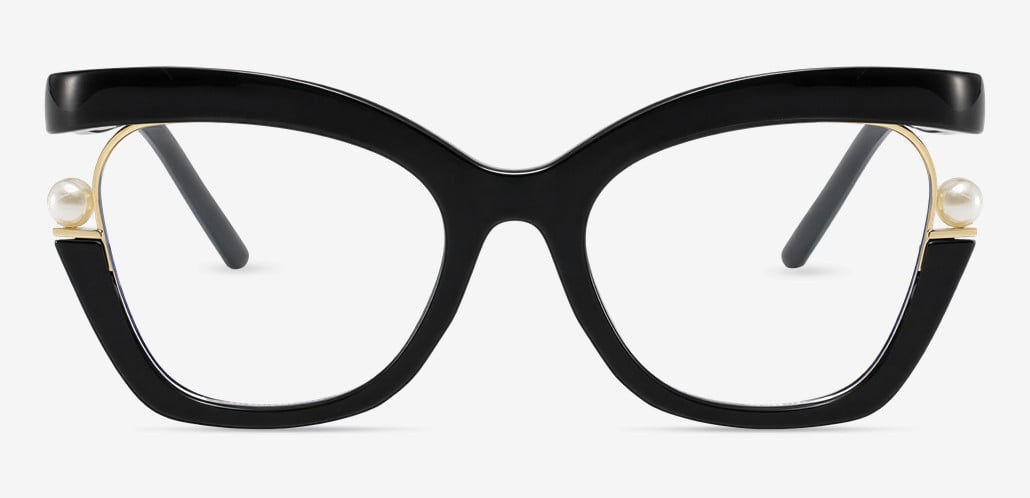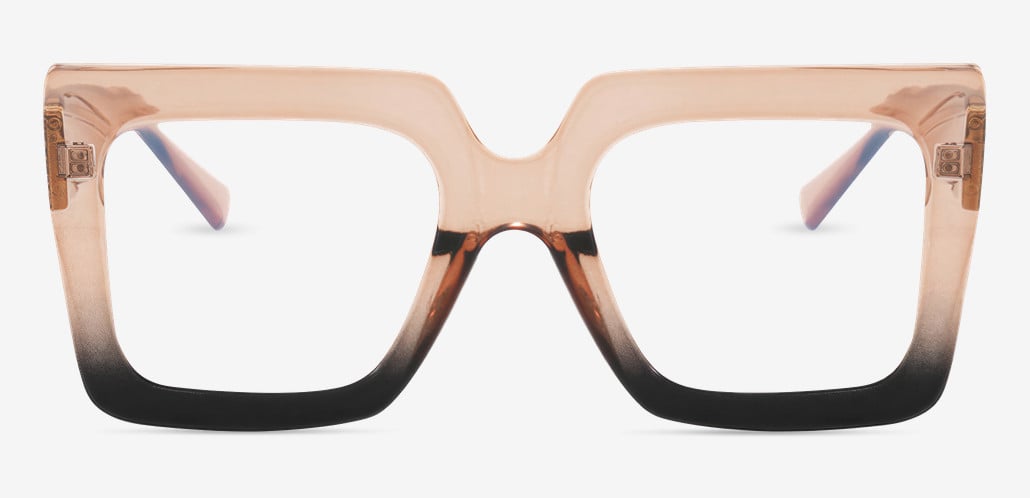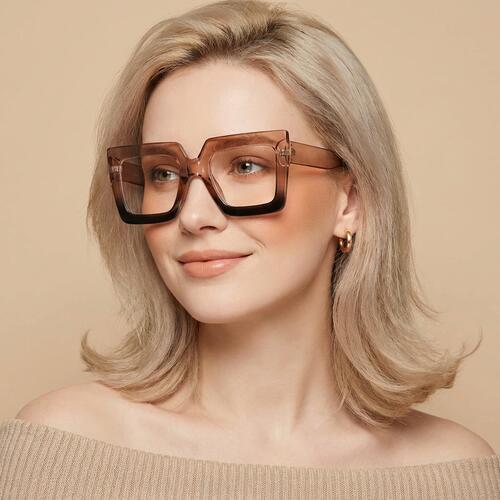

Two pairs of glasses can both be sold as "large" and differ by six millimeters of width — roughly the gap between frames that fit and frames that slide down your nose every time you glance at your phone. There is no industry standard for what makes large frame glasses large. One retailer's large is another brand's medium, sizing labels often come from merchandising teams rather than opticians, and most people order on looks alone and find out the rest when the box arrives.
You can skip that entire cycle. Everything you need to buy big frames with confidence is either printed inside a pair of glasses you already own or listed on the product page of the pair you're considering. This guide walks through how to read those numbers, what each one actually controls, and how to use them to decide whether a large frame suits your face — and your prescription.
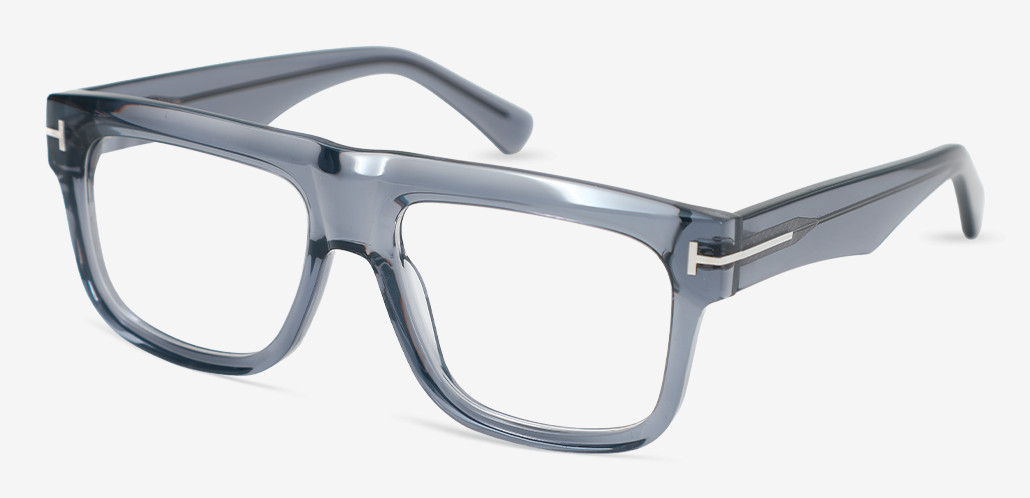
Start With the Numbers Inside Your Glasses
Take off your current glasses and look along the inside of one temple arm (the part that goes over your ear). Somewhere on that strip of plastic or metal you'll find a sequence like this:
54 □ 18 145
Those three numbers, in millimeters, are the frame's size:
54 is the lens width — the horizontal width of one lens at its widest point. Anything from about 53mm up is squarely in large territory; the frames in our large collection run to 58mm and beyond.
18 is the bridge width, the gap between the two lenses where the frame rests on your nose.
145 is the temple length, from hinge to tip.
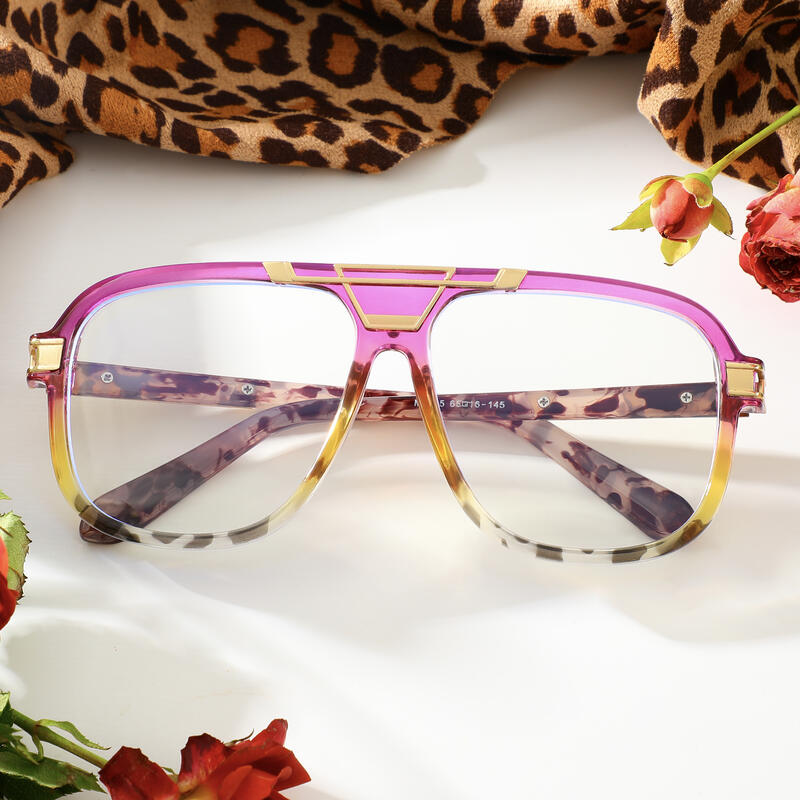
A fourth number matters just as much for large frames, though it's rarely engraved anywhere: lens height, the vertical measurement of the lens. You'll find it on the product listing instead. Keep it in mind — of the four, it's the one that changes what your glasses can do, not just how they look. More on that shortly.
If the engraving has worn off your current pair, measure the lens width directly with a millimeter ruler, or hold the glasses against a credit card: a standard card is 85.6mm long, so a lens that spans well past half the card is likely 50mm or more.

What "Large" Means When Nobody Agrees
Since there's no regulation to lean on, here is the working definition we use to catalog frames at Aoolia — a frame joins the large collection when it clears at least one of three thresholds:
Lens width of 53mm or more
Total frame width of 138mm or more (that's about 5.4 inches across the front)
Lens height of 42mm or more
Total frame width is the one shoppers overlook, and it's the one your mirror notices first. You can estimate it from the engraved numbers: two lens widths plus the bridge, plus a few millimeters for the rims and hinges. A 54-18 frame, for instance, comes out somewhere around 133–136mm depending on how thick the rims are. Retail listings usually state it outright, which is more reliable than arithmetic.
Why does the multi-threshold definition matter to you as a buyer? Because "large" can mean three different things, and they solve three different problems. A frame can be wide but shallow — big presence, no room for a reading zone. It can be tall but narrow — great for progressives, snug on a wide face. Knowing which kind of large you're looking at is most of the game.
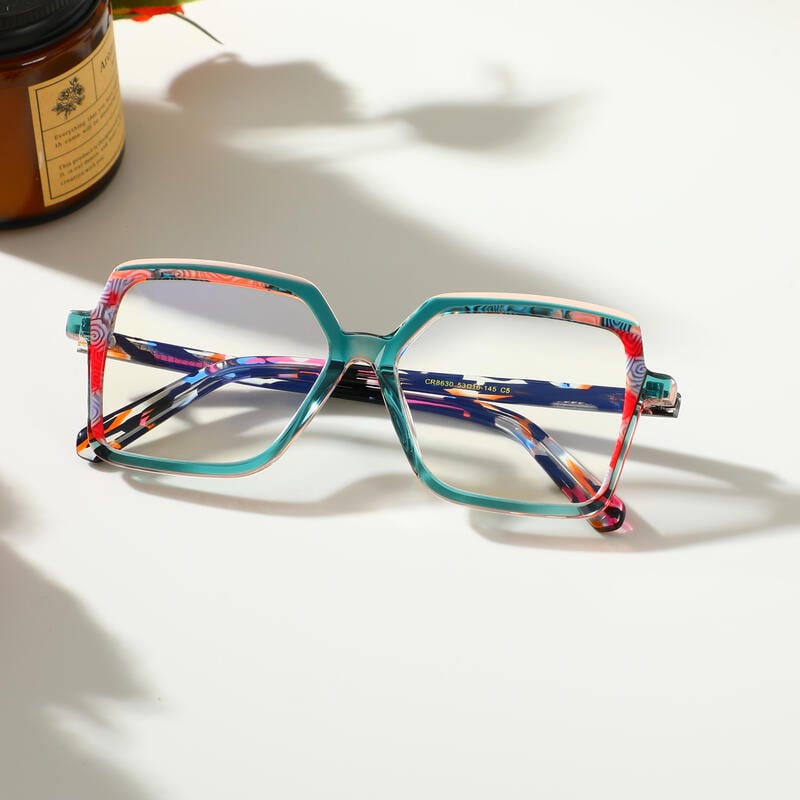
Width Decides Fit. Height Decides Function.
Each dimension has one job. Once you separate them, frame shopping stops being guesswork.
Lens and total width control how the frame sits. The common rule of thumb: your frame's total width should land within a few millimeters of the widest part of your face, measured temple to temple. Wider than that and the frame drifts sideways when you look down; the temples splay and the fit loosens over months. Narrower, and the temples press in, the frame perches too high, and you get that pinched look big glasses are supposed to avoid. To measure your face, hold a ruler flat across your temples in a mirror, or measure a well-fitting pair you already own and work from its total width.
Lens height controls what your lenses can do. This is the quiet reason large frames have practical value beyond style. Progressive lenses place your distance, intermediate, and reading zones in a vertical stack, and that stack needs room: most standard progressive designs want a fitting height in the mid-20s of millimeters between your pupil and the bottom of the lens. Compressed designs exist for shallow frames, but they narrow the reading zone to make it fit. A lens 42mm tall or more gives a progressive design space to breathe — which is why 351 of the 355 frames in our large frame glasses collection are progressive-compatible, and why a shallow, ultra-trendy rectangle sometimes isn't. If you wear progressives or expect to soon, lens height should be the first number you check, before color, before shape. Our progressive glasses collection is pre-filtered for exactly this.
Bridge width controls where the weight goes. Large frames carry more material and bigger lenses, so the bridge earns its keep. A bridge that's too wide for your nose lets the whole frame ride down; too narrow and it perches and pinches. If your nose bridge is low or narrow — a common fit complaint that sizing charts ignore — look for adjustable nose pads, which let an oversized frame sit where it should instead of where gravity takes it.

Sizing Up: How Much Bigger Actually Reads as Bigger
Suppose your current glasses are a 50-19 and you want something with more presence. How far do you jump?
Small moves are invisible. A 2mm increase in lens width barely registers in a mirror. A 4mm jump is noticeable; 6mm or more reads as a deliberate statement. But remember that lens width increases get doubled in the total width (two lenses), so a jump from 50mm to 56mm lenses adds roughly 12mm across the front — which may push the frame past your face width. The cleaner way to size up without breaking fit: hold total width steady near your face measurement and take the extra size in lens height instead. Taller lenses deliver most of the oversized look, all of the functional benefit, and none of the sliding.
Two comfort checks that matter more on big frames than small ones. First, eyebrows: on a tall frame, the top rim should sit at or just below your brow line, not above it — frames that swallow the eyebrows look accidental rather than intentional. Second, cheeks: when you smile, a deep lens shouldn't rest on your cheekbones. If it does, the frame is too tall for the distance between your eyes and cheeks, and it will fog, smudge, and bounce when you talk.

The Honest Trade-offs
Large frame glasses are not the right answer for everyone, and the exceptions are worth naming plainly.
Strong prescriptions get heavier and thicker at the edges as lenses grow. Nearsighted (minus) lenses are thinnest at the center and thicken toward the edge — so the more edge a lens has, the more thickness there is to see. There's a second, less obvious effect: if a frame is much wider than the distance between your pupils, the optical centers of the lenses have to be shifted inward to line up with your eyes. Done precisely, this is routine. Done sloppily, it distorts vision. This is one of the specific things an optician verifies on every Aoolia order before it ships — pupillary distance checked against the frame's geometry — and it's the reason we check it most carefully on this collection. If your prescription is above roughly ±4.00, choose a high-index lens at checkout and expect the best results from large frames that are tall rather than extremely wide.
Small faces can wear big frames, with one constraint. The lens can be generous as long as the total width stays close to your face width. Filter for height first, width second.
Active use is a mismatch. A 145mm+ frame with big acetate lenses will move when you run. Keep a smaller or sport-specific pair for the gym.
None of this argues against going large. It argues for going large by the numbers — which is the whole premise here.
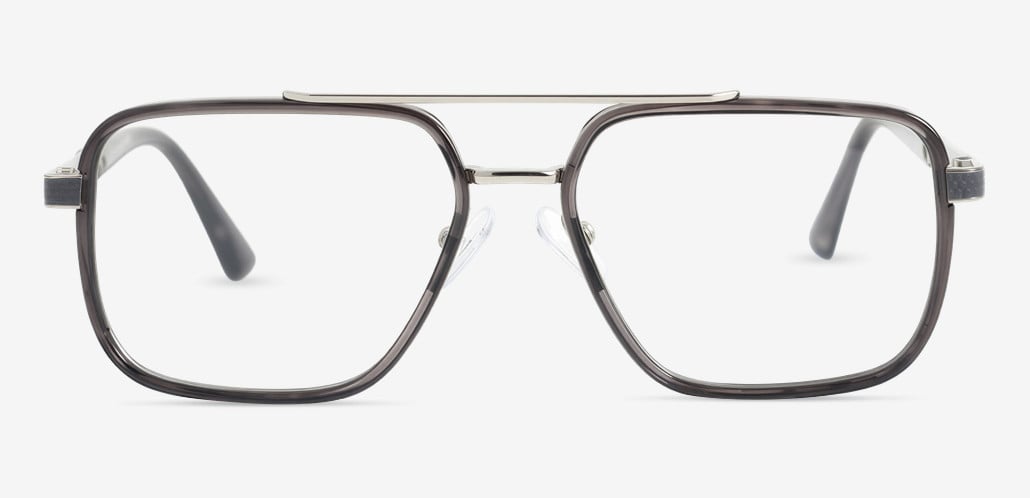
Before You Check Out: A 60-Second Verification
You've picked a frame. Run it through this once:
Total width within a few millimeters of your face measurement.
Lens height 42mm+ if you wear or anticipate progressives or bifocals; any height if single vision.
Bridge close to your current comfortable pair, or adjustable nose pads if fit has ever been a problem.
Pupillary distance (PD) entered from a current prescription — with a wide frame, an accurate PD is what keeps the optical centers over your eyes.
Virtual try-on for the brow-line and cheek checks above. A mirror test beats a size label every time.
That's the entire method. The numbers inside your glasses were always the answer — most people just never had a reason to read them. Now that you do, "large" stops being a label someone else assigned and becomes a spec you chose on purpose.