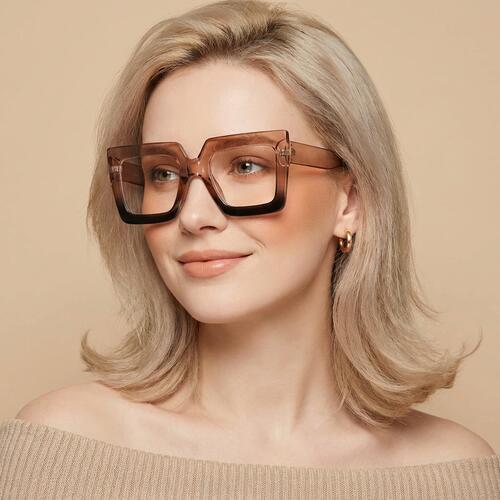

Bayonetta Glasses vs. Cat Eye: Which Sharp Frame Is Yours?
Two frames get shelved side by side in almost every roundup of sharp eyewear, and the pairing makes some sense — both are angular, both photograph well, both carry a reputation for making the wearer look like they've actually read the contract. But cat eye and Bayonetta glasses were designed to solve opposite problems, about seventy years apart. Working out which problem you're trying to solve gets you to the right frame faster than any face-shape chart will.
The cat eye was invented to make glasses forgivable
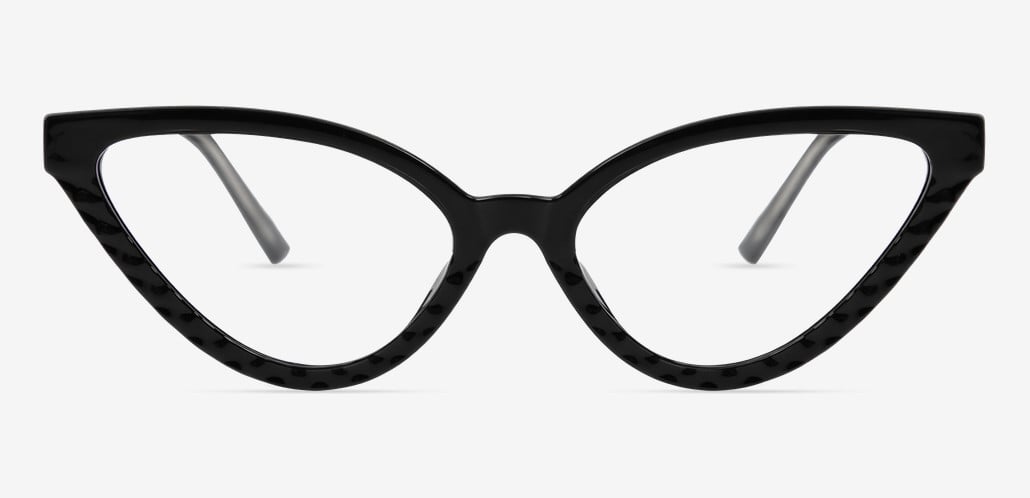
In the late 1930s Altina Schinasi was dressing shop windows in New York and couldn't find a pair of women's frames worth looking at. The available options were drab, with almost no stylistic range. Travelling in Italy, she took the upswept line of a Venetian carnival mask — the Harlequin of commedia dell'arte — and sketched it as an eyeglass frame. Retailers turned it down. A single Madison Avenue boutique took the risk, she partnered with Lugene to manufacture, and in 1939 Lord & Taylor handed her its Annual American Design Award for what the world now calls the cat eye. Vogue and Life covered it. Google put her on its homepage in August 2023, on what would have been her 116th birthday.
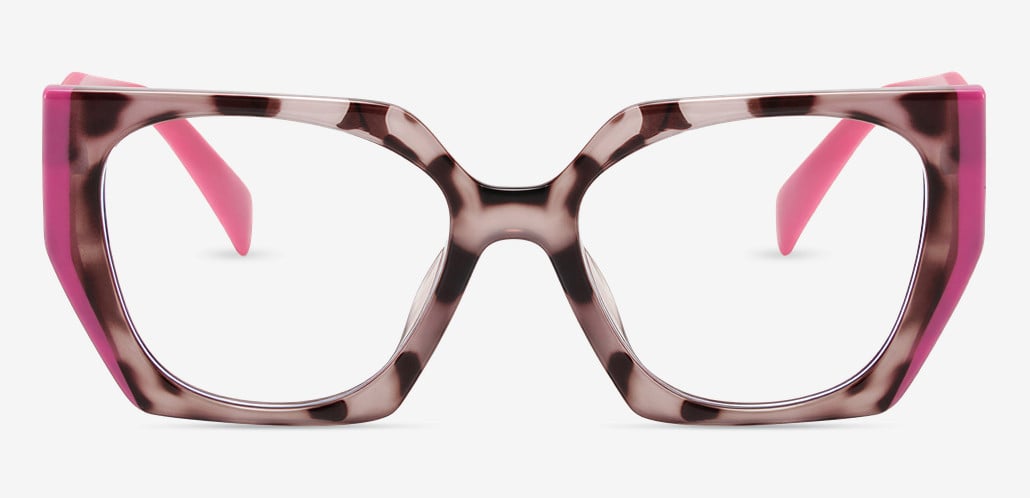
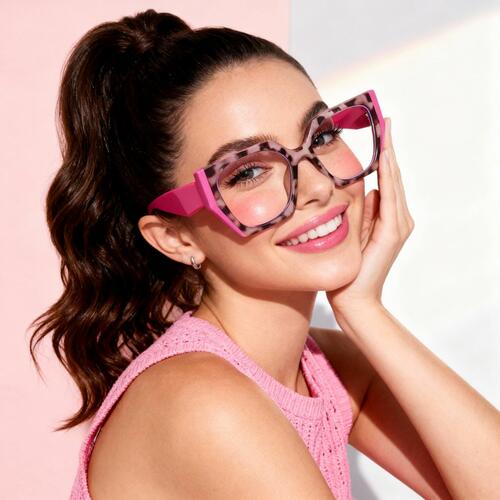
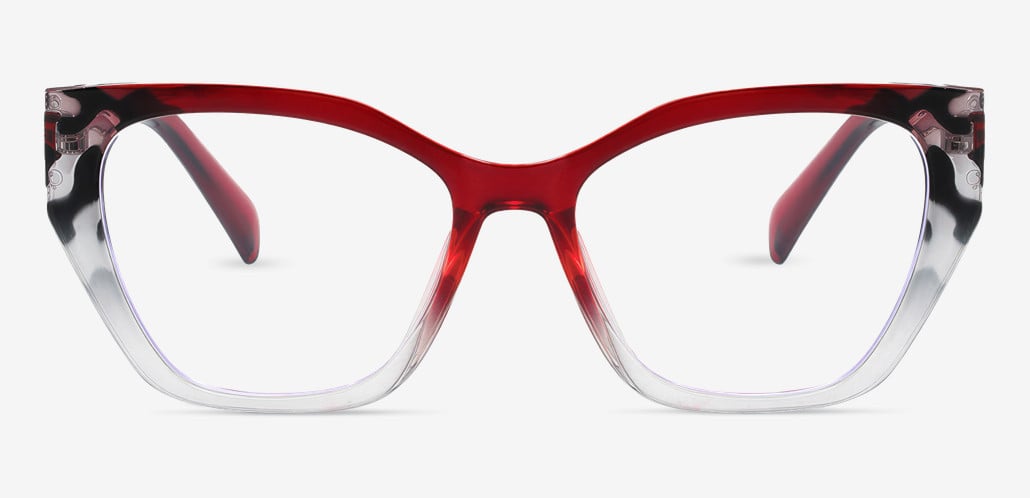
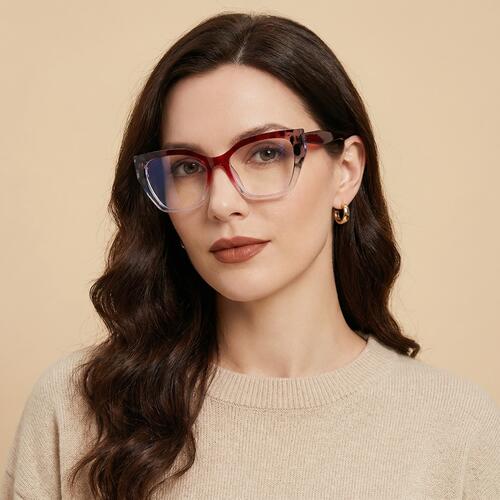
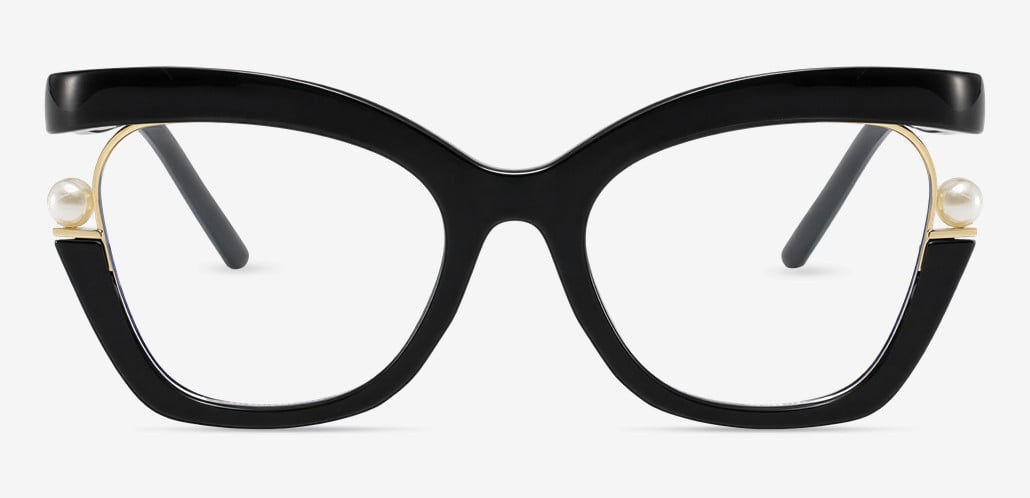
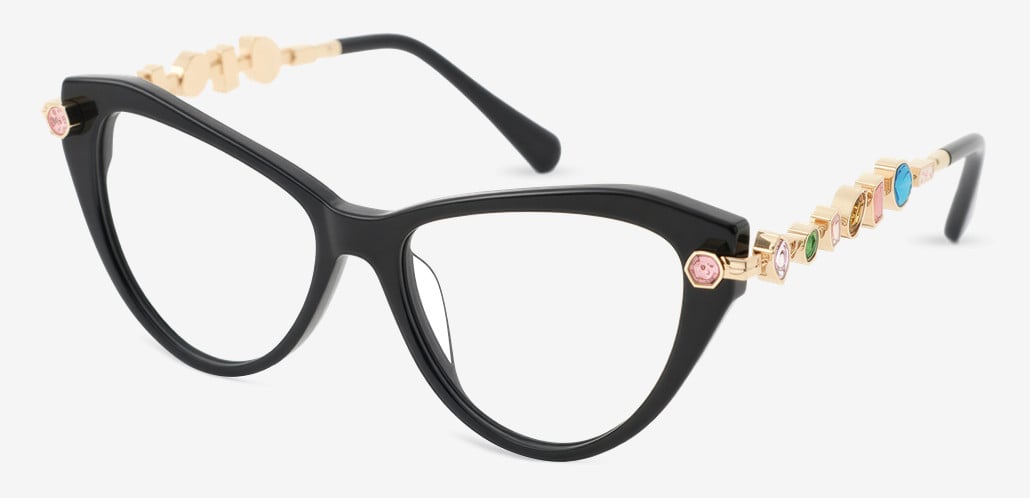
That history explains the shape. Schinasi's frame was ornamental on purpose, built for a period when needing glasses was treated as a defect to be managed. Her answer was to stop hiding them and make them jewellery instead: upswept, widening toward the outer corner, pulling attention up and away from the lens itself. Eighty-odd years on, the shape still behaves that way. A cat eye announces itself before you speak.
The cat eye was invented to make glasses forgivable
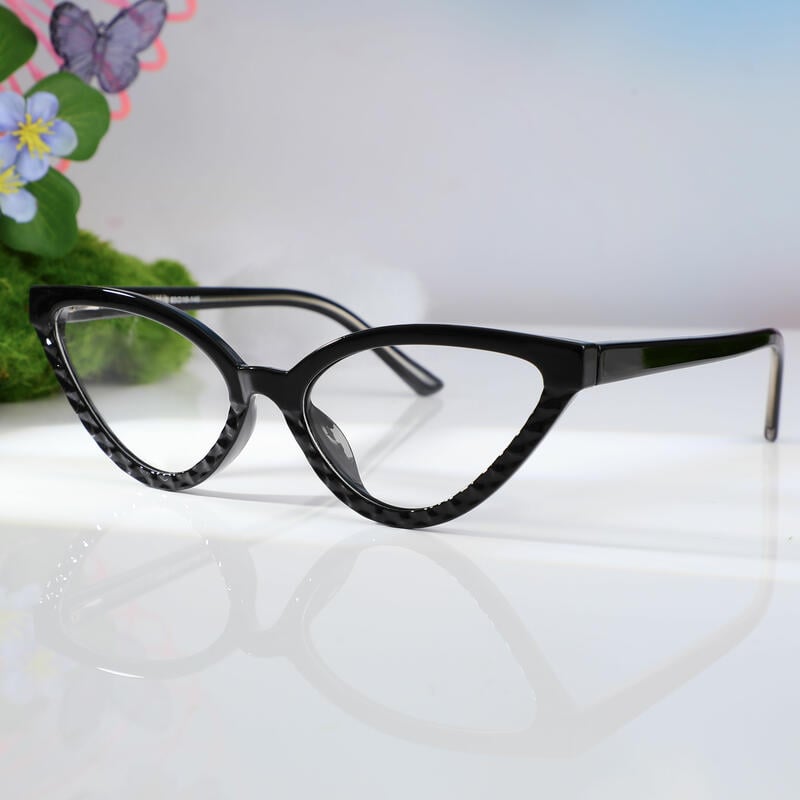
In the late 1930s Altina Schinasi was dressing shop windows in New York and couldn't find a pair of women's frames worth looking at. The available options were drab, with almost no stylistic range. Travelling in Italy, she took the upswept line of a Venetian carnival mask — the Harlequin of commedia dell'arte — and sketched it as an eyeglass frame. Retailers turned it down. A single Madison Avenue boutique took the risk, she partnered with Lugene to manufacture, and in 1939 Lord & Taylor handed her its Annual American Design Award for what the world now calls the cat eye. Vogue and Life covered it. Google put her on its homepage in August 2023, on what would have been her 116th birthday.
That history explains the shape. Schinasi's frame was ornamental on purpose, built for a period when needing glasses was treated as a defect to be managed. Her answer was to stop hiding them and make them jewellery instead: upswept, widening toward the outer corner, pulling attention up and away from the lens itself. Eighty-odd years on, the shape still behaves that way. A cat eye announces itself before you speak.

Bayonetta glasses came from the opposite premise
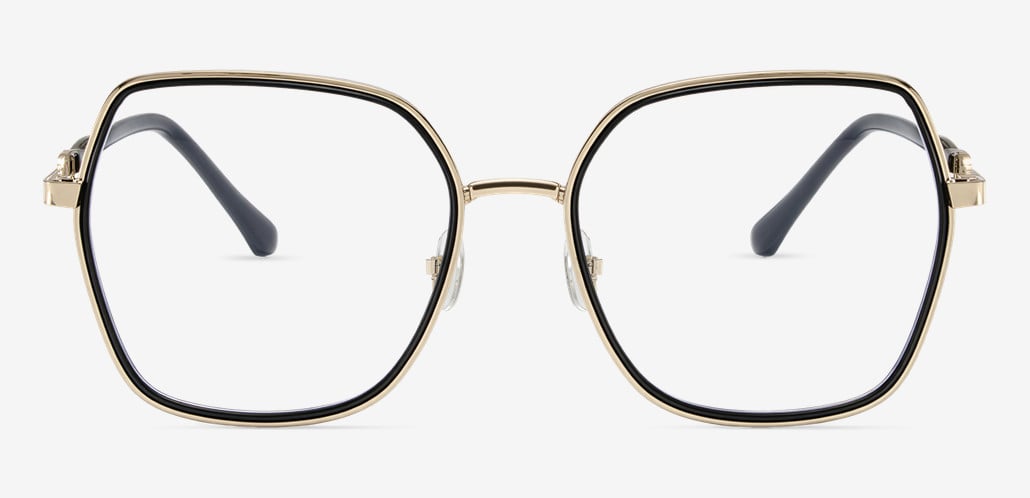
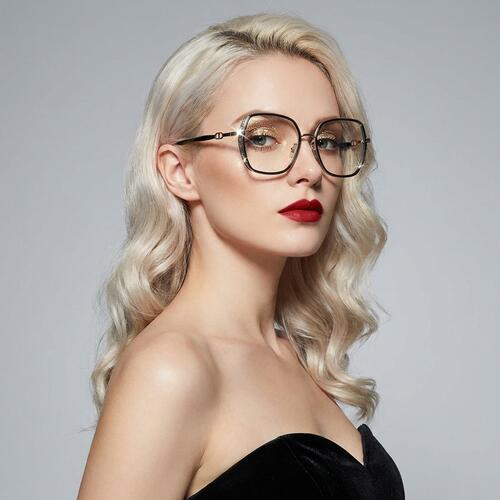
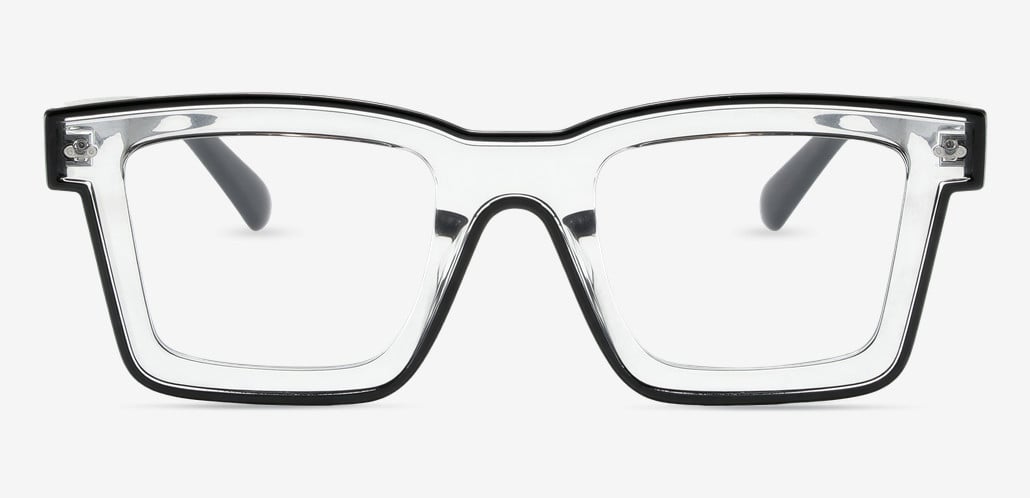
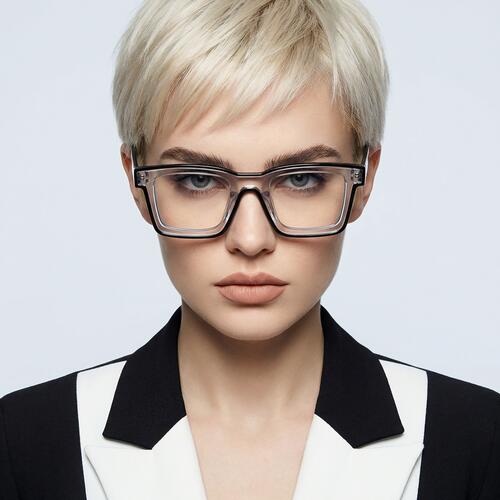
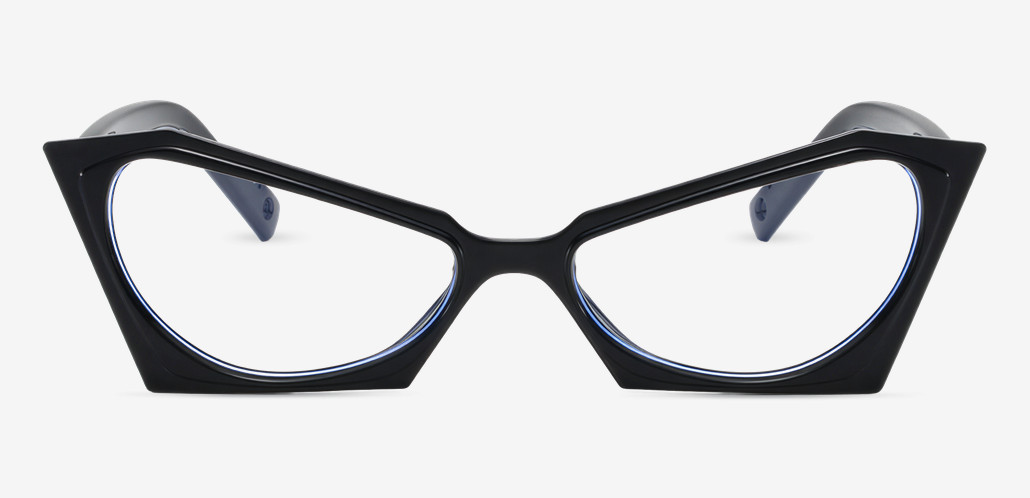
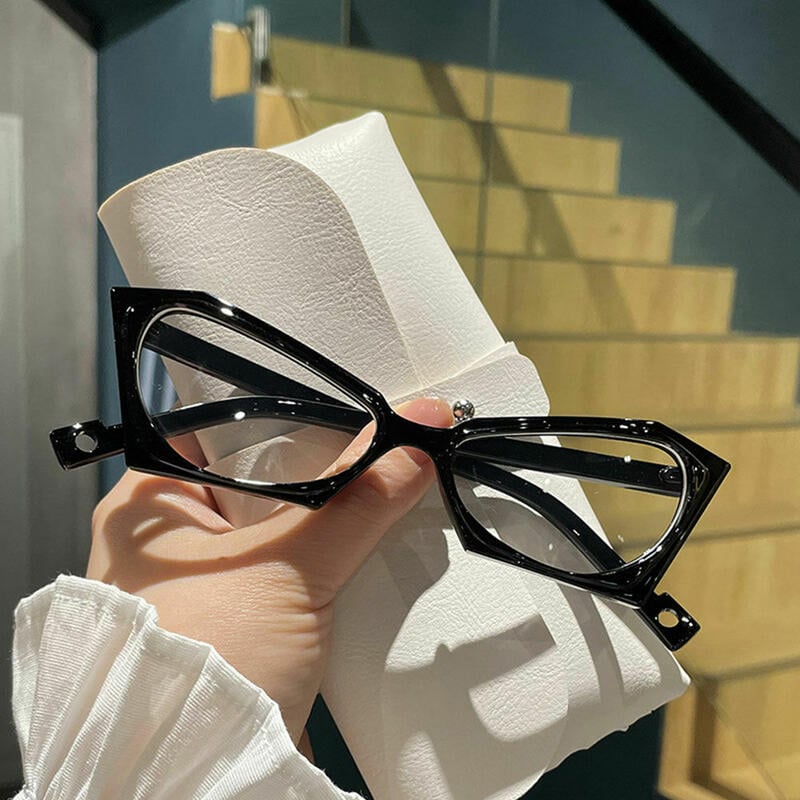
The narrow frame's lineage runs through 1990s minimalism and Y2K techno-optimism — a stretch when eyewear got treated as hardware rather than ornament. Thin, close to the face, no flourish, nothing added. The name arrived much later. Bayonetta, the 2009 game, gave the silhouette a character who is never seen without it; her creator Hideki Kamiya spent sixteen years turning down requests to take the glasses off, and has said that through every design revision the glasses layer stayed on standby.
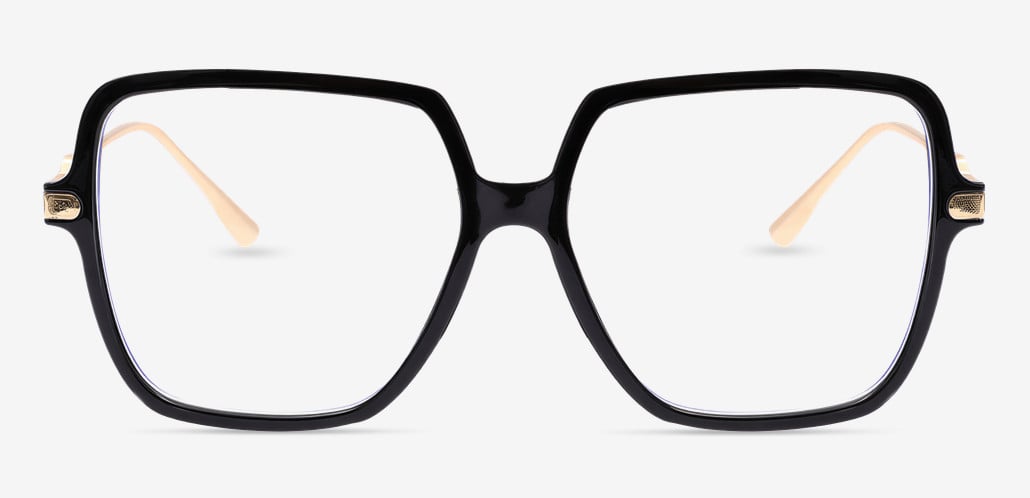
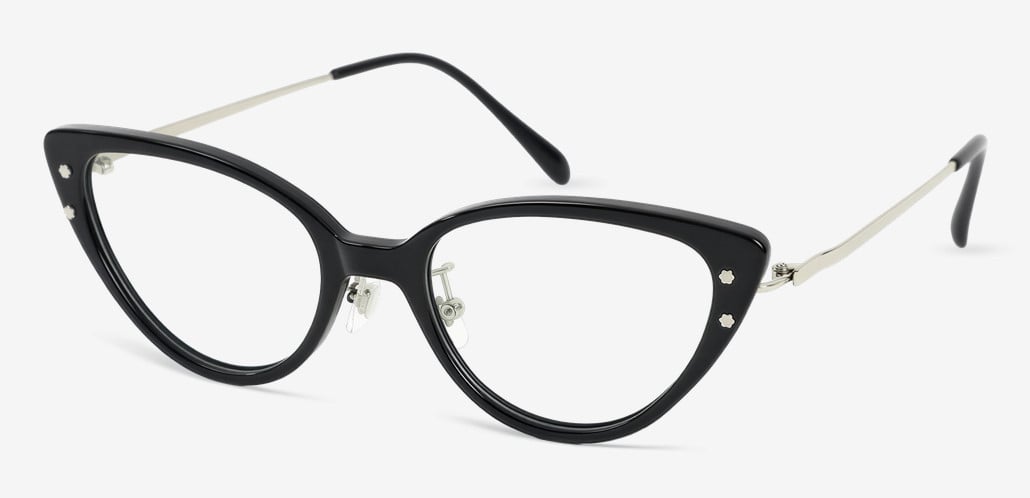
The nickname stuck because the frame does something a cat eye can't. It declines to acknowledge that glasses need justifying. There's no ornamen softening the fact of correction, no decorative gesture to change the subject. Where the cat eye decorates the need for glasses, Bayonetta glasses treat it as beside the point. That is the real difference between the two, and it's why they read so differently on the same face.
Worth noting how the naming shook out. The fashion industry had its own term for this look — office siren, a revival of 90s and Y2K librarian styling — and a nickname borrowed from a video game character beat it into common use anyway. If you searched for one and landed on the other, that's why. They describe the same frame.
What that difference actually does in a room
This next part is a judgement call rather than documented history, so take it as one.
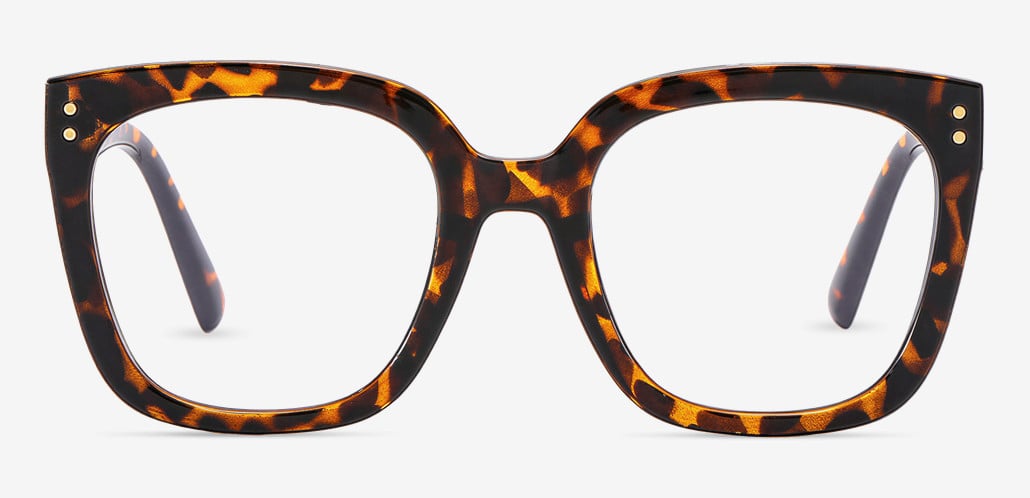
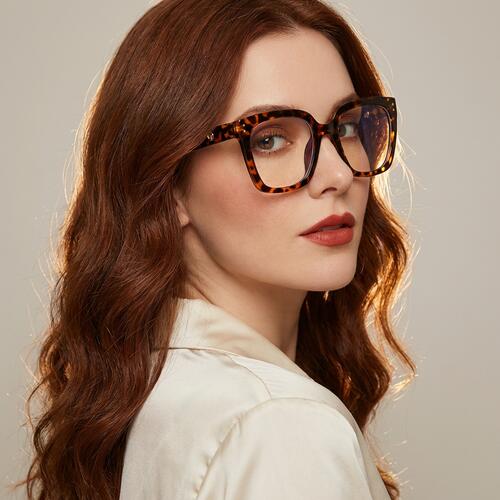
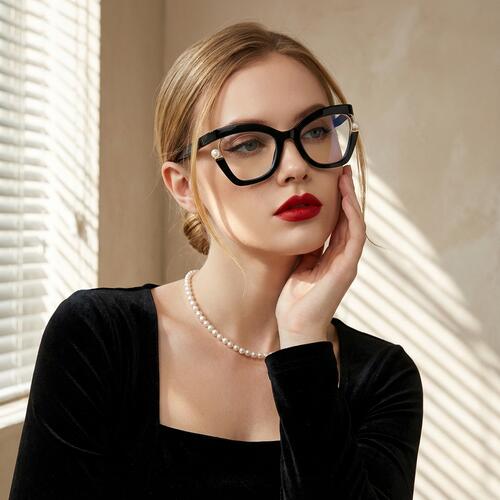
A cat eye gives people something to respond to. It's legible as a decision, which makes it social — it invites the compliment, the "great glasses," the read that you have a style and you've committed to it. It also carries era.You can't fully separate the shape from the 1950s, and depending on what else you have on, it will pull retro, secretarial, or costume-adjacent.
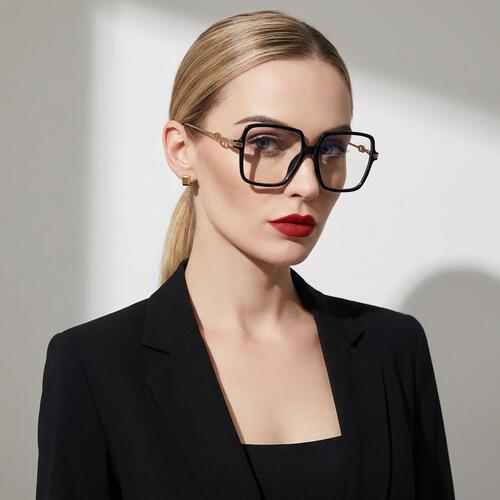
A Bayonetta frame withholds. Narrow, unornamented, sitting close to the face, it gives people less to interpret you through. That lands as composure or as coldness depending on who's looking, and the office siren framing that grew up around the style is specifically about that withholding. The sharpness reads as competence; the fact that the frame isn't trying to be liked is the part people call subversive.
Neither is the better frame. They're different social instruments, and the choice is about which one you want to be holding.

The question nobody asks: which one will you still wear in three years?
Frame trends move, and prescription eyewear is an awkward thing to buy on a trend, because the lenses are often the bigger line on the invoice. Replacing a frame you've gone cold on usually means paying for lenses again too. So cycle risk here has a number attached to it, which is more than can be said for most style decisions.
On that measure the two frames aren't comparable. The cat eye has been in continuous production since 1939. It came through the oversized 70s, the aviator 80s, the wire-rim 90s and the very large frames of the 2010s without ever leaving the market outright. It's about as close to a fixed point as eyewear gets.
The narrow silhouette is a revival, and it's arriving loudly right now.Trend coverage running into 2026 puts narrow rectangles, thin wire and rimless "cyber-minimalism" at the front of the conversation, and the Guardian reported in January 2026 that small frames had become the most wanted thing in men's eyewear. A caveat on that: most of the other 2026 forecasting circulating at the moment comes from retailers and market research rather than independent fashion desks, so the enthusiasm is worth treating as directional rather than settled. What does look clear is that the market is running on two tracks — slim and oversized are selling in parallel, not one replacing the other.
The practical read runs against what you might expect a page selling Bayonetta glasses to tell you. If you're buying one pair and you need it to carry you for years, the cat eye is the lower-risk spend. If you're adding to a rotation, the Bayonetta frame is the more interesting addition, and youcan afford to be more price-disciplined about it precisely because you're buying into a cycle rather than a constant.
How to tell them apart when the label is wrong
Because "Bayonetta glasses" is a nickname rather than a real product category, retailers apply it loosely. You will find genuine cat eyes filed under it, and narrow frames sitting in cat eye collections. Three checks,in this order:Where is the widest point? A cat eye widens as it travels outward, so the broadest part of the lens sits at or near the outer corner. A Bayonetta frame holds roughly the same width the whole way across.Is the lift in the rim or in the lens? Cat eyes raise the entire lens shape. Narrow frames that lift at all do it in the brow line only, with the lens staying level underneath.How does it read from ten feet? Cat eyes need vertical room for the upsweep to register as an upsweep. If a frame reads as a line rather than a shape from across a room, it belongs to the narrow family whatever the listing calls it.None of that needs a tape measure. It needs one look at the outer third of the frame.

Where each frame fails, and what to check before you buy
Fit and prescription are their own subject. Lens height in particular changes what's possible inside a narrow frame, and that's handled in detail on our Bayonetta glasses collection page rather than repeated here. Setting that aside, the two styles break down in different places, and none of it shows up in a spec sheet.Thin acetate carries stress at the hinge. There's less material around the screw on a slim frame, so one that gets folded hard twice a day will loosen sooner than a chunkier frame would. Ask what kind of hinge it has.Narrow metal frames often skip adjustable nose pads. Without them you lose the main lever for correcting a frame that sits too low — and that matters more on a narrow shape, because there's less lens height to spare in the first place.Cat eyes put weight outboard. The upswept corner extends past the temple hinge, so a heavy acetate cat eye can feel different across a long day than its listed weight suggests.High-shine finishes on either style show fingerprints at exactly the point where you grab them. Satin and matte finishes usually cost nothing extra and stay looking new longer.One more that comes up more than it used to: on camera, a narrow frame reads as a thin horizontal line and tends to disappear at webcam resolution, while a cat eye's upsweep survives compression and still reads as deliberate on a laptop feed. If a lot of your professional presence happens on video, that's a real consideration rather than a cosmetic one.
A shortcut, if you want one
Not face shape. Register.Look at what you already wear most days. If your default is structured —tailoring, straight lines, a hard shoulder — a Bayonetta frame extends what's already there and settles into the outfit rather than sitting on top of it. If your default is softer, that same frame tends to read as an intrusion,while a cat eye reads as an accessory, which is exactly what it was built to be.
The one-loud-thing rule holds too. Either of these frames is the loud thing.Put either next to a chunky earring and both lose.
The question that gets you nowhere is which frame is sharper. Both are sharp. The cat eye is sharp in a way that wants to be noticed; the Bayonetta frame is sharp in a way that doesn't care whether you noticed. Pick according to how much you want your glasses saying on your behalf.
About this piece: the design history above is sourced from published records — Altina Schinasi's 1939 Lord & Taylor award and the Harlequin frame's origins, and Hideki Kamiya's own public comments on the Bayonetta character design. The styling and durability observations are editorial judgement from the Aoolia team, and we've flagged them as such where they appear. Nothing here is optical advice: lens suitability depends on your prescription and your measurements, and that conversation belongs with your optician or with the fitting data on the product page.