
If your readers give you headaches or eye strain
This is the most common complaint, and it usually has nothing to do with "getting used to" reading glasses.
Off-the-rack readers make two assumptions: that both of your eyes need the same power, and that your pupils sit exactly where the lens centers happen to be. For a lot of men, neither holds. It's common for one eye to need a quarter or half diopter more than the other, and rack glasses are built to an average pupillary distance that may not be yours. Wear a mismatched pair for a two-hour stretch of reading and your visual system spends the whole time compensating. That's the headache.
What "best" means here: readers built to your actual numbers — separate power per eye, your pupillary distance. Any made-to-order pair does this; drugstore pairs by definition can't. At Aoolia you enter both powers at checkout and an optician verifies the finished lenses before they ship. If you don't know your numbers, a standard eye exam gives you both, and it's worth getting one anyway (more on that at the end).
If the headaches persist even with correctly matched readers, stop troubleshooting the glasses and book an exam. Persistent strain can point to astigmatism or other issues that reading power alone doesn't fix.

If you keep losing them
Honest answer: if you lose readers constantly, the drugstore multipack logic is sound. Five pairs scattered between the truck, the desk, and the garage beats one perfect pair that's never where you are.
But the usual version of that strategy has a flaw — all five pairs carry the same compromises described above. A better setup for 2026, at roughly the same total spend: one properly made pair for wherever you do your longest reading, plus low-cost backups for everywhere else. When made-to-order pairs start at $6.95, the backups can be built to your eyes too. The "cheap pair by the toolbox" no longer has to be a worse pair.
Two features worth prioritizing on any pair that travels in a pocket: spring hinges, which survive one-handed removal and being sat on, and TR90 or similar flexible frames that bend instead of snapping. Aoolia's catalog lets you filter for both.
If they make you look older than you feel
Nobody says this part out loud, but it drives more reading-glasses avoidance than price does. The half-moon lenses perched on the nose are a costume for "aging man," and plenty of men would rather squint at the menu.
The fix isn't a special product category — it's realizing that reading glasses can simply be good glasses. The frames men wear as everyday eyeglasses work identically as readers; the only difference is the lens inside.
A few specifics from our catalog that get chosen most often by men buying readers:
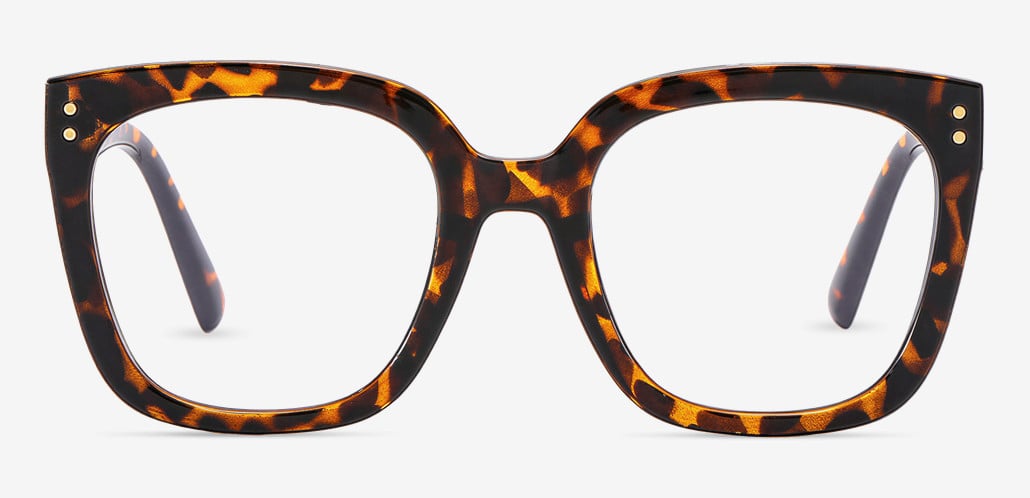
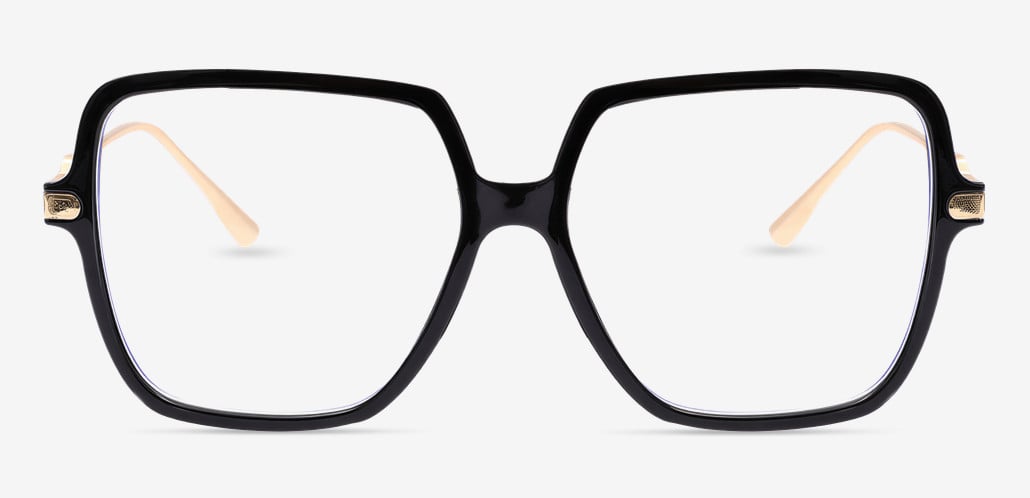
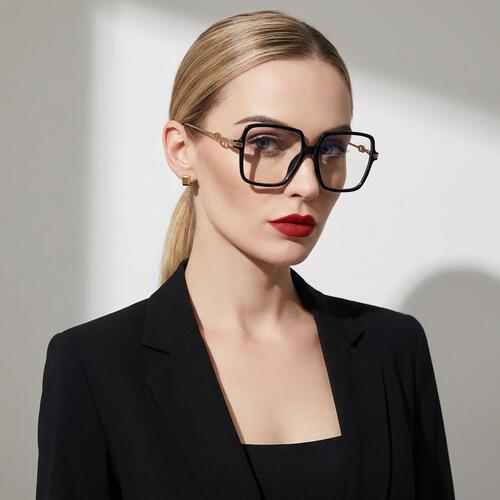
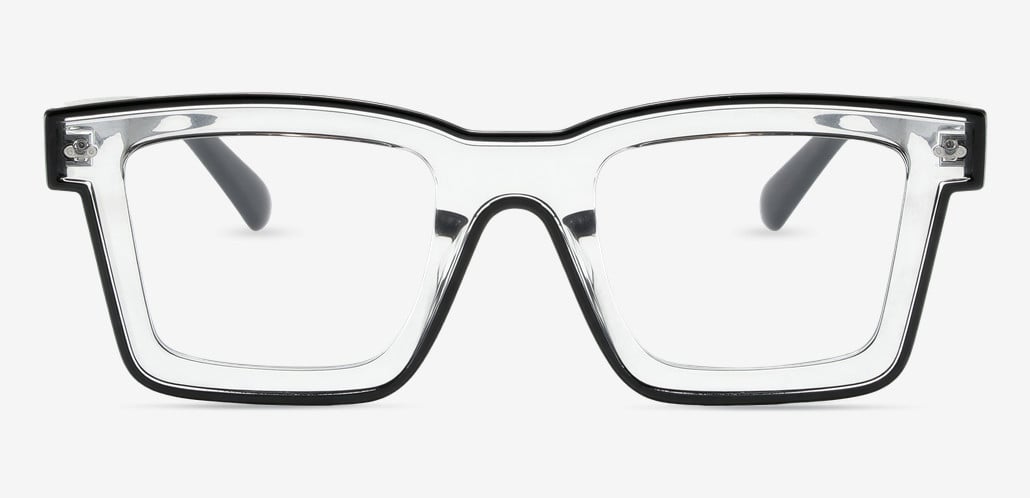
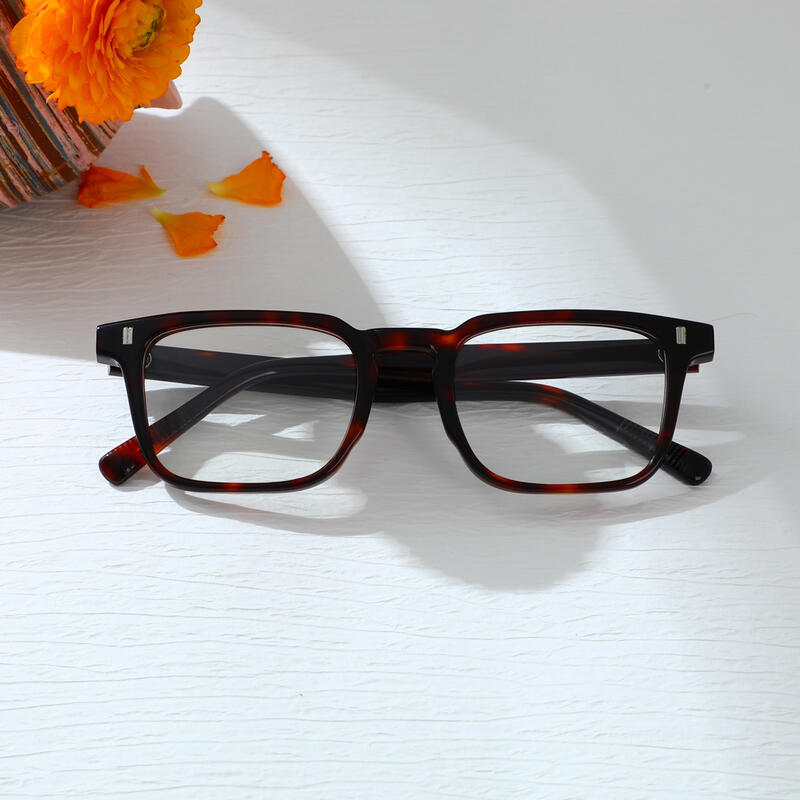
Steward — a black square acetate frame, the closest thing to a universal donor. Square and rectangular shapes read as deliberate, chosen eyewear rather than pharmacy hardware, and they suit the widest range of faces.
Carter — a black aviator. Aviator eyeglasses (not sunglasses) have quietly become one of the most-worn men's shapes, and they flatter wider and rounder faces where squares can feel boxy.
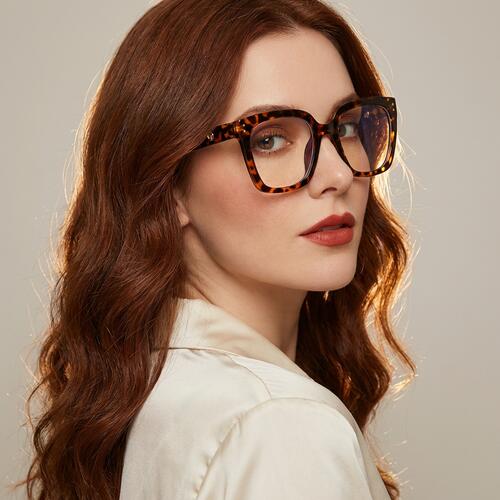
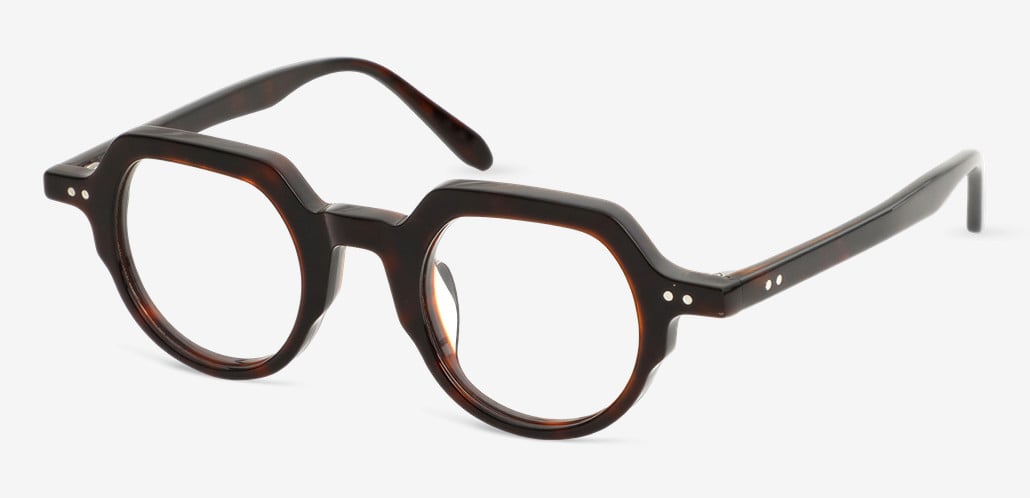
Barrie — tortoise and round, for men whose taste runs more architect than accountant. Round frames balance angular faces.
Troy — a black rectangle, the conservative pick that disappears into any wardrobe, office included.
If you're genuinely unsure, use the virtual try-on before ordering — it renders each frame on your own face, which settles the square-versus-aviator question faster than any face-shape chart.

If most of your "reading" is a screen
Two adjustments matter here, and only one of them is the one that gets marketed.
The unglamorous one: distance. A laptop sits farther from your eyes than a paperback — roughly arm's length instead of 14 to 16 inches. Readers powered for book distance are slightly too strong for screen distance, which is why some men find themselves leaning back from the monitor. If screens are your main use, consider ordering about a half step below your book-reading power (+1.50 instead of +2.00, say), or a dedicated pair set for intermediate distance.
The marketed one: blue light filtering. The honest state of the evidence in 2026 is mixed. The American Academy of Ophthalmology maintains that blue light from screens hasn't been shown to damage eyes, and studies on whether filters reduce eye strain point in different directions. What screen-heavy users more reliably report helping: anti-reflective coating, correct power for the distance, and taking actual breaks — the 20-20-20 habit of looking at something 20 feet away for 20 seconds every 20 minutes. At Aoolia, blue light filtering is an inexpensive add-on to your reading power rather than a separate product, so if you want it, you're not trading anything away. Just don't expect it to substitute for the distance adjustment above.
If you're sick of taking them on and off
The on-off cycle — glasses down to read, off to see who walked in, back on for the phone — is the single most annoying thing about single-power readers, and it's the problem the drugstore rack cannot solve at all.
Bifocal readers put reading power in the lower portion of the lens and leave the top clear for distance, so you look down to read and straight ahead to see the room. Progressive readers do the same without the visible line, adding an intermediate zone that happens to sit right at screen distance. Progressives take most people a few days of adaptation — the edges of the reading zone are narrower, and you learn to point your nose at what you're reading — but men who make the switch rarely go back to flipping glasses on and off.
Both builds are available across Aoolia's frames, including every style named in this guide, which is worth knowing: you don't choose between the frame you like and the lens setup you need.

If your glasses live a hard life
For workshop, jobsite, or outdoor use, frame material matters more than anything on the lens.
TR90 — a flexible nylon-based polymer — is the survivor's choice: it flexes under impact and weighs almost nothing. Titanium costs more but resists corrosion from sweat and won't lose its shape, which matters for a pair worn ten hours a day. Skip rimless designs for rough duty; exposed lens edges chip. Add spring hinges, and look at adjustable nose pads if you sweat through the bridge — over 270 frames in the men's catalog have them.
One more option for outdoor readers: tinted or photochromic reading lenses, for men who read plans, screens, or box scores in full sun.
A quick word on strength
Power guides deserve their own article — we've written one, linked below — but the short version: reading powers run +0.75 to +3.50, most men start in the +1.00 to +1.50 range in their 40s, and needs creep up roughly a quarter step every few years. Two things a chart can't tell you: whether your eyes match each other, and whether reading power is all you need. Both come from an eye exam.
For the full walkthrough, see How to Choose the Best Reading Glasses for Your Eyes.
When reading glasses aren't the answer
Presbyopia — the age-related loss of near focus that reading glasses correct — is a normal part of getting older and eventually reaches essentially everyone. But a few symptoms don't belong to presbyopia and shouldn't be handled with a stronger pair from the rack:
Blurriness in one eye only, or a sudden change in either eye
Halos around lights, especially at night
Frequent power increases in a short span
Headaches that survive correctly matched readers
Any of these is a reason to see an optometrist or ophthalmologist rather than a checkout page — including ours. The American Optometric Association recommends adults over 40 get comprehensive exams regularly even without symptoms, since this is the age range where glaucoma and early cataracts start appearing, often silently. An exam also hands you the exact numbers that make everything else in this guide work better.
The bottom line
The best reading glasses for men in 2026 aren't a single product — they're whichever pair eliminates your particular annoyance. Headaches point to per-eye power and correct pupillary distance. Constant losing points to a good primary pair plus cheap-but-correct backups. Style resistance points to frames you'd wear anyway. Screen fatigue points to distance-adjusted power before any coating. The on-off shuffle points to bifocals or progressives.
What's changed is that none of these fixes requires choosing between "cheap" and "made for your eyes" anymore. Start with your numbers, pick a frame you actually like, and let an optician check the result before it ships. Browse reading glasses for men — every frame supports per-eye powers, bifocal and progressive builds, and free virtual try-on.