
Why Round Frames Have a Reputation for Being Hard to Wear
Three reasons, and none of them are about fashion.
First, a circle has no angles to negotiate with. A rectangular lens can be a little wider or narrower and your eye forgives it, because the shape already has proportions of its own. A circle is only ever a circle, so any mismatch between the frame and your face reads immediately.
Second, round lenses put your eyes on display. The symmetry draws attention straight to the center of the lens — which is great when your pupils sit centered, and noticeably off when the frame is too small or too wide for your pupillary distance. More on that below, because almost nobody writes about it and it matters.
Third, wire-rim rounds carry a century of associations — scholars, musicians, film characters. That history is exactly why a well-fitted pair reads as deliberate and a badly fitted pair reads as dress-up.
None of this means avoid the shape. It means the sizing decisions carry more weight than they would on a rectangle. Here's how that plays out on each face shape.

Square Faces: The Easiest Yes
If your jaw is about as wide as your forehead and it turns a visible corner below your ears, round frames are close to a guaranteed win. The curve of the lens offsets the angles of the face, which is the effect every styling guide promises and — on this face shape — actually delivers.
You have the most freedom here. Medium lens diameters (47–50mm) in metal or acetate both work. The one mistake square-faced men make is going too delicate: a very thin wire circle on a heavy jaw can look underscaled, like the frame lost an argument with the face. If your jawline is genuinely strong, step up to a thicker acetate rim or a double-bridge metal frame and let the glasses hold their own.
Oval Faces: Yes, With One Trap
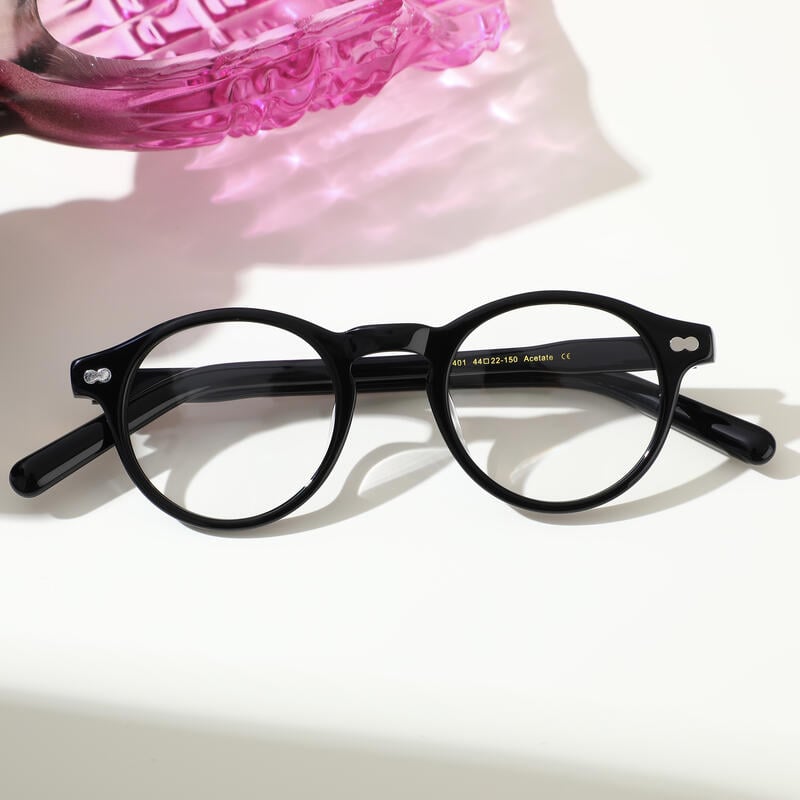
An oval face — slightly longer than wide, gently curved jaw — handles nearly every frame shape, and round is no exception. The verdict is yes without conditions on style.
The trap is size. Because oval faces are already longer than they are wide, a lens that's too small leaves empty space at the temples and visually stretches the face further. Stay at 47mm and up, and match the overall frame width to your cheekbones. Oval-faced men who think round glasses "just don't suit them" have usually only tried pairs a size too small.

Longer Faces: Round Frames Are Doing You a Favor
If your face is clearly longer than it is wide — sometimes called oblong or rectangular — round frames are one of the better tools available for adding width and breaking up vertical length. A round lens is tall relative to a standard rectangle, and that extra lens height shortens the visual distance between forehead and chin.
Go larger here: 50mm and up if the rest of the fit allows, with a rim that has some visible weight. The combination adds horizontal presence exactly where a long face needs it. Thin, small circles do the opposite — they float in the middle of the face and emphasize the length around them.
Round Faces: The Honest Answer
This is the question that brings most men to this page, so here is the answer without hedging: round glasses on a round face are workable, but they're not automatic, and the standard advice — "round faces need angular frames, full stop" — is a blunt rule that ignores how much the details change the outcome.
What makes the difference is whether the frame repeats your face's curve or interrupts it. Three adjustments push things toward interruption:
Go smaller in lens diameter. On a round face, 44–47mm sits better than the 50mm+ that suits longer faces. A smaller circle stops mimicking the face's outline and starts functioning as a detail on it.
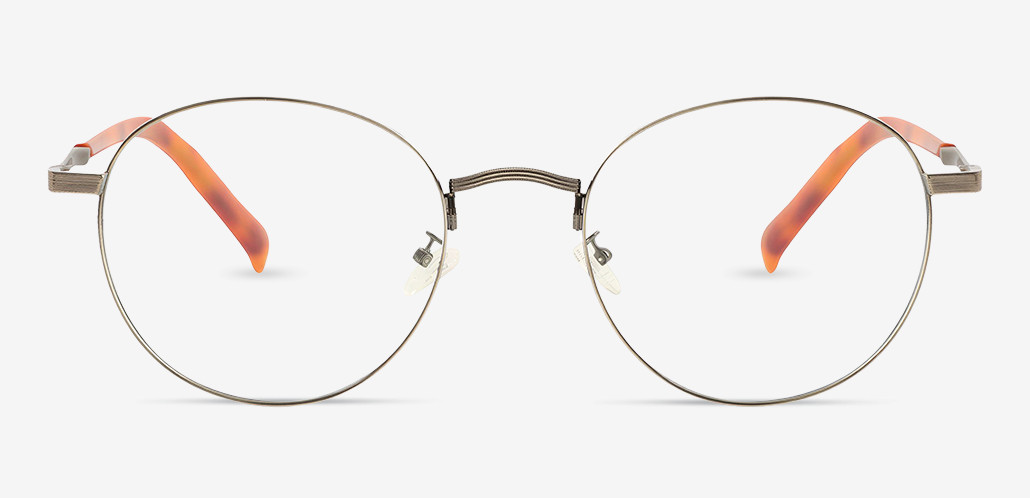
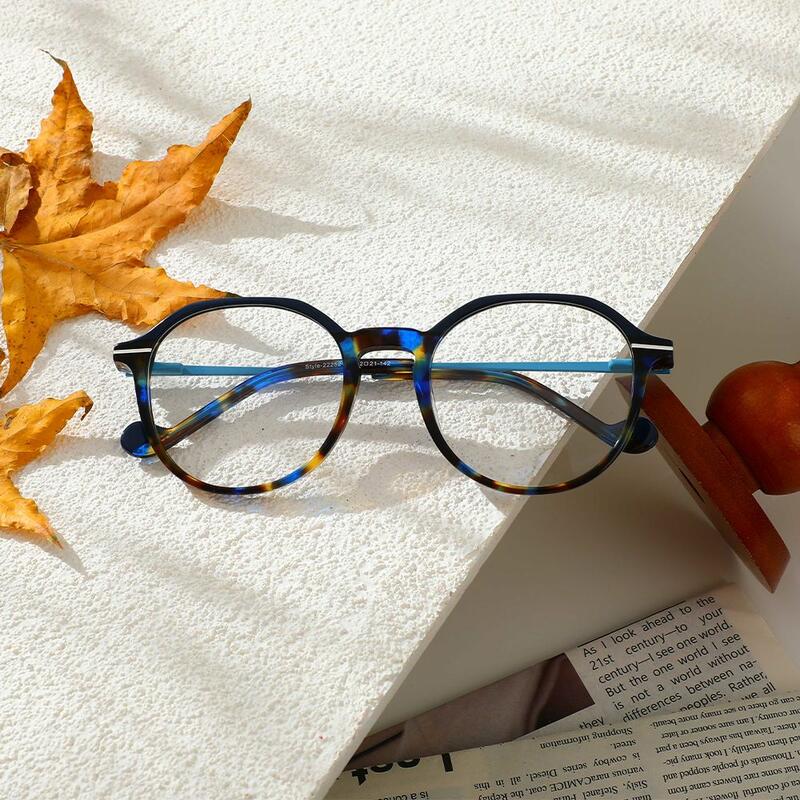
Add rim weight and darkness. A black or dark tortoise acetate rim draws its own firm line. It's the oversized thin gold wire circle — the frame that's all curve and no structure — that flatters a round face least.
Choose a keyhole bridge. That small notch above the nose adds a vertical, structured detail at the exact center of the face, where a round face otherwise has nothing but curves. It's a minor spec that most men never look at, and on this face shape it earns its keep.
If you make all three adjustments and the mirror still isn't convinced, the nearest exits keep most of what you liked about the look: a panto frame (round at the bottom, flattened along the top) or a browline reads 80% round while adding the horizontal line a round face is missing. And if you'd rather see it than theorize, every frame in Aoolia's collection of round glasses for men supports virtual try-on from the product card, which settles the question in about thirty seconds.
Heart-Shaped Faces: Yes — Keep It Small and Light
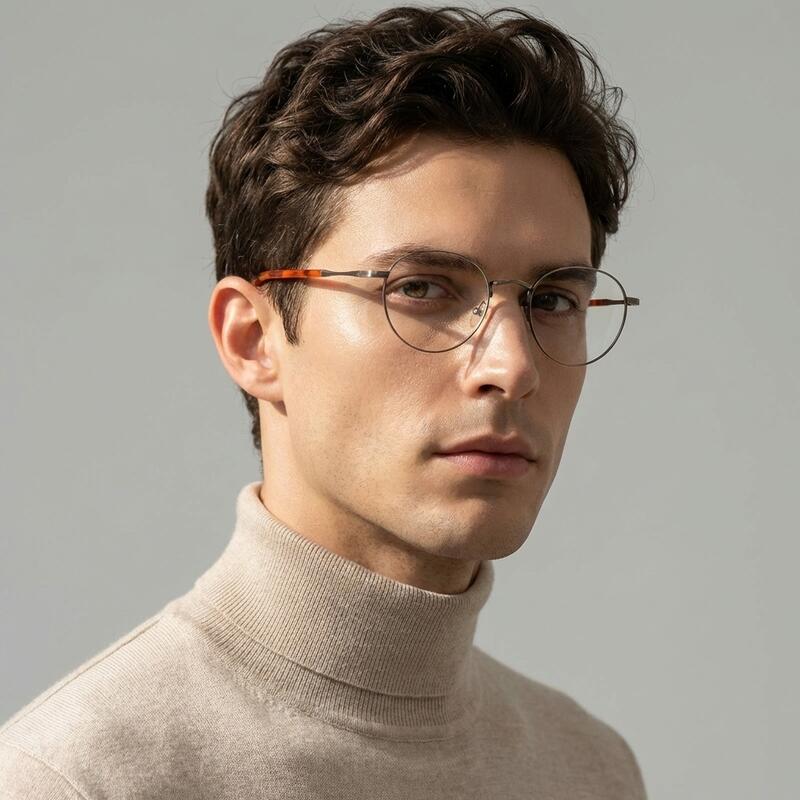
A wider forehead tapering to a narrower chin takes round frames well, because the curve softens the width up top. The adjustment runs opposite to the long-face advice: choose smaller diameters and thinner rims. A heavy, oversized round frame on a heart-shaped face concentrates even more visual weight in the upper half, where you already have plenty. Light metal rounds in the 44–48mm range are the sweet spot.
Diamond Faces: An Underrated Match
Wide cheekbones with a narrower forehead and jaw is the least common face shape and the one most guides skip. Round frames are genuinely one of its better matches: the lens curve softens cheekbone prominence, and because the forehead is narrow, round shapes don't add unwanted width where there isn't room for it. Medium diameters work; frames with detailing along the top edge (a browline accent, a contrast bridge) also do well by drawing the eye slightly upward.
Don't Know Your Face Shape? You're in the Majority
Most men can't confidently name their face shape, and the categories are blunt instruments anyway — plenty of faces are a square jaw with oval proportions, or a long face with round cheeks. Two questions get you most of the way there:
Does your jaw turn a corner or a curve? Corner means the square-face advice applies. Curve means read the round-face section.
Is your face clearly longer than it is wide? If yes, size up and follow the longer-face guidance regardless of what your jaw is doing.
If the answer is still "no idea," skip the taxonomy entirely and let a camera decide — try-on tools exist precisely because verdicts beat theory.

The Spec Almost Nobody Mentions: Your PD
Here's the detail that separates a round frame that photographs well from one that looks subtly off, and it has nothing to do with face shape. Pupillary distance — the millimeters between your pupils — determines where your eyes sit inside those two circles.
Round lenses make centering visible in a way rectangles don't. If your PD is on the wider side (above roughly 66mm) and you choose a very small lens with a narrow bridge, your pupils end up toward the outer edge of each circle. At low prescriptions this is optically harmless, but it's visibly asymmetric in photos, and it's why some men conclude small round frames "look weird" on them when the real issue is arithmetic. The fix is simple: with a wide PD, choose a slightly larger lens or a wider bridge measurement so your eyes land near the center of each circle. Your PD is printed on most prescriptions, and it's worth checking before you fall in love with a 42mm frame.
This is also a quiet argument for buying from somewhere that checks the numbers. At Aoolia, every prescription order is reviewed by a qualified optician before it ships — including whether the lens and PD combination actually centers your vision — which is the kind of step that catches a mismatch no styling guide can.
Where That Leaves You
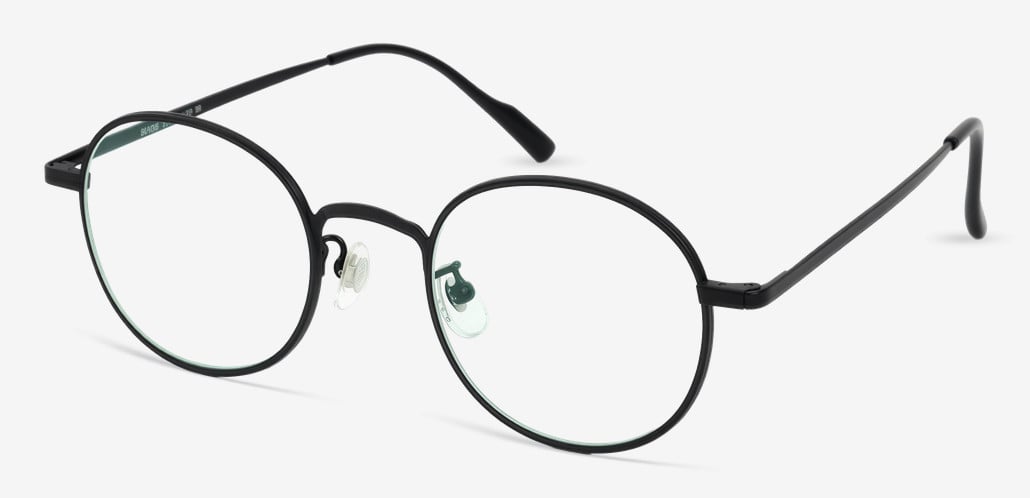
The reality check, compressed: square, long, and diamond faces should treat round frames as a strength. Oval faces just need to avoid sizing down. Heart-shaped faces should keep them small and light. Round faces can absolutely wear them — with a smaller lens, a darker rim, and a keyhole bridge doing the structural work.
Whichever section described you, the variables that decide the outcome are the same three: lens diameter, rim weight, and bridge style. Filter for them deliberately in the round glasses for men collection — the size and material filters exist for exactly this — and the "does this suit me" question stops being a gamble.