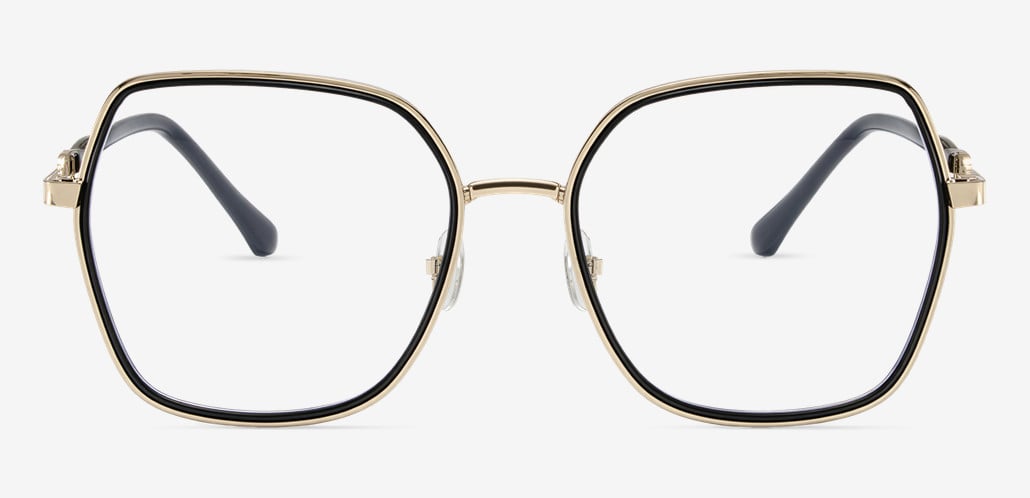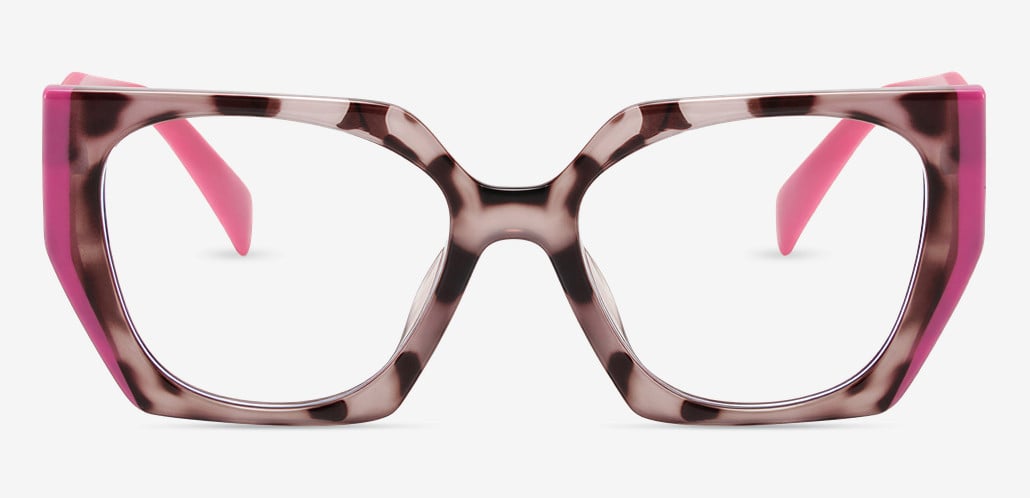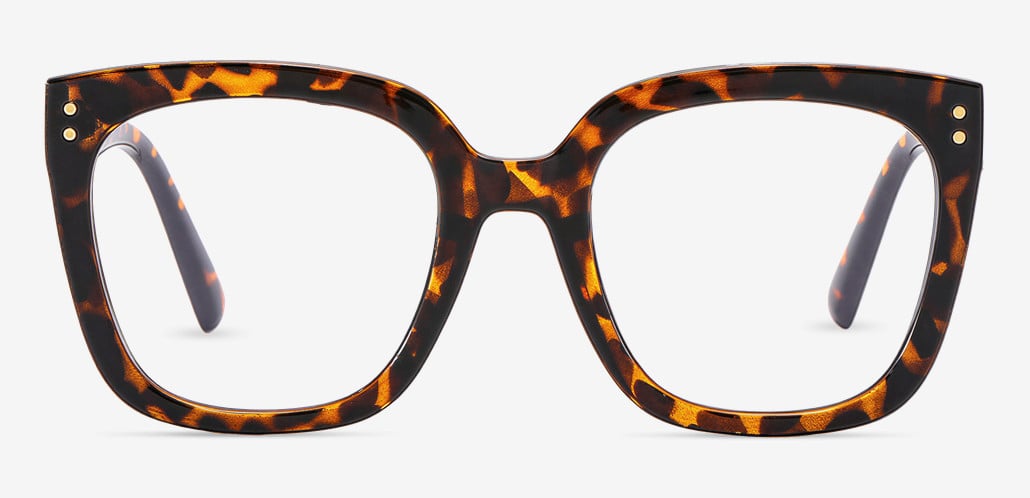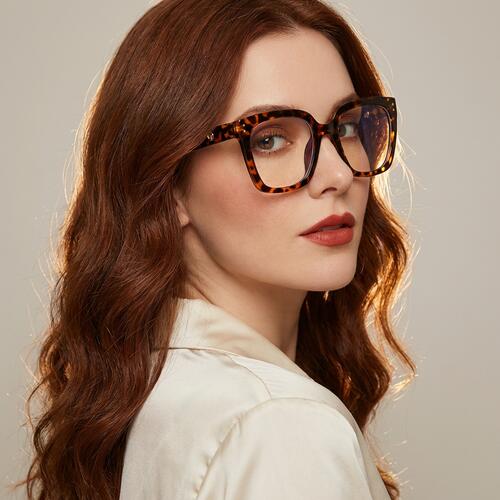

Somewhere in your early-to-mid forties, a familiar routine stops working. The restaurant menu drifts to arm's length. Your phone brightness creeps up. You take your glasses off to read a label, which feels backwards. An eye exam confirms what you suspected — presbyopia, the age-related stiffening of the eye's lens that makes near focus harder — and now you're standing at a fork most glasses wearers eventually reach.
One sign points to single vision spectacles: one prescription, one distance, done. The other points to progressive glasses: three viewing zones blended into a single lens, no line, no swapping.
Most comparison articles hand you a pros-and-cons table and wish you luck. This one takes a different approach. The right answer isn't in the lens specs — it's in how your particular day is built. So instead of comparing features, we'll walk the decision itself: the four questions that actually settle it, the cases where the conventional advice steers people wrong, and the middle paths that rarely make it into either sales pitch.
First, thirty seconds on what each lens actually does
Skip ahead if you know this part.
Single vision spectacles carry one corrective power across the entire lens. That power can be for any distance — driving, computer, reading — but it's the same everywhere you look through the lens. They're optically simple, which is why they're the least expensive to make, the easiest to adapt to, and the most forgiving of small fitting errors.
Progressive glasses stack a gradient of powers into one lens: distance correction at the top, intermediate (roughly arm's length — dashboards, monitors) through the middle, and reading power at the bottom. Your eyes learn to find the right zone by tilting your chin and lowering your gaze. The trade-off for that convenience is physics: blending three prescriptions into one surface creates soft, slightly blurred areas at the lower edges of the lens, and the usable reading zone is narrower than a dedicated pair of readers.
Neither is the "advanced" option. They're different tools. Which brings us to the questions that matter.
Question 1: How many distances does your day actually demand — at the same time?
This is the question that decides most cases, and it's more specific than "do you need help up close."
Count the switches, not the distances. A retiree who reads for two hours in the morning, gardens in the afternoon, and drives to dinner uses three distances — but in long, separate blocks. Two pairs of single vision spectacles (or one distance pair plus readers) handle that day with zero compromise, because the switching cost is a few seconds, a few times a day.
Now picture a pharmacist: reading a label, glancing up at a customer, checking a screen, back to the label — dozens of distance changes per minute. Swapping glasses at that pace isn't a minor inconvenience; it's unworkable. That's the person progressive glasses were invented for.
So map an ordinary Tuesday. If your near and far tasks live in separate chunks of the day, single vision remains a legitimate first-choice answer, not a budget compromise. If they're interleaved — teaching, retail, cooking from a recipe, parenting small children, any job with a clipboard — progressives start earning their price.
Question 2: How do you feel about a two-to-four-week adjustment?
Progressive glasses ask something of you that single vision spectacles don't: an adaptation period. Your brain has to learn a new visual habit — pointing your nose at what you want to see, lowering your eyes rather than your whole head to read, tolerating soft focus in your lower peripheral vision. Stairs feel strange for the first few days. Grocery store aisles, with their walls of small print at every height, are a common early complaint.
For most wearers this resolves within a couple of weeks. A minority — estimates in the optical industry commonly run somewhere around one in ten — never fully adapt and return to single vision or lined bifocals. You're more likely to land in that group if you're highly sensitive to motion, if your two eyes have very different prescriptions, or if you wait until your reading addition is strong before trying progressives for the first time. That last point is worth underlining: adapting to a mild add power in your mid-forties is far easier than jumping straight into a strong one at sixty. If you think progressives are in your future, earlier is genuinely easier.
Single vision spectacles, by contrast, work the moment you put them on. If you have a low tolerance for a "getting used to it" phase — or a job where day-one clarity is non-negotiable — weight this question heavily.

Question 3: What does each path cost over two years, not at checkout?
Sticker prices mislead here, in both directions.
A pair of progressive glasses costs meaningfully more than a comparable single vision pair — the lens design is more complex, and the fitting measurements are more exacting. Online, the gap is smaller than at a traditional optical shop, but it's still real.
The math people skip: the single vision path for a presbyope usually isn't one pair. It's a distance pair plus a reading pair, or a distance pair plus a computer pair, each replaced as your prescription drifts. Presbyopia typically keeps progressing until roughly your early sixties, so expect prescription updates every one to two years during that stretch. Two pairs updated on that cycle can quietly close the price gap with one progressive pair — and you're managing two frames, two cases, and the eternal question of where the other pair went.
Run your own numbers honestly. If you'd only ever buy one single vision pair and tough out the rest, single vision is cheaper. If you'd realistically end up with two or three task-specific pairs, the gap narrows enough that cost stops being the deciding factor.
Question 4: Is there anything in your prescription or fit that tilts the field?
A few situations change the calculus regardless of lifestyle:
A large difference between your two eyes (anisometropia) can make progressive adaptation harder, because the two lenses shift images by different amounts as your gaze moves down the lens. It doesn't rule progressives out, but it's worth discussing with your eye doctor before committing.
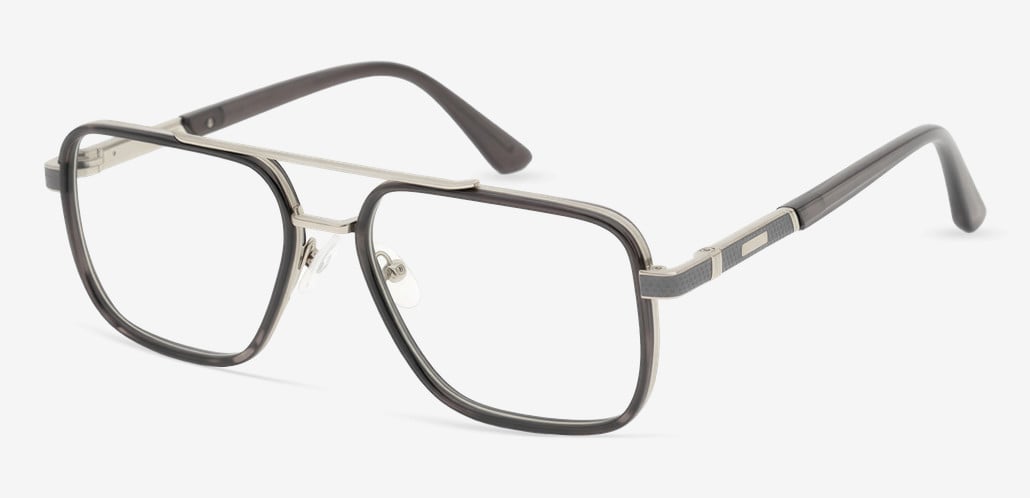
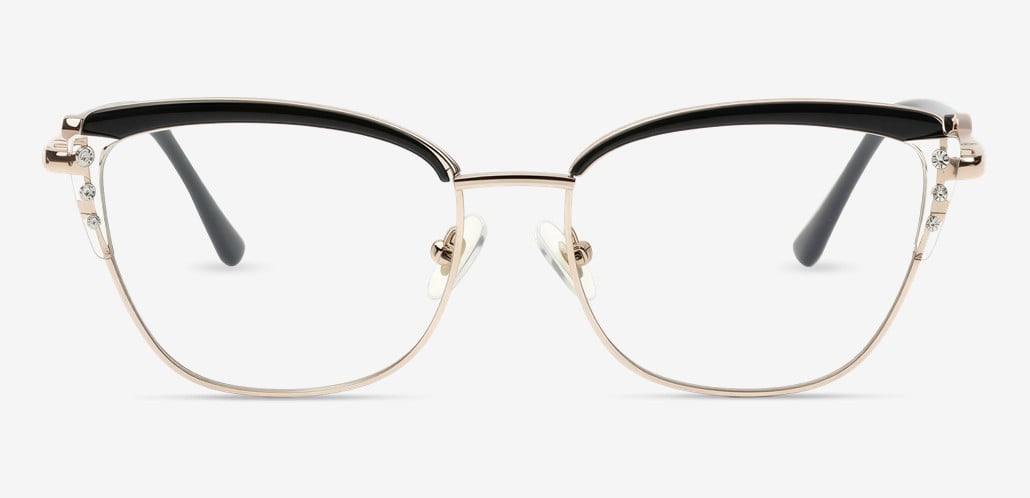
Very small frames shrink the vertical space available for a progressive corridor. If your style runs to narrow, shallow lenses, the reading zone may end up cramped. Progressive glasses generally want a lens with reasonable vertical height — a fitting detail, but one that constrains frame choice.
Precision measurement matters more for progressives. Single vision spectacles need an accurate pupillary distance. Progressives additionally depend on fitting height — where your pupil sits vertically in the chosen frame — because the whole power gradient is positioned relative to your eye. When ordering online, this is the measurement to be careful with: photograph-based measurement tools and clear frame dimension data exist for exactly this reason, and a frame that fits your face properly (not sliding down your nose) protects the accuracy of everything else.
Where the conventional advice gets it wrong
Two corrections to the standard script.
"You have presbyopia, so you need progressives" — not necessarily. If your distance vision is still good and only near work has gone soft, a pair of single vision spectacles set for reading may be all you need for years. Plenty of people in their forties own exactly one pair of glasses: readers. Progressives solve a switching problem; if you don't have one yet, you don't need the solution yet.
"Progressives replace all your other glasses" — usually not quite. The intermediate zone in general-purpose progressive glasses is a corridor, not a picture window. If you spend six or more hours a day at a monitor, many progressive wearers end up adding a dedicated computer pair anyway — either single vision spectacles set to screen distance, or an office/occupational lens design that trades away distance vision for wide near and intermediate zones. Progressives are an excellent everywhere-lens; they're a mediocre all-day-desk lens.

The middle paths worth knowing
The choice isn't strictly binary, and the hybrid setups are often the happiest:
Distance single vision + drugstore-style readers — the lowest-cost entry into presbyopia, fine while your reading demand is light and occasional.
Progressives for life + single vision for the desk — the most common two-pair combination among people with screen-heavy jobs, for the reasons above.
Progressives for daytime + single vision spectacles for one demanding task — night driving is the classic example. Some wearers who notice the soft peripheral zones most on dark highways keep a dedicated distance pair in the car.
Office lenses as a third category — if your world is a room (desk, colleagues, whiteboard) rather than a road, occupational designs cover near through mid-range with far wider zones than general progressives. They're not legal for driving, which is the trade.

A short answer key
Is one option optically "better"? No. Single vision gives you the widest, sharpest field at one distance; progressives give you three distances with narrower zones. It's breadth versus depth.
Can a first-time glasses wearer start with progressives? Yes, and first-timers often adapt easily — they have no single-vision habits to unlearn.
Do progressive glasses work for astigmatism, or strong prescriptions? Generally yes; both lens types accommodate cylinder correction and high powers, though strong prescriptions benefit from thinner high-index materials in either case.
How do I know my prescription supports both options? Look for an ADD value on your prescription. Its presence means your eye doctor has measured a reading addition — the ingredient progressives are built from, and also the number used to calculate a dedicated reading pair.
Deciding
If your near and far worlds are separate, your budget is tight, or the idea of an adjustment period is a dealbreaker: start with single vision spectacles, and know that adding a second pair later is a small, cheap step — not a failure of planning.
If your day is a constant braid of distances, your reading addition is still mild, and you can give a new pair two patient weeks: progressive glasses will likely become the thing you forget you're wearing, which is the highest compliment a lens gets.
And if you're genuinely torn, your most recent prescription already contains the tiebreaker. Bring your actual Tuesday — the screens, the driving, the small print — to your next eye exam, and let the way you live pick the lens. The good news at this particular fork in the road: both paths are well paved, and neither is permanent.
Your prescription includes an ADD value and you're ready to try either route? Aoolia's optician-verified frames support both single vision and progressive lens options, with virtual try-on to check fit before you order.