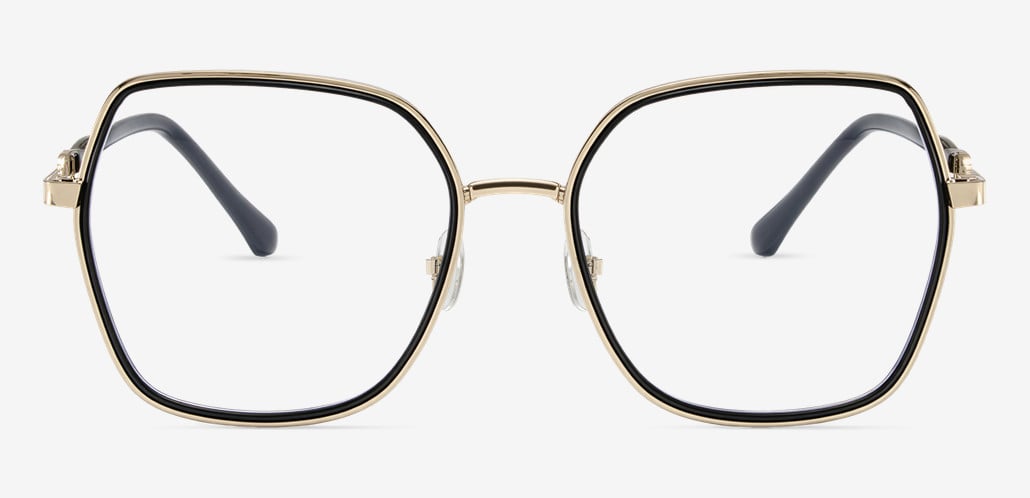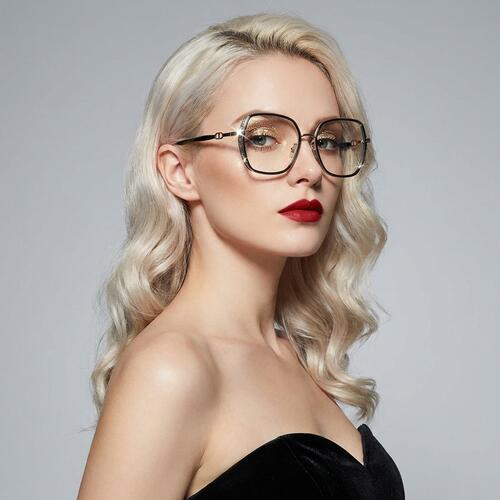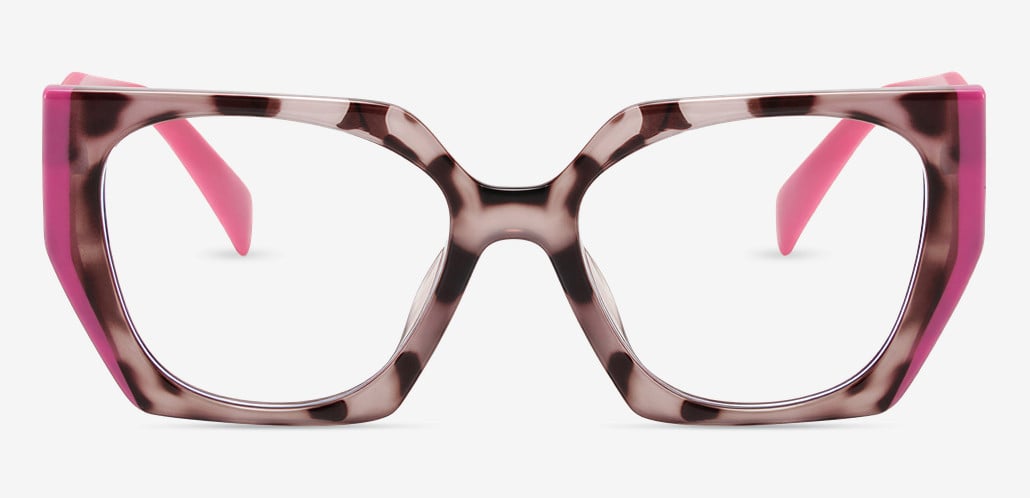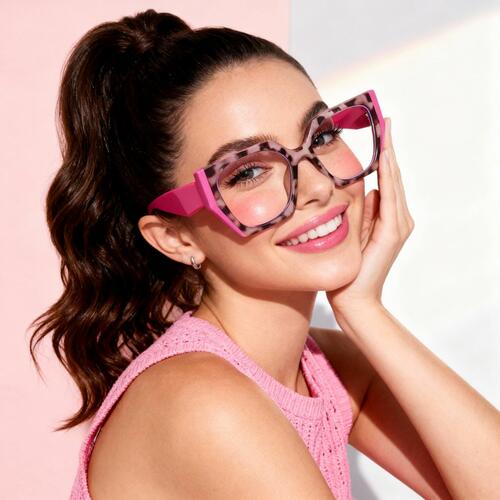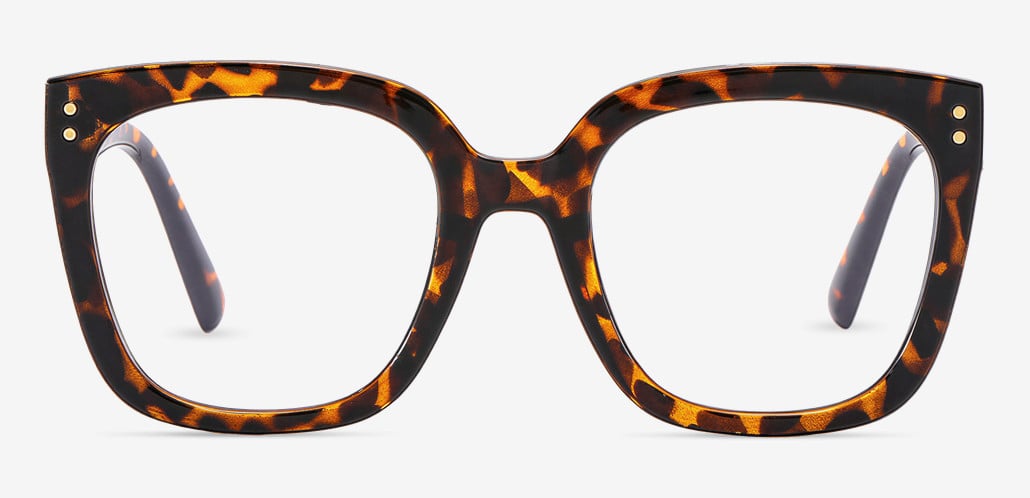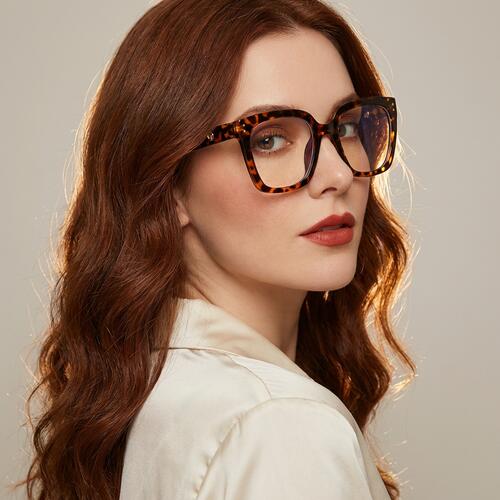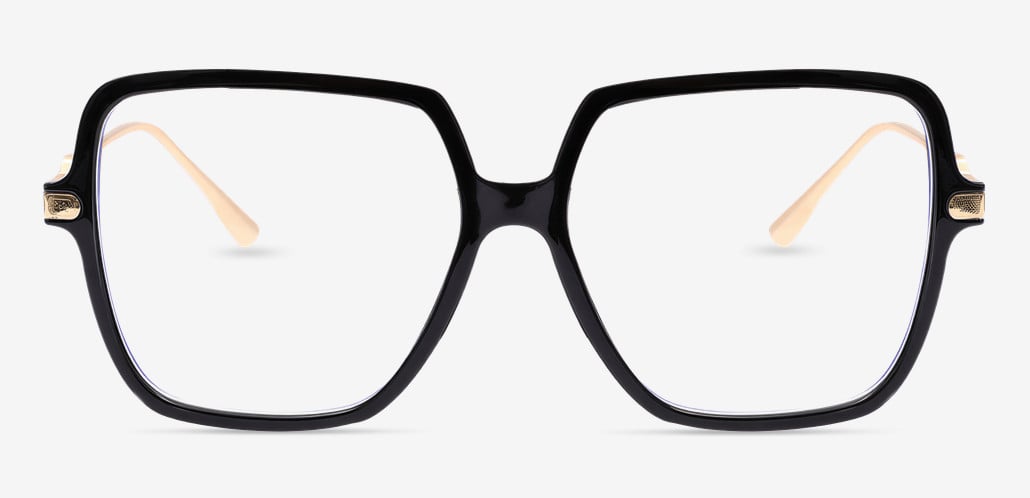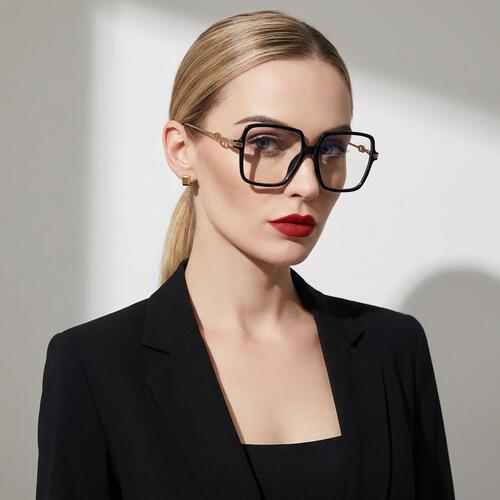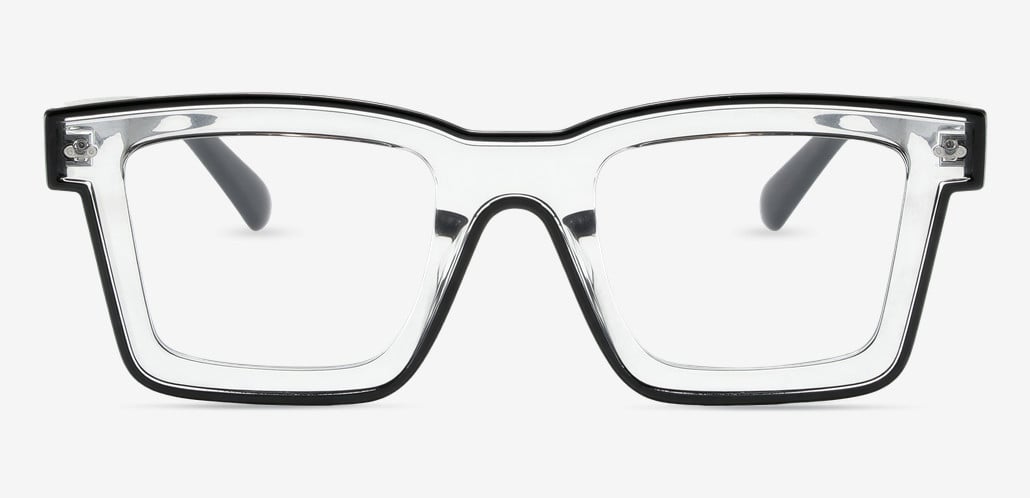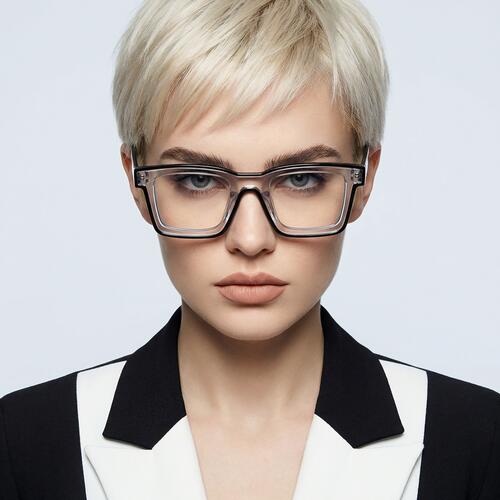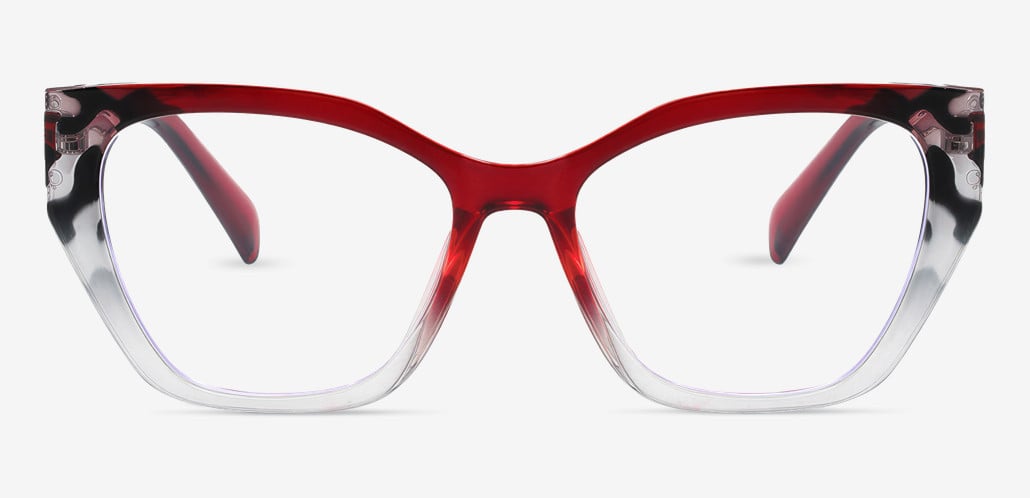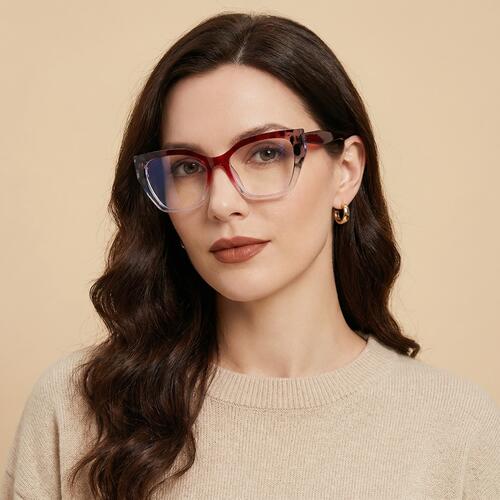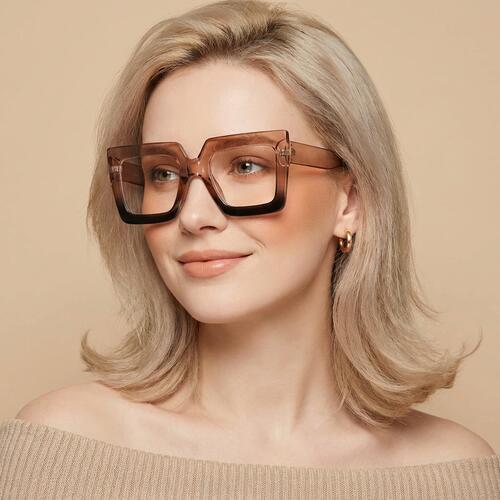

Here's the short answer most people don't get when they ask me this: there's a square frame that suits almost every face shape. Square is one of the most face-flexible silhouettes in the case. The catch is that "square glasses" is a label, not a fit — and two pairs that share it can look completely different on the same face.
That's the part the face-shape charts skip. They tell you square frames "suit round and oval faces" and "balance soft features," which is true as far as it goes. But I've watched plenty of round-faced customers buy exactly the frame the chart recommended and still set it back on the counter, because the pair they grabbed was the wrong kind of square. The chart got the category right and the execution wrong.
So instead of asking "is my face shape right for square glasses," I want to teach you to ask the two questions that actually decide it: how sharp are the corners, and how tall is the lens? Get those right and square works on you. Get them wrong and it won't — no matter what your face shape is.
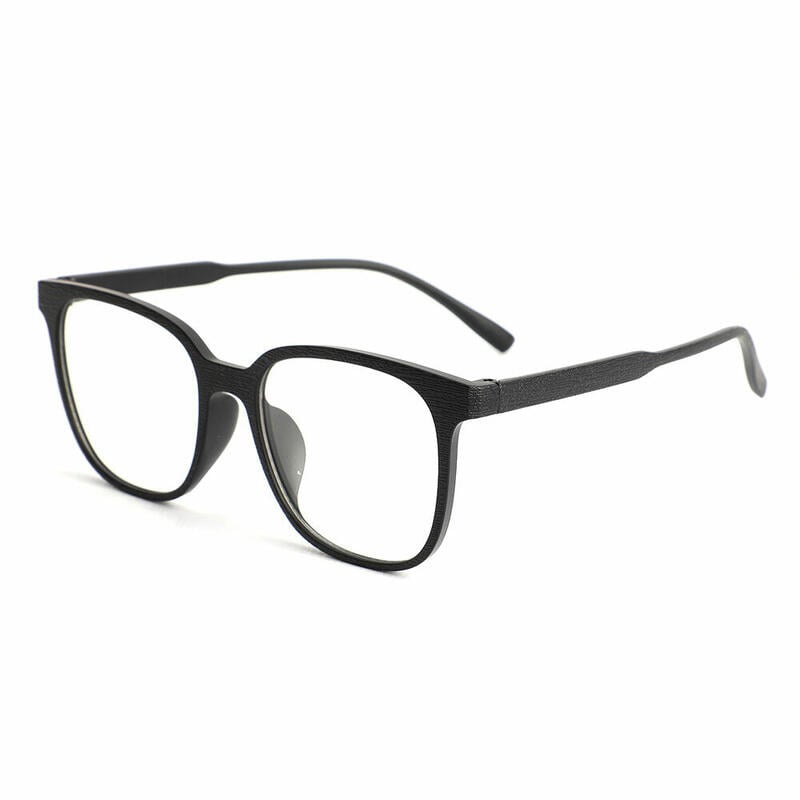
First: are you sure you want a square — and not a rectangle?
This trips people up constantly, and it's worth thirty seconds before you go further, because half the "square glasses look weird on me" complaints I hear are actually rectangle problems wearing the wrong name.
A true square frame is roughly as tall as it is wide — the lens is close to a 1:1 proportion. A rectangle is noticeably wider than it is tall. On the wall they look like cousins. On your face they behave like opposites. A rectangle stretches your features sideways and shaves visual length off a long face. A square does the reverse: because it claims real vertical space, it can shorten a long face beautifully, but it can also crowd a short one.
A quick gut check: pull up a frame's lens width and lens height. If they're within a few millimeters of each other, you're looking at a real square and everything below applies. If the width is meaningfully larger than the height, that's a rectangle, and the geometry works differently enough that it deserves its own conversation. Aoolia's Sylvia is a clean example of a true square — 53mm lens width against a 47mm lens height, so it reads as a deliberate square block rather than a wide band. Knowing which one you're actually shopping for saves you the frustration of blaming your face for a proportion mismatch.

The lever nobody teaches: how square is the square?
This is the one that matters most, and it's the one every trend article waves at without explaining. "Square" isn't a single shape. It's a spectrum that runs from a sharp, near-90-degree corner at one end to a soft, rounded corner — what designers call a squircle — at the other. Where a frame sits on that spectrum changes who it flatters more than your face shape does.
Think of corner sharpness as a contrast dial. A square frame works by introducing angles your face doesn't already have. The sharper the corner, the louder that contrast. The softer the corner, the gentler it gets. So the real fitting logic is simple and almost nobody states it plainly: match the frame's angularity inversely to your face's angularity.
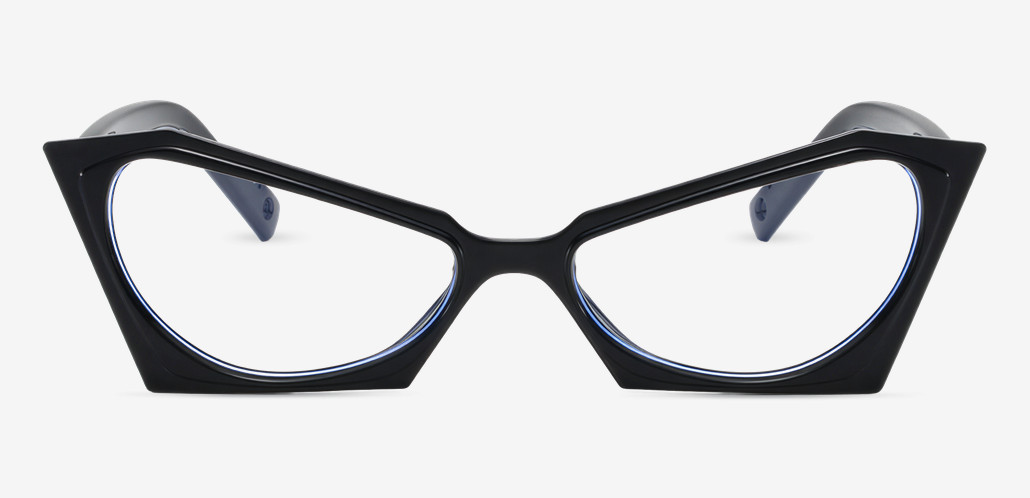
If your face is on the softer, rounder side — round, soft-oval, fuller cheeks, a gentle jaw — you have room to push toward the sharp end of the dial. The hard corner gives you the definition and structure your features don't supply on their own, and the contrast is what makes the frame look intentional rather than incidental. This is where a crisp, geometric square earns its keep. Something like Aoolia's Wade, which is built around a genuinely sharp, angular line, does the heavy lifting here. A soft frame on a soft face just disappears.
If your face already has angles — a defined jaw, a squarer hairline, strong cheekbones, a diamond or pronounced rectangular structure — the charts will tell you to avoid square frames entirely and reach for round. Ignore that. You can absolutely wear square; you just slide toward the soft end of the dial. A rounded-corner square echoes your structure without amplifying it, so you get the clean, modern look of a square frame without the "everything on my face is a right angle" effect that a sharp pair would create. Aoolia named a frame for exactly this need — the Lilli "Square Round" is literally a square silhouette with the corners rounded off. That's the frame I'd hand an angular-faced customer who likes the square look and was told they couldn't have it.
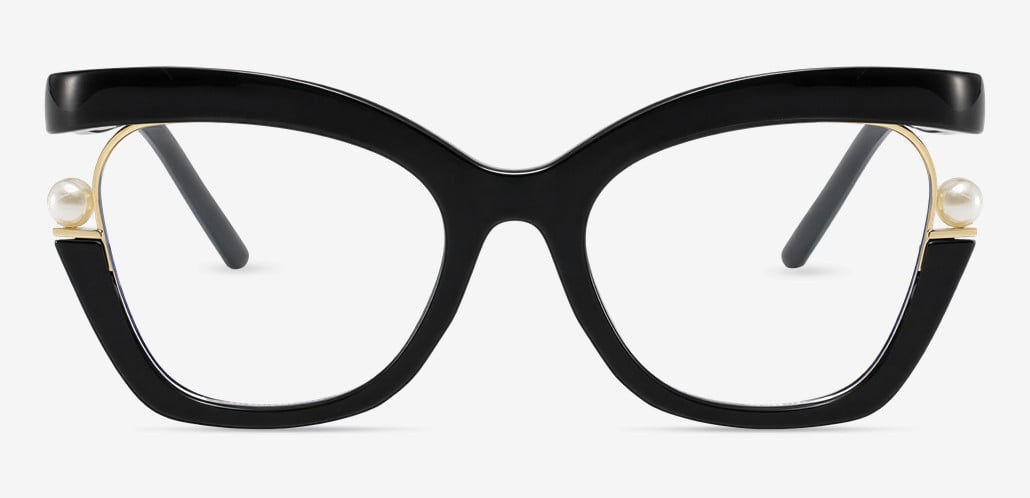
And if you're somewhere in the middle — which is most people, because most real faces are blends rather than textbook shapes — the safe default is a true square with a clean but not razor-sharp corner. Aoolia's Dunlop sits right in that pocket: defined geometric lines, no exaggeration in either direction. When you genuinely can't decide, the honest, middle-of-the-dial square is the lowest-risk choice in the case.
Notice what just happened. We covered round, oval, square, diamond, and rectangular faces — but not as a list of "your shape → your frame" pairings. We organized around the one variable you control at the point of purchase. That's the difference between advice you can act on and a chart you have to memorize.

The second lever: how tall is the lens?
Because a square frame owns vertical space the way a rectangle never does, lens height is doing real work on your face — and this is where square frames part ways completely from their rectangular cousins.
If you have a longer or more oblong face, a square is quietly one of your best options, which surprises people. A taller lens fills vertical space and visually breaks up the length, where a short, wide frame would only emphasize it. You want a frame with genuine lens height. Sylvia's 47mm lens height is a good benchmark for what "tall enough to shorten a long face" looks like.
If your midface is short — not much distance between your brow and the tip of your nose, or eyes that sit close to your cheeks — a deep square is a trap. The bottom rim drops onto your cheeks, and because a square frame has a long, straight bottom edge, that contact is obvious in a way a curved frame would hide. The fix is a shallower lens height and a careful look at where that bottom rim lands when you smile. This is also where bridge fit stops being a footnote: a frame that slides down even a couple of millimeters lands that straight edge right on the cheek. If you have a lower or wider nose bridge, look for a narrow bridge measurement — Wade's 10mm bridge sits high and snug, where Sylvia's 18mm bridge is built for a taller, more prominent nose. Match that number to your face and the whole frame stays where it belongs.
This is the part I wish more people understood before they shop: on a square frame, vertical fit is the make-or-break, because the shape lives or dies on whether that flat bottom edge sits clean above your cheek or rests on it.
Where square frames genuinely don't work — and I'll say it plainly
I don't believe any shape flatters everyone, and square is no exception. A few honest limits.
A sharp, wide, heavy square on a small or very full face will swallow it — the frame becomes the headline and your features become the footnote. If your face is petite, prioritize a smaller overall frame width before you worry about anything else; a 143mm frame on a narrow face is going to look borrowed.
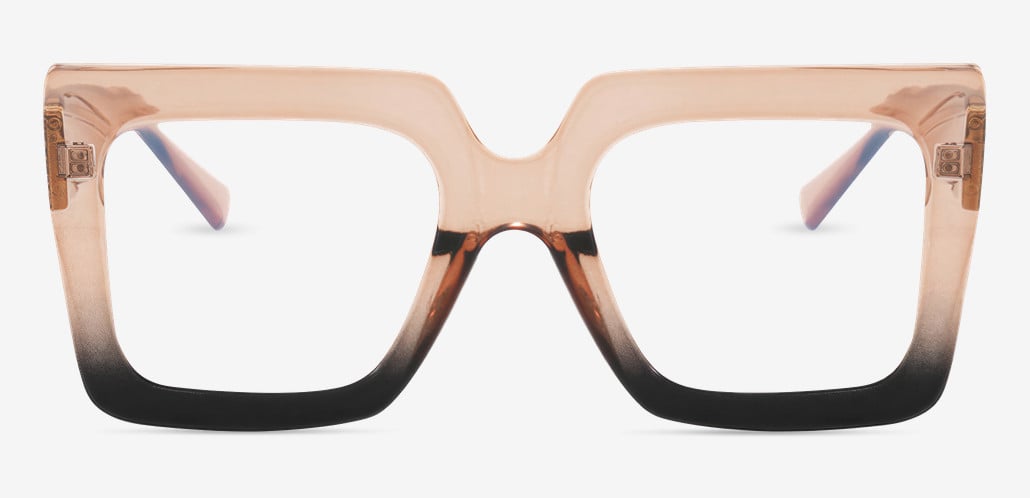
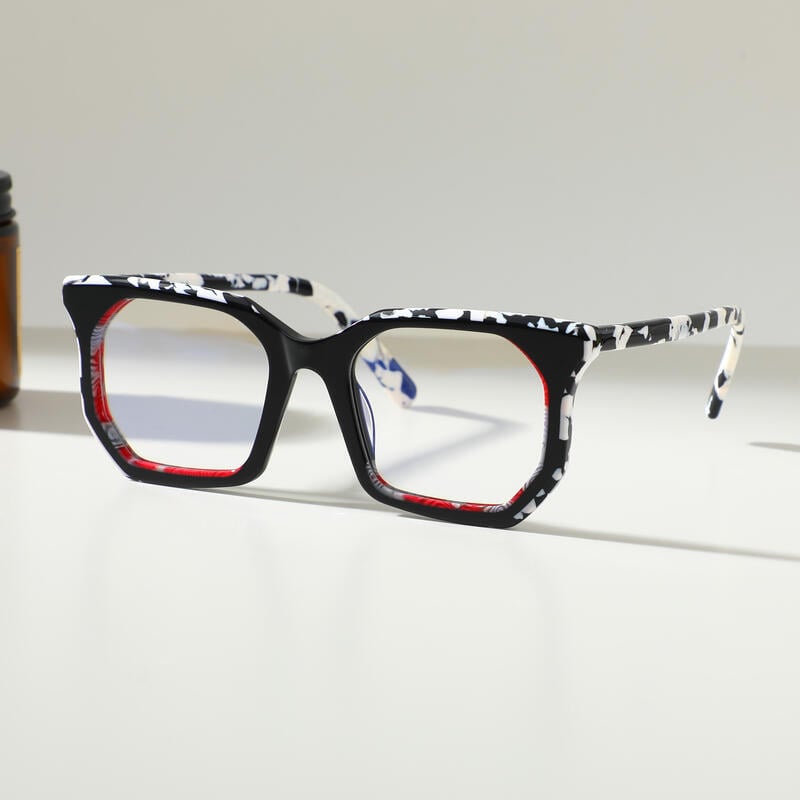
A glossy, bold-colored sharp square reads as a statement piece, not a daily driver. That's not a flaw, but be honest with yourself about whether you'll reach for it on a tired Tuesday. If you want square to be your everyday frame, a tortoise, clear, or neutral version of a softer square — Aoolia's Bronte in black-clear, or the champagne Quie — wears far more quietly than a high-shine, hard-cornered black.
And if your features are noticeably asymmetric — one brow higher, a slight set to the nose — know that a square frame is the least forgiving shape for it. All those parallel straight lines act like a level held up to your face; they make symmetry, or the lack of it, more visible. It's not a dealbreaker, but a softer corner forgives more than a sharp one.
The 30-second test before you buy
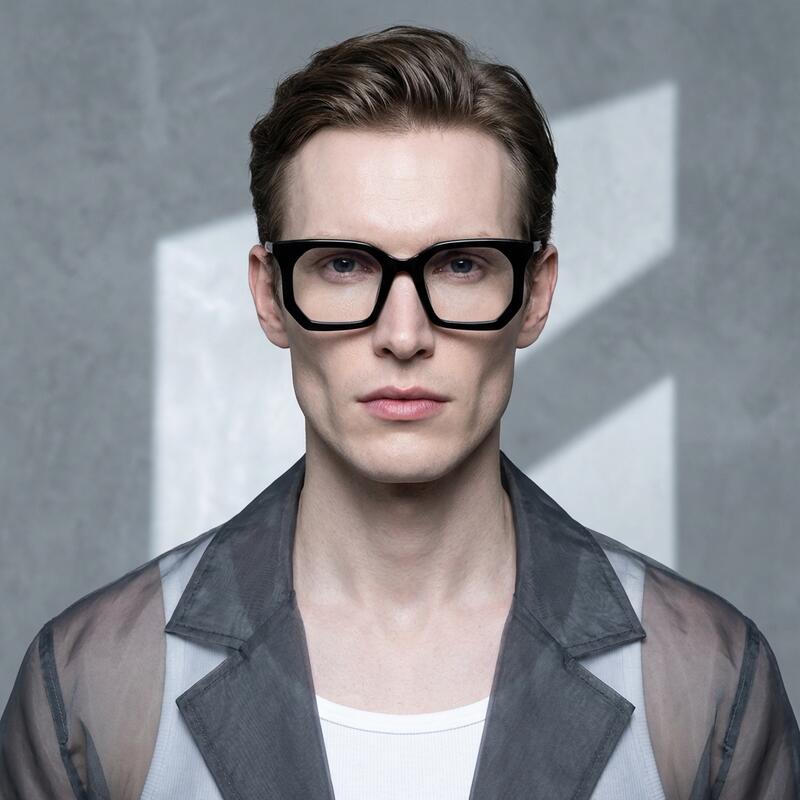
Forget the printable face-shape chart. When you try a square frame on — virtually with Aoolia's try-on tool or in the mirror — do two quick things.
First, smile naturally and watch the bottom edge of the frame. If it lifts up and touches your cheeks, the lens is too deep or the bridge is too loose for your face; go shorter or narrower in the bridge. Second, look at the corners against your own jaw and hairline. If your face is already angular and the frame's corners look like they're competing with it, soften them. If your face is round and the frame looks like it's melting into your features instead of defining them, sharpen them. That's the whole method. It takes longer to read than to do.
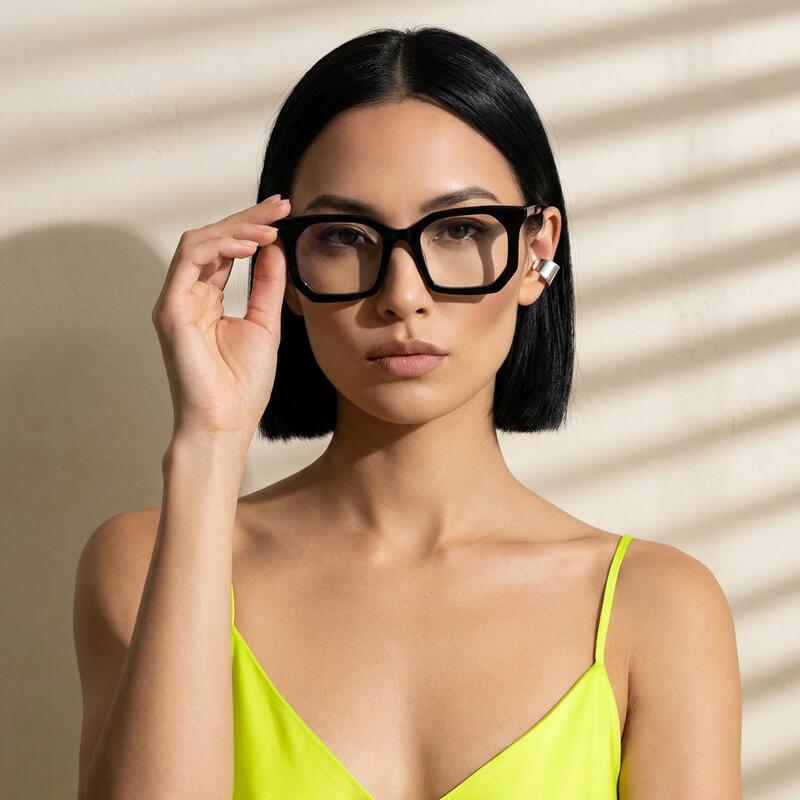
So — are square glasses right for your face?
Almost certainly yes, with the right two adjustments. Square is the most adaptable of the structured shapes precisely because it comes in sharp and soft, tall and shallow, loud and quiet. The face-shape charts treat that range as noise and hand you a single verdict. It's not noise — it's the entire decision. Pick the corner sharpness that contrasts your face rather than copies it, pick a lens height that fits your midface rather than fights it, and a square frame will look like it was made for you. Browse the full square eyeglasses collection, narrow by the two levers above, and you'll skip the part where you blame your face for a fit problem.
A few questions I get at the counter
"The internet says my face shape should avoid square. Is that real?"
It's an oversimplification. Those charts assume every square frame has a sharp corner, which isn't true. An angular face should avoid a sharp square, not square altogether — a rounded-corner square is often a great match.
"What's the difference between square and rectangle glasses, really?"
Proportion. A square is close to as tall as it is wide; a rectangle is clearly wider than tall. Compare a frame's lens width and lens height — if they're close, it's a square, and it'll add vertical balance rather than horizontal stretch.
"Are square frames still in style, or did I miss the window?"、
They're one of the defining frame shapes of 2026, particularly in acetate and clear. This isn't a trend you're late to; it's closer to a staple right now.
"I have a small face. Can I still wear square?"
Yes — lead with overall frame width first. Choose a smaller, softer-cornered square so the frame frames your features instead of overwhelming them, and check that the frame width roughly matches the width of your face.