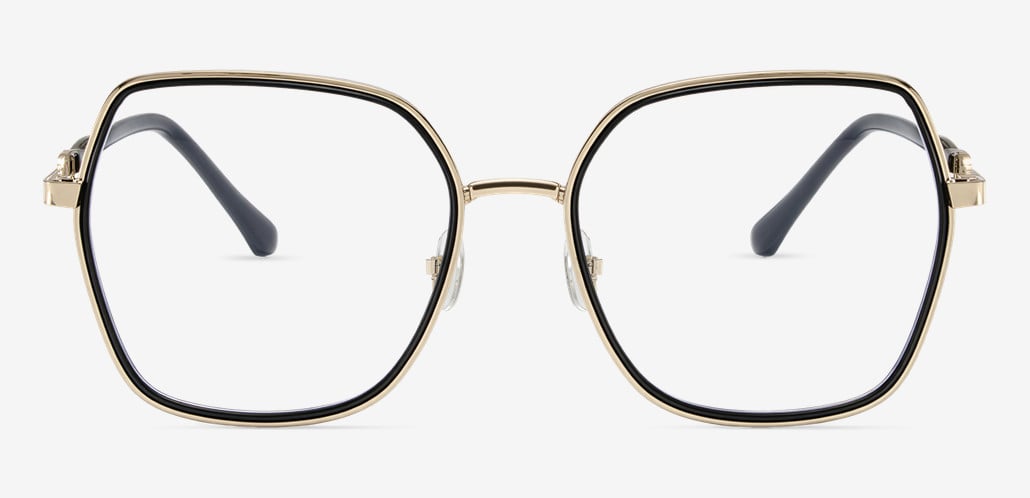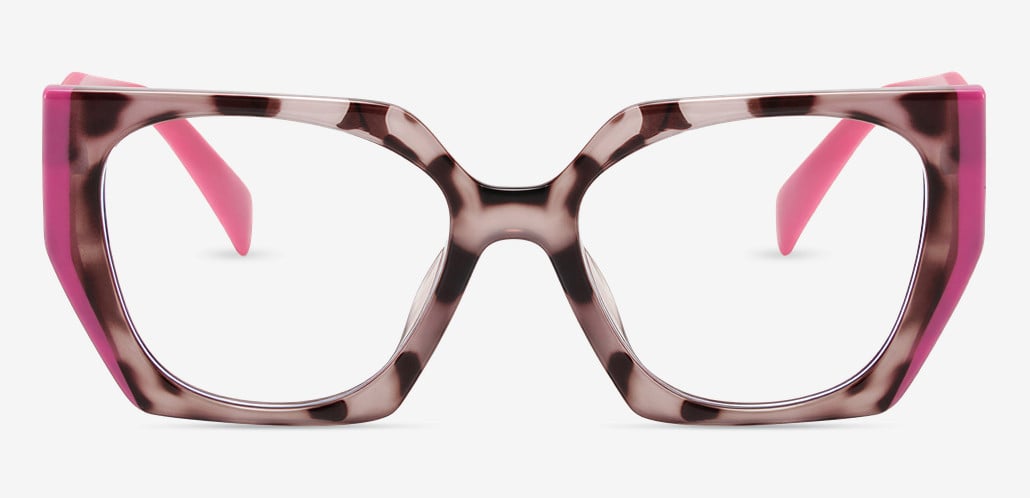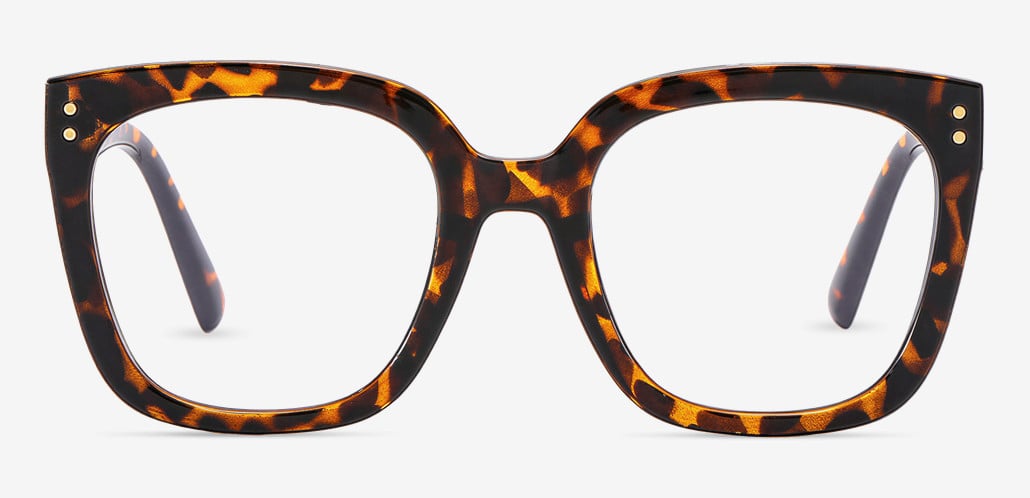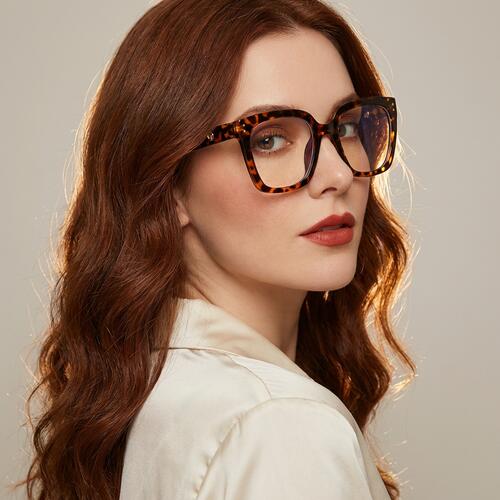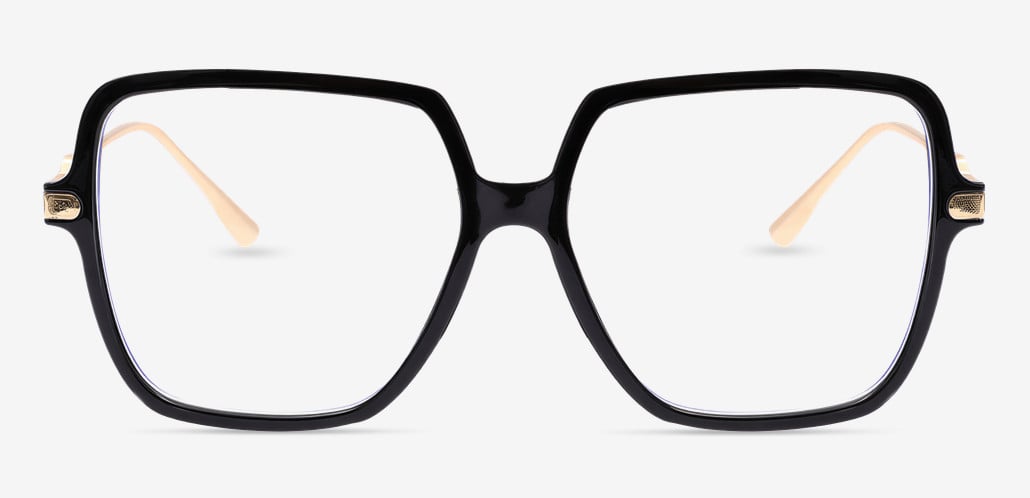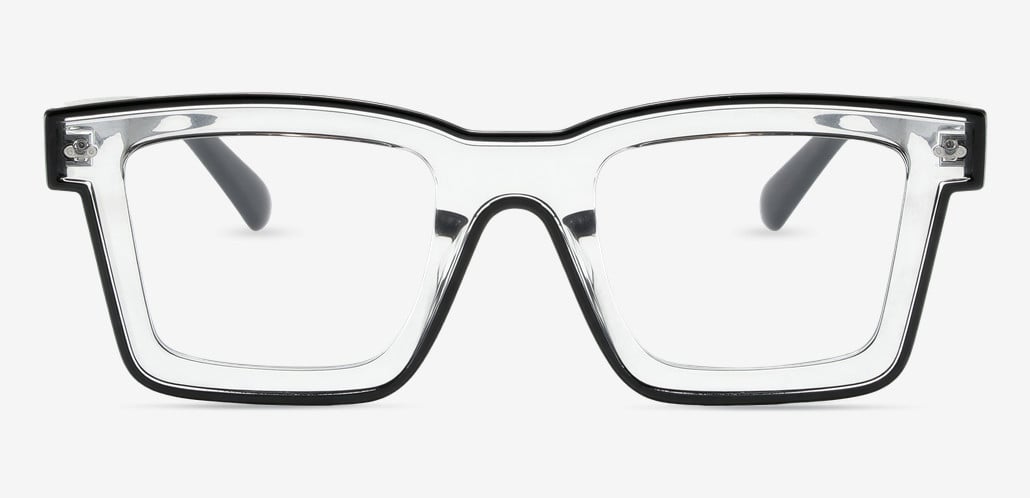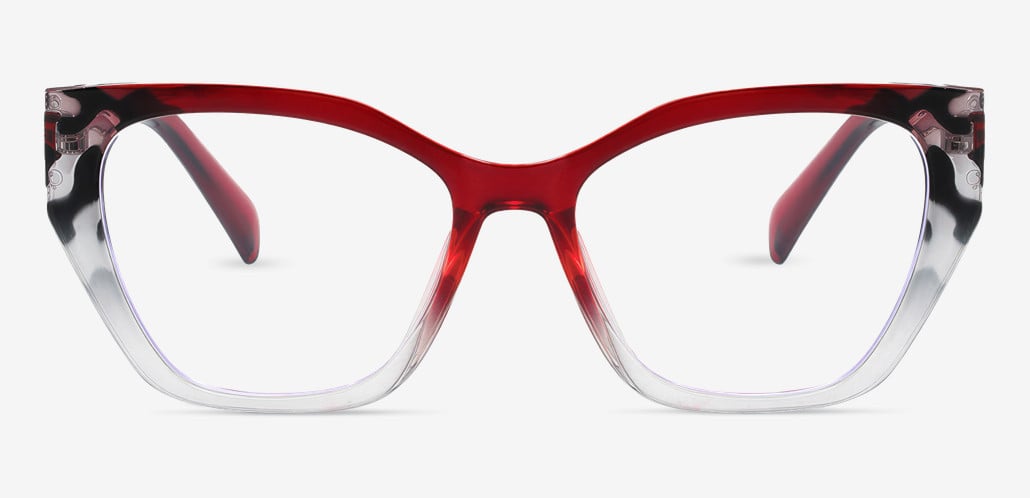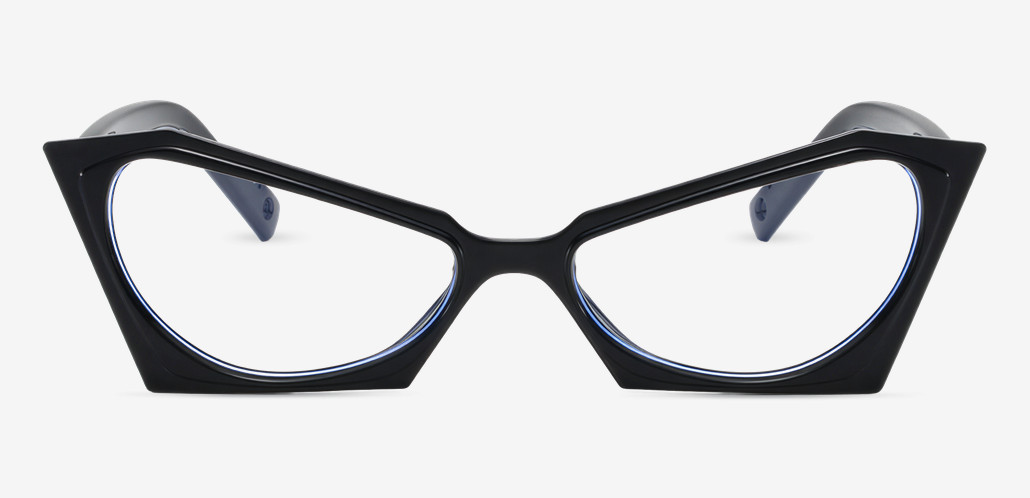

Almost every guide to low bridge glasses opens the same way: stand in front of a mirror, lay a finger across the top of your nose, and see whether it lands above or below your pupils. It's a reasonable screening test. It's also the wrong instrument for the question most people are actually asking, which isn't is my bridge low but why do my glasses keep doing this, and will a different frame stop it.
There's a better instrument, and it's already on your face. The pair you're wearing right now has spent months running an experiment on your nose. Where it sits at 9am versus 4pm, where it leaves marks, what it touches when you smile — that's evidence, and it's more specific than anything a mirror will tell you. This piece is about how to read it, what low bridge glasses actually change, and — the part almost nobody writes about — who should stop looking at bridge fit entirely, because their problem is somewhere else.
What Low Bridge Glasses Actually Are
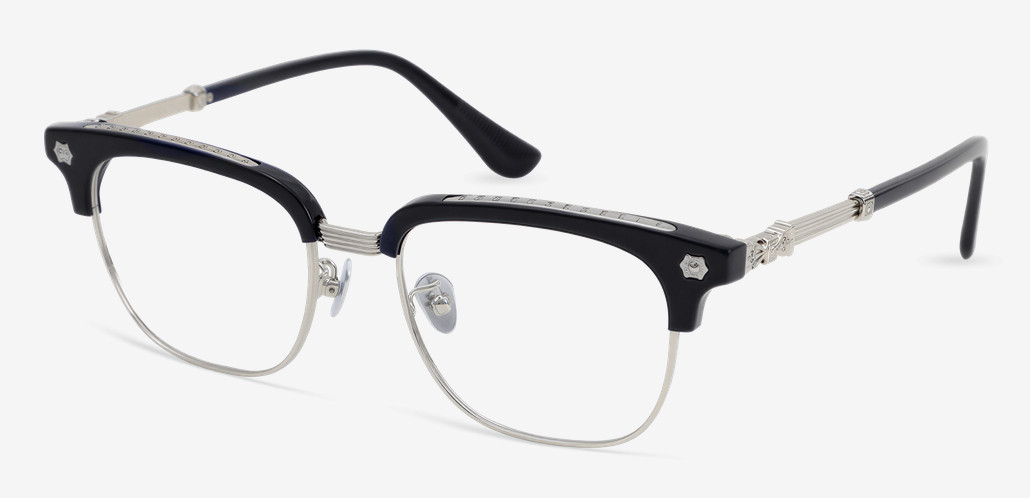
Low bridge glasses are frames built for a face where the nasal bridge sits level with or below the pupils, and where the nose has a shallower slope for a frame to grip.
Standard frames make an assumption about the surface they're landing on. They assume a bridge that projects forward, giving the nose pads a ridge to sit against, and they assume that ridge starts high enough that the frame will hang from it rather than slide down it. When both assumptions hold, gravity is handled by friction against a slope and the frame stays put. When the bridge is low and flat, there's much less slope to grip, and the frame does the only thing left available to it — it descends until something stops it. Usually your cheeks.
Three things change on a low bridge frame, and each one is solving a separate part of that failure.
The nose pads sit lower and wider. On a metal or titanium frame, the pads are mounted on adjustable arms; longer arms let the pads drop down onto the sides of the nose, where there's more surface area and more grip, instead of perching on the shallow slope between the eyes. On an acetate frame there are no arms at all, so the equivalent change has to be moulded into the bridge itself — a deeper, more substantial pad area rather than a thin flat one.
The pantoscopic tilt is reduced. Tilt is how far the frame front angles inward toward your face at the bottom, and standard frames typically run somewhere in the 8 to 12 degree range. That tilt exists for good optical reasons on a face where the frame sits forward on a prominent bridge. On a low bridge, where the frame already sits closer to the face, the same tilt swings the bottom rim straight into the cheekbone. Low bridge frames flatten it.
The front curve is flatter. A frame with pronounced wrap curves back toward the cheeks at the outer edges. Reducing that curve buys clearance at exactly the point where a low bridge frame tends to make contact.
There's a fourth change that some brands include and others don't: a slight outward arch in the temple arms, which relieves pressure at the sides of the head. It's less universal, and it's addressing a different complaint — worth knowing about, but not part of the core definition.

The Part That Rarely Gets Written About: A Sliding Frame Changes Your Prescription
Most articles treat frame slippage as a comfort problem. It's also an optical one, and understanding why is the difference between "these are annoying" and "these are why my eyes hurt by mid-afternoon."
Two things happen when a frame drops down your nose.
The lens moves away from your eye. The gap between the back of the lens and the front of the cornea is called vertex distance, and it's usually somewhere around 12 to 14mm when a frame is fitted properly. Moving a lens further from the eye changes its effective power: <cite index="20-1">a minus lens loses effective power as it moves away, and a plus lens gains it</cite>. <cite index="19-1">On a strong prescription the shift is measurable — a -10.00 lens sitting roughly 5mm further down the nose behaves closer to -9.52</cite>. <cite index="25-1">The effect becomes noticeable somewhere past ±4.00 diopters</cite>.
Two everyday experiences fall directly out of that. If you're nearsighted and your vision sharpens slightly when you push your glasses back up, that isn't your imagination — you're restoring the power the slide took away. And if you wear readers and have ever caught yourself pulling them down your nose to read fine print, you were doing the same thing in reverse, borrowing a bit of extra plus power from the increased distance.
Your pupil ends up above the optical center of the lens. Every lens has a point it was ground to be looked through, and your prescription is only fully accurate at that point. Look through it somewhere else and the lens introduces prism — a slight bending of light that shifts where the image appears to be. The amount is predictable: displacement in centimeters multiplied by the lens power in diopters, which optical labs know as Prentice's rule.
When both eyes have similar power, both get shifted the same amount in the same direction, and most people tolerate that reasonably well. The problem case is unequal prescriptions. Say your right eye is -1.00 and your left is -4.00, and the frame is sitting 5mm lower than it should. The right lens produces about 0.5 prism diopters, the left about 2.0 — a mismatch of 1.5 between the two eyes, in the vertical direction, which your eye muscles have to work continuously to overcome. That's a well-known source of eye strain and headache, and it's entirely invisible if you're only thinking about whether the frame looks like it's in the right place.
Progressive lens wearers have a third version of this problem. A progressive has a narrow corridor of usable power running down through the lens, and its position was set relative to where your pupil was expected to sit. When the frame slides, the corridor slides with it, and the reading zone ends up somewhere below where you're looking. The usual response is to tilt your head back — which is why people who've never connected the two things end up with both slipping glasses and a stiff neck.
None of this means a sliding frame is damaging your eyes. It means the correction you paid for isn't reaching them in full, and that the fatigue you've been attributing to screen time may have a mechanical cause sitting on your nose.

What Your Current Glasses Have Already Told You
Here's where the evidence comes in. Four common complaints, and what each one actually points to — because two of them are usually bridge problems and two of them frequently aren't.
They slide down within an hour
The classic low bridge signature — but it has at least three possible causes, and they're distinguishable.
Push your glasses up and note how long they stay. If they begin descending almost immediately and continuously, the bridge isn't providing grip, and that's a bridge fit problem. If they hold for a while and then slip suddenly when you look down or move quickly, the issue is more often behind your ears: temple arms that have relaxed out of shape and are no longer hooking. And if you have a strong prescription in a large frame, weight may be doing most of the work — heavy lenses shift the center of gravity forward, and no bridge geometry fully compensates for that.
The test that separates them: put the frame on, then tip your head forward as if reading a book on a table. If it falls off, the arms aren't gripping. If it stays but creeps down while your head is upright, it's the bridge.
The lenses touch your cheeks when you smile
This one is close to diagnostic. Cheek contact is a function of two measurements — how far the frame front tilts in at the bottom, and how tall the lenses are — and both of those are exactly what low bridge designs modify. If your lenses fog from the bottom, collect makeup along the lower rim, or lift visibly when you grin, tilt is the culprit and a flatter frame front will fix it. High cheekbones produce the same complaint even on a bridge that isn't especially low, which is why cheek contact is worth taking as its own signal rather than folding into the bridge question.
Your eyelashes brush the inside of the lenses
Two separate things cause this and they need opposite fixes. If the frame is sitting too close to your face — a short vertex distance, common when a frame with insufficient bridge depth settles right against the nose — the answer is more clearance, which is what deeper nose pads provide. If the frame has simply dropped so far that you're looking through the upper portion of the lens, the answer is to stop the drop.
The distinguishing question is whether it happens immediately when you put clean glasses on, or only develops later in the day. Immediate means clearance. Later means slippage.
Red marks, dents, or a sore spot
Where the mark is matters more than that there is one. Marks high on the sides of the nose, close to the inner corners of the eyes, mean the pads are perched on the narrow upper slope and concentrating the entire weight of the frame onto a small area — a bridge geometry issue, and one of the clearest cases for low bridge glasses. Marks lower down and spread across a wider area are more often about total weight, which points toward a lighter frame material or a smaller lens size rather than a different bridge.
Where the Mirror Test Actually Fits
The pupil-line check isn't wrong. It's a screening test, and screening tests are for sorting, not for diagnosing.
Its main limitation is that it only measures one dimension. Bridge height and bridge width are independent — a nose can be low and narrow, low and wide, or high and wide, and those three faces need different things. Someone with a low, wide bridge often does well with a wider bridge measurement on the frame and standard pads. Someone with a low, narrow bridge needs the pads to come inward as well as down. The finger test returns the same answer for both.
Its second limitation is that it says nothing about cheekbones, and cheekbone height determines how much vertical room a frame actually has to work with. Two people can have identical bridges and completely different outcomes in the same frame.
Use it to decide whether low bridge glasses belong on your list. Use the wear evidence above to decide which features you specifically need.

The Number Stamped Inside Your Frame Measures the Wrong Thing
Look on the inside of the left temple arm of your current glasses and you'll find something like 52-18-140. Lens width, bridge width, temple length, all in millimeters. Bridge width — the 18 — is the one people are told to pay attention to, and it's genuinely useful: if your frames slide and that number is 17 or below, moving up to 18 or 19 often helps.
But notice what it measures. It's the horizontal gap between the two lenses. The thing that fails a low bridge is vertical — how deep the frame sits, how far down the pads reach, how far forward the front is held. No frame prints that number, on any brand, anywhere. Which is why bridge width alone is such an unreliable predictor and why people who've done the homework still end up with frames that slide.
Two things you can look at instead, both visible in product photography if you know to check:
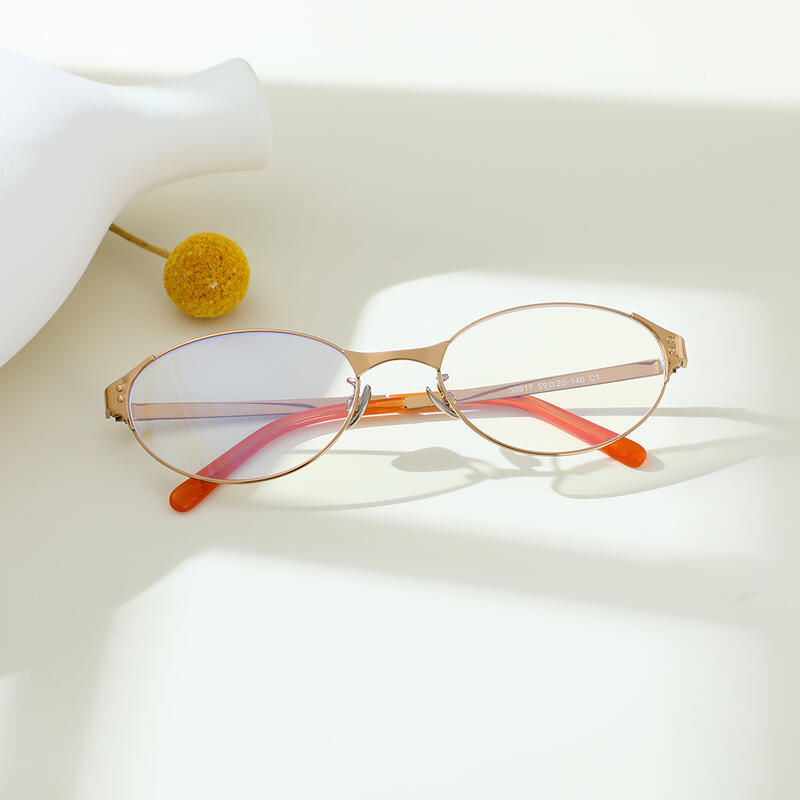
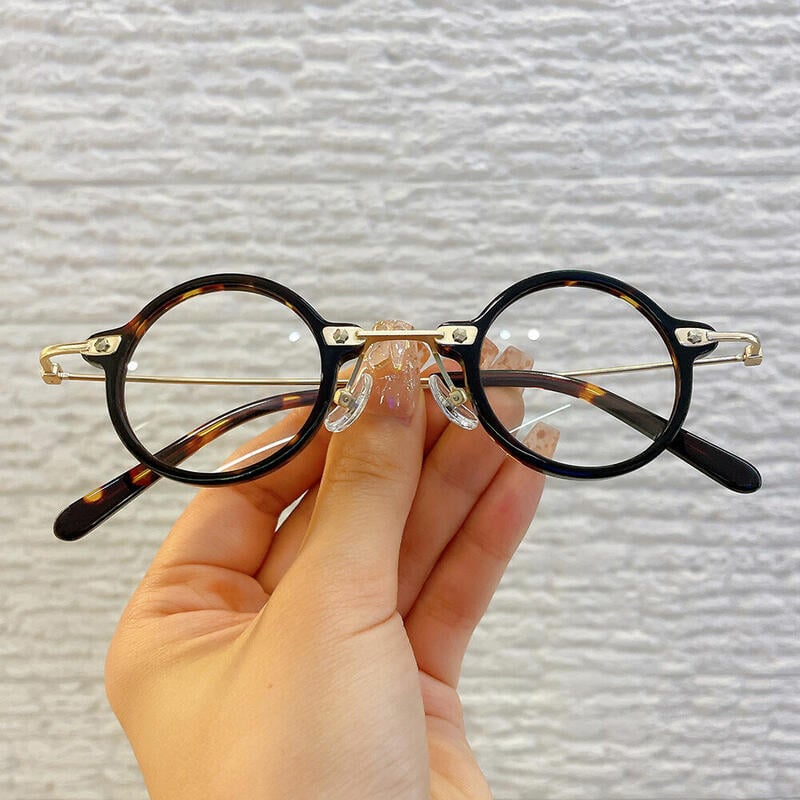
On metal and titanium frames, look at the pad arms. Short stubby arms mean the pads sit high and close to the frame front, with very little room for adjustment. Longer arms mean an optician — or you, carefully — can bring the pads down and out to where the nose is wider. This is the single most adjustable variable in eyewear, and it's the reason metal frames are so often the practical answer for a low bridge even when they aren't marketed as low bridge fit.
On acetate frames, look at the shape of the bridge itself. A saddle bridge is one continuous curve from lens to lens, resting along the top of the nose — it needs a ridge to rest on, and on a flat bridge it has nowhere to grip. A keyhole bridge, named for its shape, arches up and away from the top of the nose and sits on the sides instead. That's a meaningfully different load path, and on a low bridge it works considerably better than a saddle. It's an old design, it costs nothing extra, and it goes almost entirely unmentioned in low bridge shopping advice.
"Asian Fit," "Alternative Fit," "Omni Fit"
You'll encounter all of these, and they refer to the same design. The oldest is Asian fit, which comes from the fact that a lower nasal bridge is statistically more common in some East Asian populations.
It's a poor name for a good product, because it describes a group of people rather than a feature of a face. A great many people with high bridges are East Asian; a great many people with low bridges have never been described as Asian in their lives. The anatomy doesn't track the label closely enough for the label to be useful.
The practical consequence, though, is that it's still the term some retailers file their inventory under. If a site's low bridge selection looks thin, searching the older term sometimes surfaces frames the newer one doesn't. Worth knowing when you're shopping, even if the naming is due for retirement.

Who Doesn't Need Low Bridge Glasses
This is the section the category is missing, so here it is plainly. Three common problems look like bridge fit and aren't.
Frame width. If your temples press against the sides of your head, or the frame leaves marks in front of your ears, or your eyes sit noticeably toward the inner edges of the lenses rather than centered, the frame is the wrong width for your face. Low bridge geometry doesn't change width. You need a larger temple-to-temple measurement.
Weight. A frame that's genuinely too heavy will slide regardless of how well the bridge is designed, and heavy usually means either a large frame in a dense material or a strong prescription in oversized lenses. <cite index="24-1">Edge thickness on a minus lens scales sharply with lens diameter, so a larger frame doesn't just add a little weight — it adds a lot</cite>. The fix is a smaller or lighter frame, or a higher-index lens material, not a different bridge.
Temple adjustment. Arms that have gradually splayed outward over a year of being taken off one-handed will let a perfectly fitted frame slip. This is a five-minute fix at any optical counter and costs nothing. Rule it out before you buy anything.
A Note on Children
Nasal bridges develop with age, which means a shallow bridge is close to universal in early childhood. This is why children's frames so often slide, and why so much of what's sold for kids has either deep integrated pads, silicone grips, or a cable temple that wraps behind the ear.
If you're buying for a child, the low bridge features are worth looking for as a default rather than as a special case — and it's genuinely worth having a frame professionally adjusted, since a child looking through the top edge of a lens is a real optical problem, not just a scruffy-looking one.
Buying Low Bridge Glasses Online
The thing to understand about ordering online is that the fit failure modes are almost all visible in profile and almost none of them are visible head-on. A frame that will rest on your cheekbones looks completely normal from the front. So when you use a virtual try-on, rotate to the side view and look at one thing: the gap between the bottom rim of the lens and your cheek. If there isn't one, the frame will touch when you smile.
Adjustable metal pads are worth treating as insurance. A metal or titanium frame with pads on reasonably long arms can be brought into range for most low bridges, which means you're not betting everything on the fit being right out of the box. An acetate frame can't be adjusted the same way, so with acetate the bridge design has to be right at the point of purchase — which brings you back to looking for a keyhole or a deep moulded bridge rather than a flat saddle.
Two practical points beyond the frame itself. Get your pupillary distance right, because the prism effect described earlier applies horizontally as well as vertically, and a wrong PD combined with a sliding frame compounds into genuine discomfort. And read the return terms before you order rather than after, since bridge fit is the category of purchase most likely to need a second attempt.
At Aoolia, every low bridge frame carries its actual bridge width, nose pad type and pad arm length on the product page rather than a description of how comfortable it is, and every prescription order is reviewed by an in-house optician before the lenses are cut. It doesn't remove the guesswork entirely. It removes the part of the guesswork that shouldn't have been guesswork in the first place.

The Short Version
Low bridge glasses are frames engineered for a nasal bridge that sits at or below pupil level: lower and wider nose pads, less pantoscopic tilt, a flatter front. They're worth pursuing if your current glasses slide continuously while your head is upright, rest against your cheeks when you smile, or leave concentrated marks high on the sides of your nose. They aren't the answer if the frame pinches at the temples, feels heavy, or has simply gone out of adjustment.
And the reason to sort this out isn't only comfort. A frame sitting where it was designed to sit is the condition under which your prescription actually works.