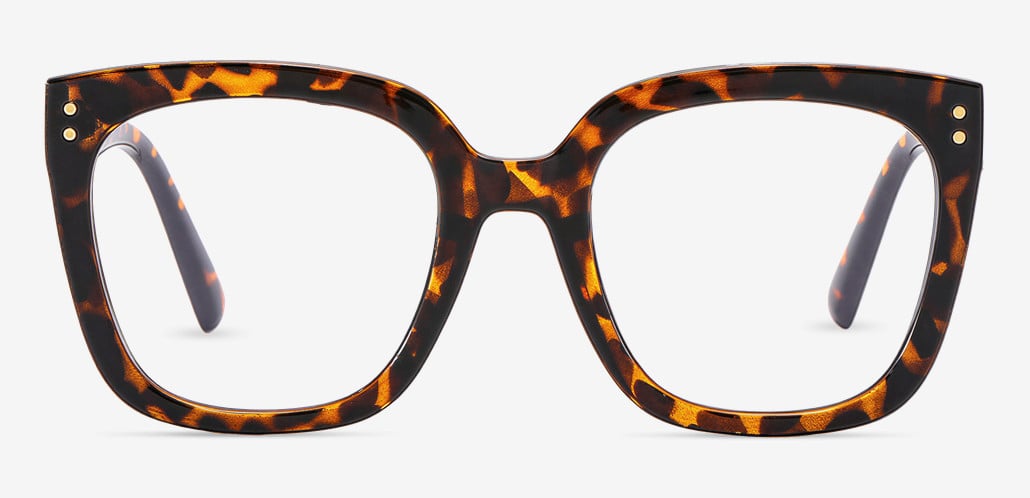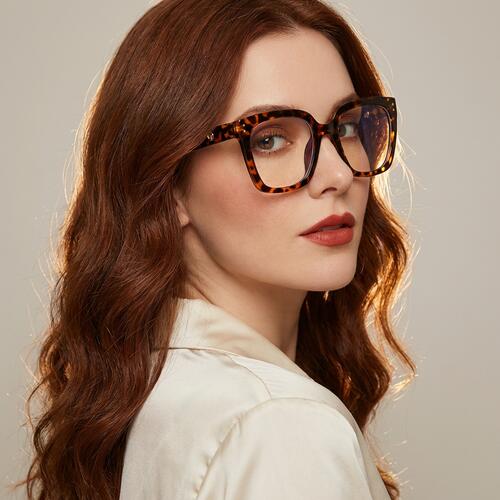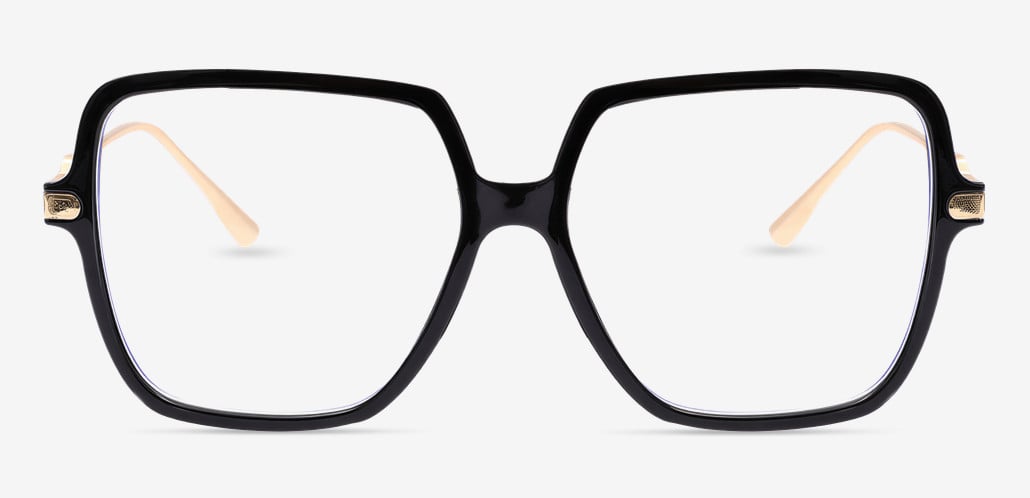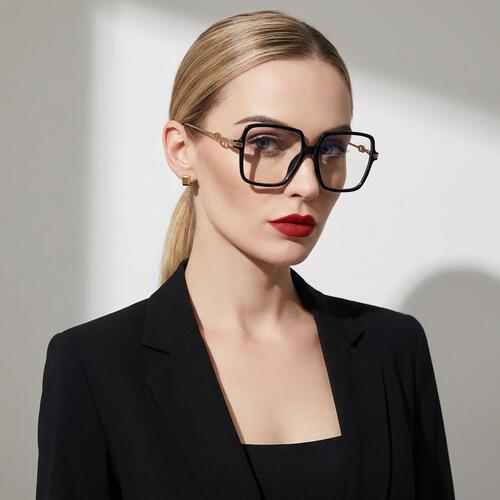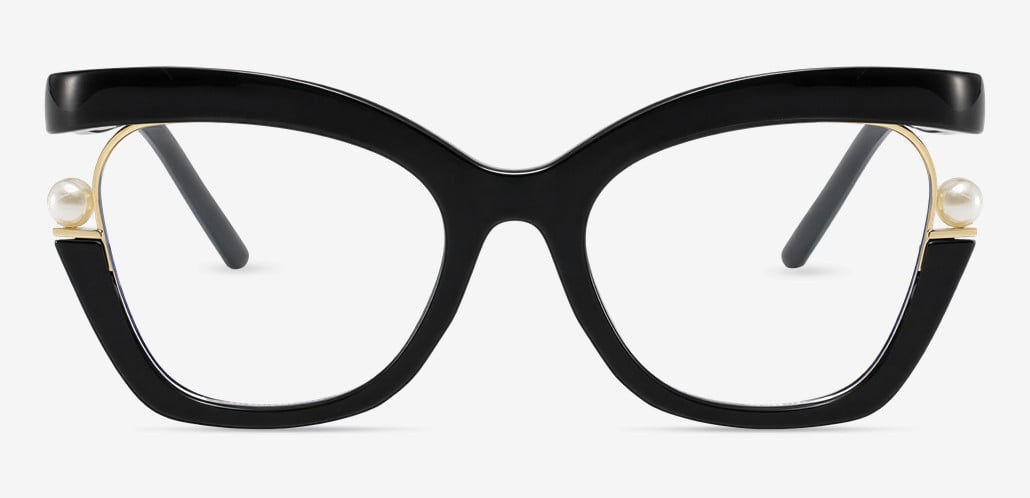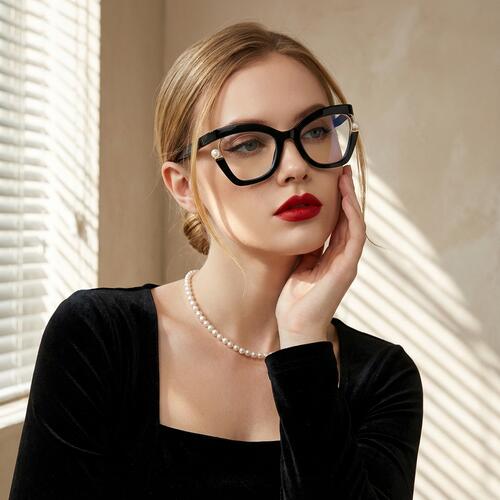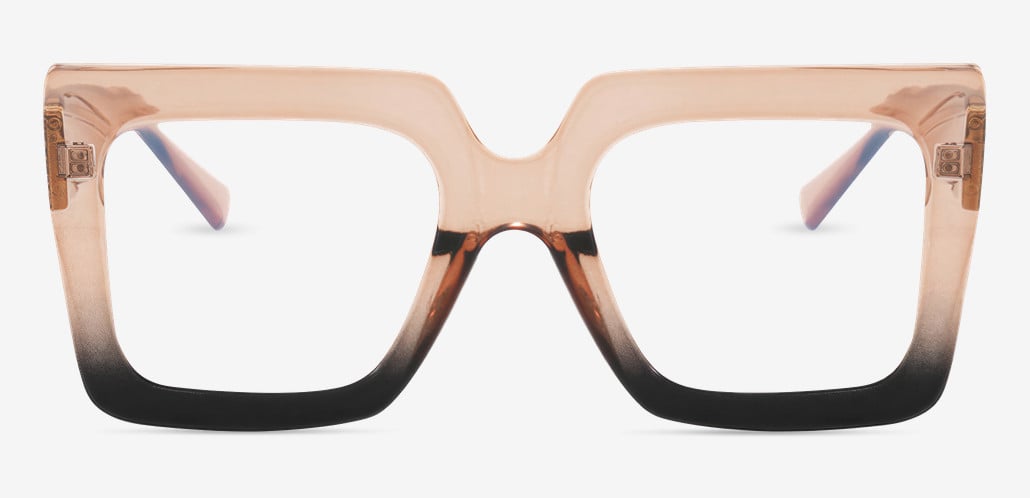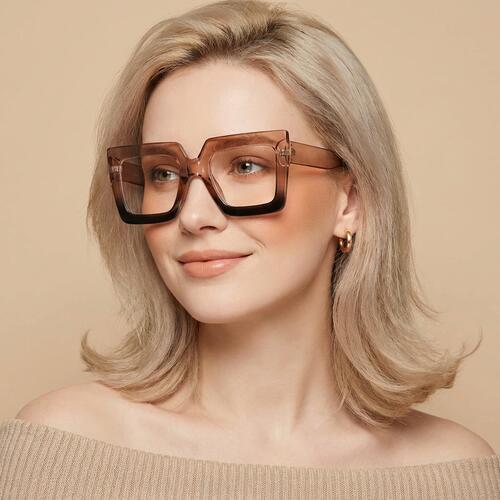

Search for the best progressive readers for women and you will find roughly the same article a dozen times: six frames, a paragraph each about how flattering they are, a price, a link. Pleasant to read. Almost useless for deciding.
Here is the problem with that format. Progressive readers fail for three reasons, and only one of them is about taste.
The power can be wrong. The frame can be too shallow to hold the progressive corridor. Or the frame can slide down your nose during the day, which drags the corridor down with it and puts your reading zone somewhere below your line of sight.
Two of those three are frame problems, and neither one shows up in a product photo.
So this list is built backwards from the usual one. First, the five measurable things that make a progressive reader work or not work. Then shortlists organized around the constraint you are actually dealing with — a narrow face, a laptop, a bag that eats glasses — instead of around frame shape. Then, at the end, the frames we left out of our own collection and the reason why.
One disclosure up front: every frame named here is one Aoolia sells. The criteria came first, and where our catalog is a poor fit for something, we have said so.
What a progressive reader is actually doing
A single-power reader has one magnification across the entire lens. It is a magnifying glass shaped like eyewear, and it is excellent for a paperback and useless for anything past about eighteen inches.
A progressive reader puts a gradient in the lens instead. The top is clear and uncorrected. As your gaze travels down, the magnification builds through a narrow channel — the corridor — until it reaches full reading strength at the bottom. There is no line, which is why these are also sold as no-line bifocal reading glasses.
That gradient is the whole product, and it is also the whole difficulty. A corridor needs vertical space to develop. Squeeze it and it turns into a slot. This is why frame geometry matters so much more here than it does for any other kind of eyewear, and why "best" cannot be answered with a mood board.
Worth separating from a related thing: a progressive reader does not correct distance vision. If road signs and doorways are soft too, you are looking for full prescription progressive glasses, which is a different purchase.

The five specs that decide whether a pair works
1. Lens height
Sometimes printed as the "B" measurement on a frame spec. It is the vertical distance through the lens, and it is the single most predictive number in this category.
Below roughly 28mm, a progressive corridor gets compressed. The intermediate zone — the part you use for a laptop, a recipe card, a price tag — narrows into something you have to hunt for. At 30mm and above, the corridor has room to develop and the transitions stop feeling abrupt.
Every frame in the progressive readers for women collection is screened for lens height before it is allowed in. That is a gate we apply to the catalog, not a warning we print underneath it.
2. Where the frame sits on your nose
The corridor is positioned relative to your pupils. If the frame rides two millimeters lower than it was fitted for, your reading zone moves two millimeters lower too, and you start tipping your chin to find it.
Two things control this: bridge width and nose pads. A bridge that is too wide lets the frame settle down your nose. Adjustable nose pads let you correct that afterward, which is why they are worth filtering for even if you have never thought about them. There are 325 frames with adjustable nose pads in the collection.
3. Whether it stays put over eight hours
Related, but not the same thing. A frame can fit correctly at 9am and be a millimeter looser by mid-afternoon if the temples have relaxed. Spring hinges — 239 frames here have them — flex outward under pressure and return, instead of gradually splaying.
For a single-power reader that you push up and forget about, this barely matters. For progressives it is the difference between glasses you stop noticing and glasses you keep adjusting.
4. Lens width against your own measurements
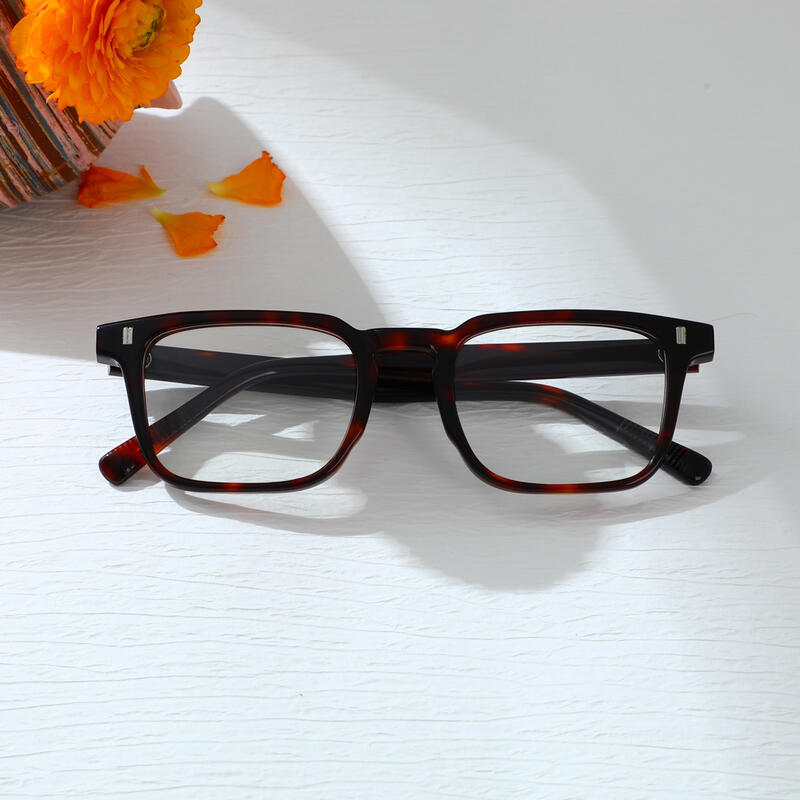
Wider lenses give the corridor more room to blend laterally, which softens peripheral distortion. But a lens that is much wider than your face pushes the optical centers outward, away from your pupils, which does the opposite.
The practical version: take a pair of glasses you already like the fit of and read the numbers printed inside the temple arm — something like 52-18-140, meaning lens width, bridge, temple length in millimeters. Stay within about 2mm on the first number and 1mm on the second and you will be close.
5. Weight, and where it lands
Total weight matters less than distribution. A heavier acetate frame that spreads its load across the bridge and both temples is more comfortable at hour six than a light frame that concentrates everything on two small nose pads.
Materials, in short: acetate has substance and holds color and tortoise patterning that plastics cannot match. TR90 is a memory polymer, the lightest option here, and it springs back into shape. Titanium is the pick when you want something thin that still holds an adjustment. Mixed materials usually means a metal front for precision at the fit points and acetate for everything else.
The one thing no frame can fix
Your reading power. If the strength is wrong, the best-fitting frame in the world will still feel like work.
Reading power is written in diopters with a plus sign, and it drifts upward over the years. Broadly: +1.00 to +1.25 tends to start in the early forties, +1.50 to +1.75 by the late forties, +2.00 to +2.25 in the early fifties, and higher from there. Age is a starting point rather than an answer — two women the same age can sit two steps apart on that scale.
If you are between two powers, the lower one is usually the better choice in a progressive reader, because the corridor is already giving you extra range that a single-power lens would not.
One thing worth knowing before you buy anything off the shelf: every off-the-shelf reader puts the same power in both lenses. If your two eyes need meaningfully different strengths, no fixed-power reader will resolve that, and forcing it produces exactly the headache people blame on progressives. Aoolia builds progressive readers to your prescription for this reason, which adds a step at checkout and removes the guessing.
Shortlists, by the constraint you're actually working with
Prices below are current at the time of writing and frames sell out; treat these as starting points rather than a fixed ranking.
If this is your first pair of progressives
You want forgiving geometry and low stakes. Deep lens area, mid-range size, nothing dramatic in the silhouette while your brain learns the corridor.
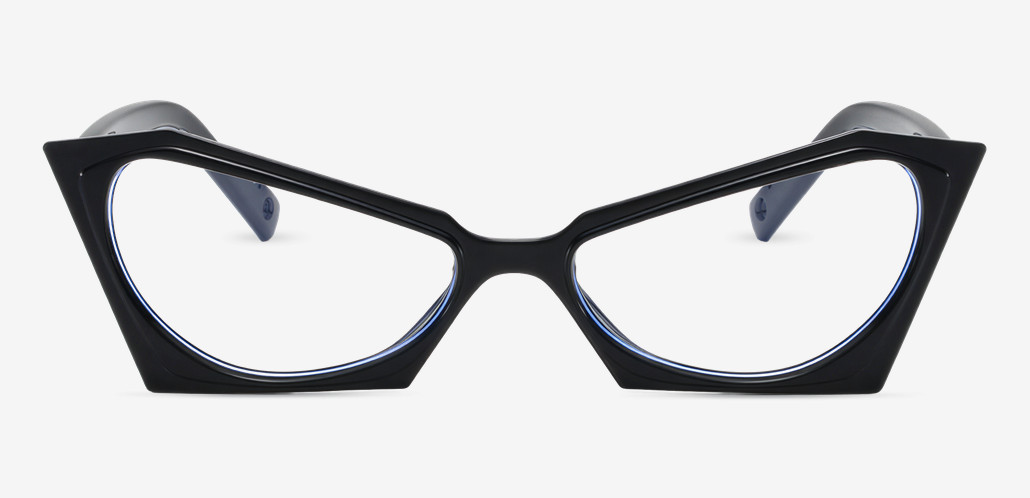
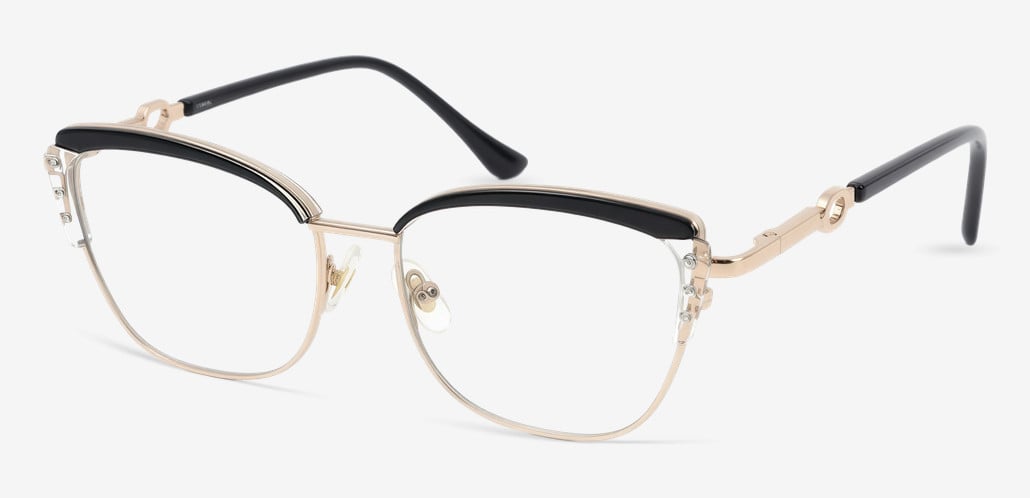
Alvon Black Cat Eye — $6.95. Deep-set cat-eye, and the least expensive way to find out whether progressives suit you at all.
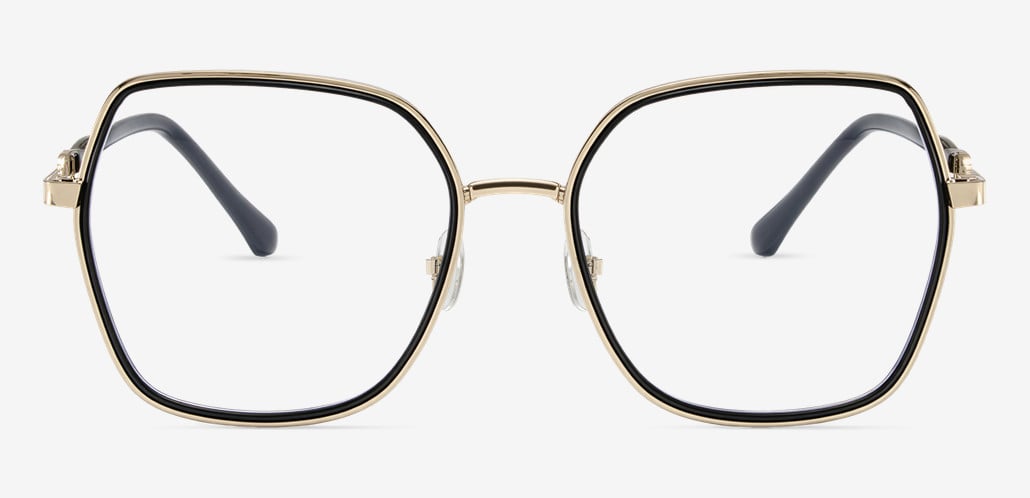
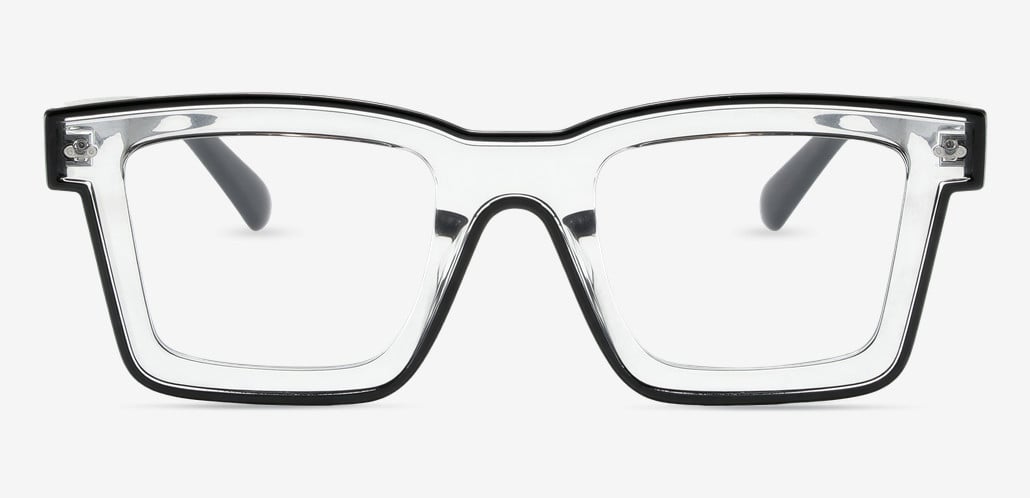
Gloria Black Square — $11.95. Square shapes carry the most usable corridor of any silhouette here.
Ingrid Black Oval — $15.95. Soft outline, generous vertical space.
If you spend the day at a laptop
Filter to Square, Rectangle, or Geometric, and add blue light filtering at lens selection.
Joanne Purple Square — $15.95
Sophia Black Square — $27.95
Leanne Gray Square — $46.95
An honest limit: this works for a laptop at arm's length, where your gaze naturally drops. It works much less well for a large desktop monitor set back and near eye level, because the intermediate zone lives in the lower half of the lens and you end up holding your chin up to reach it. If that is your setup most of the day, a dedicated computer lens is the better tool and we would rather say so now than process the return later.

If you have a narrow or small face
The trap here is sizing down without watching height — small frames are often shallow frames, and shallow is the one thing a progressive cannot tolerate. Filter to Small or Extra-Small, then filter again for adjustable nose pads so you can set exactly where the frame sits.
April Champagne Cat Eye — $11.95
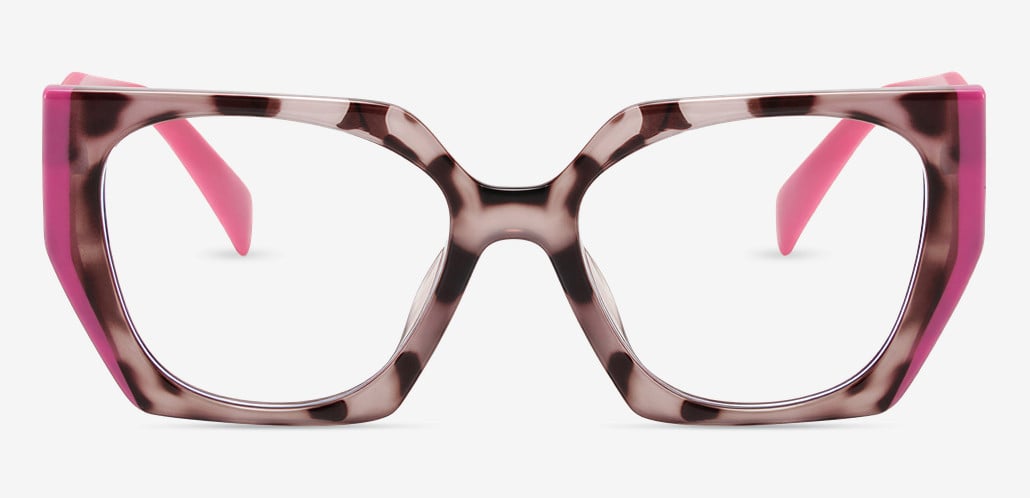
Una Pink Cat Eye — $15.95
Gilda Pink Cat Eye — $24.95
If you don't want them to read as "reading glasses"
Nothing about a progressive reader has to look clinical. Colour and shape carry the whole impression, and none of it costs you corridor.
Ivy Orange Cat Eye — $29.95
Britney Black Cat Eye — $24.95
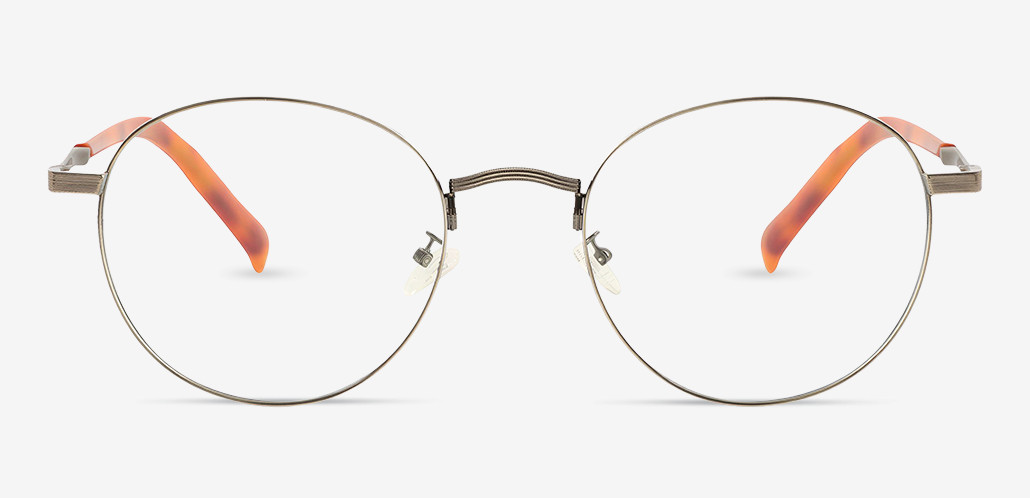
Gaskel Multicolor Round — $66.95
Adrienne Purple Cat Eye — $99.95
If they live at the bottom of a tote bag
Filter to TR90 and to spring hinges. Memory polymer flexes and returns instead of taking a set, and spring hinges survive being pulled out sideways.
Flossie Green Square — $9.95
Halona Multicolor Cat Eye — $9.95
Idelle Black Cat Eye — $13.95
If you want one pair for indoors and out
Add photochromic lenses at checkout — clear inside, darkening in sunlight. Aviator shapes carry the tallest lens area of any silhouette in the collection, which gives the corridor the most room to work with while you read a menu on a patio.
Jordan Pink Aviator — $14.95
Glynnis Gray Aviator — $25.95
What we left out, and why
A list is defined as much by its exclusions, so here are ours.
Frames under roughly 28mm of lens height are excluded from the progressive readers collection entirely, even when they are frames we like and sell elsewhere. They accept a progressive lens technically. They do not deliver one comfortably, and the gap between those two facts is where most bad reviews of progressive readers come from.
The slimmest rectangles went the same way. A narrow rectangle is a flattering shape and a poor progressive host, and we would rather lose the sale than have the frame arrive and disappoint.
Rimless and half-rim frames are available in the collection — 15 rimless and 9 half-rim — but we do not recommend them as a first progressive. Rimless lenses are often cut down at the edges, and without a rim there is no visual reference for where the corridor sits, which makes the adjustment period harder than it needs to be. Second pair, once your eyes know what they are doing: a different conversation.
Anything promising instant adaptation. No lens in this category is free of peripheral distortion. Blending several powers across one surface pushes unwanted power to the outer edges, and every progressive lens made — at any price, from any brand — has it. It fades because your brain stops attending to it, usually within three to fourteen days, not because a manufacturer solved it.

What has actually changed by 2026
Trend writing in eyewear is mostly colour forecasting, so here is the version that affects the decision.
The floor fell out of the price. Progressive readers used to be a $60 to $100 purchase from a handful of specialist brands, because the lens work was the expensive part. Progressive-capable frames now start at $6.95 here, with the lens priced separately, which changes the calculation from "is this worth risking" to "buy a second pair for the kitchen."
Lens options that used to be premium upcharges are now ordinary. Blue light filtering, photochromic, and tinted finishes are configuration choices on the same frames rather than separate product lines.
Try-on moved on. Seeing where a frame sits vertically on your own face matters more for progressive readers than for any other category, because vertical position is corridor position. A camera-based try-on answers a question a size chart cannot.
And one thing has not changed: the frame still has to fit, the power still has to be right, and no amount of technology has removed the two-week adjustment. Anyone telling you otherwise is selling something.
Before you order
Pull out the pair of glasses you wear most and read the numbers inside the temple arm. Decide your power honestly rather than optimistically — lower rather than higher, if you are hesitating. Filter for adjustable nose pads if your glasses have ever slid down your nose, and for spring hinges if they get thrown in a bag. Then use try-on and pay attention to where the frame sits vertically, not just whether you like the colour.
And give a new pair the full two weeks before you decide it was a mistake. If you are at day fifteen and it still feels wrong, that usually means the power or the fitting height is off, not that you cannot adapt — and that is something we can remake.
Common questions
Do progressive readers need a prescription? Aoolia builds them to your prescription, so yes. Fixed-power readers sold elsewhere skip this, which works only if your two eyes are closely matched and the corridor happens to land where your pupils are.
What is the difference between progressive readers and bifocal readers? Bifocals have two distinct zones separated by a visible line and nothing in between. Progressives blend continuously, covering the arm's-length distances a bifocal skips, with no line.
Why do the edges look soft? Peripheral distortion, described above. Turning your head toward what you are reading rather than swinging your eyes keeps you inside the clear corridor, and most people stop noticing within two weeks.
Can I get blue light filtering or tinting on these? Yes — both, plus photochromic, as options at lens selection on any frame in the collection.
How many pairs do I actually need? Most people end up with two: one that lives where they read and one that travels. At these prices that is a practical answer rather than an upsell.
Progressive readers are not a substitute for an eye exam. If your near vision changed quickly rather than gradually, if one eye is noticeably worse than the other, or if you are seeing doubled or distorted lines, see an optometrist before buying anything.
Browse progressive readers for women →