
What a rose lens actually does
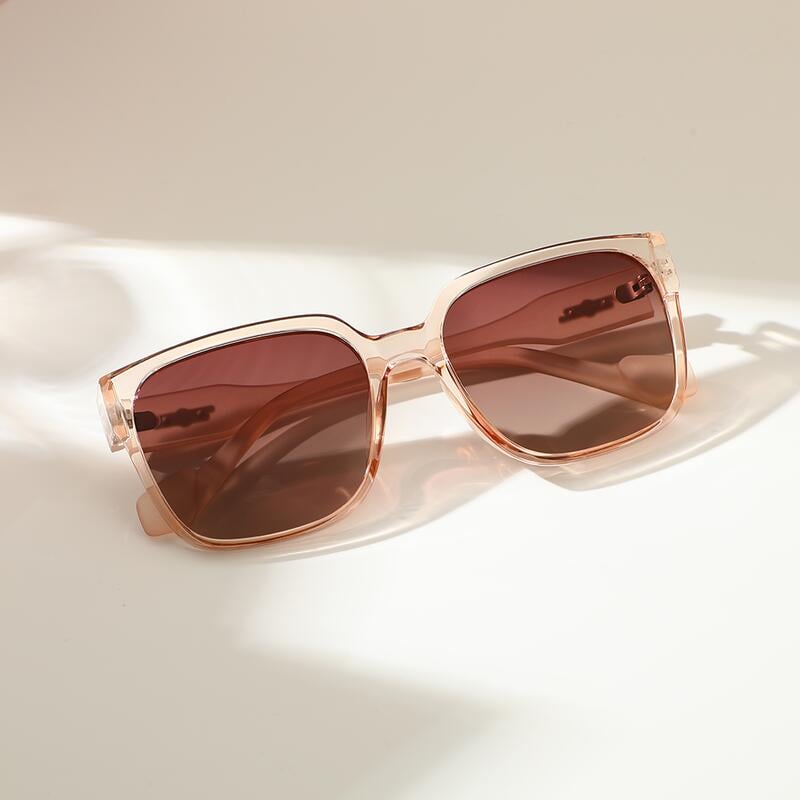
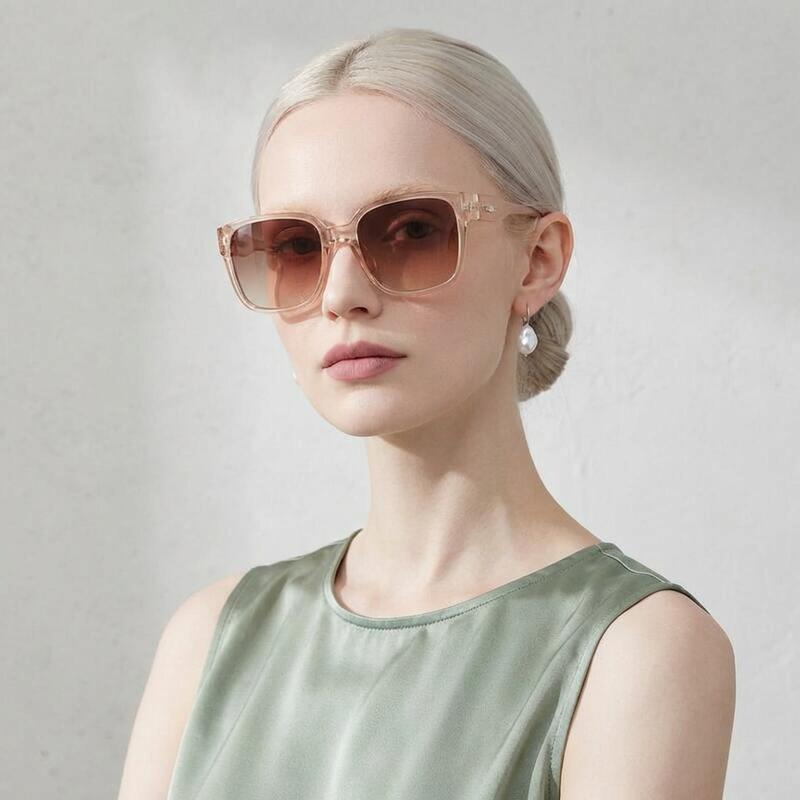
Rose and pink tints filter out some blue light, which nudges up contrast and depth perception. That makes them genuinely useful in flat, low, or shifting light — overcast afternoons, dawn and dusk drives, the kind of grey day when a dark grey lens just makes everything dim. Plenty of drivers keep a light rose tint for exactly this. The trade-off shows up in harsh midday sun, where rose can feel warm and slightly muddy and a neutral grey or green lens is the better tool. And because color perception varies from person to person, a rose tint one wearer loves can look "off" to another. Trying them on is the only honest test.
One thing a pink tint does not do: protect your eyes. This trips up a lot of shoppers. The color and darkness of a lens have nothing to do with UV protection — that comes from a UV filter built into the lens material or coating. A clear lens with a proper filter blocks more UV than the darkest uncoated one, and a dark uncoated lens is actually worse than no sunglasses, because it relaxes your pupils wide open while letting UV straight through. Look for the UV400 or 100% UV label and treat tint as a separate, purely optical-and-aesthetic choice. Every Aoolia lens carries full UV400 protection, so the shade you pick is about how you want to see and be seen, not about safety.
The pink spectrum, decoded
"Pink" on a product page can mean six fairly different things. Knowing the vocabulary saves you from ordering a shade you didn't expect. Roughly from quietest to loudest:
Blush / nude pink — barely-there, beige-adjacent. Reads expensive and almost neutral, and it's the safest entry point if you've never worn pink.
Millennial / rose pink — soft, slightly cool, a little retro. The everyday workhorse that sits easily with denim and neutrals.
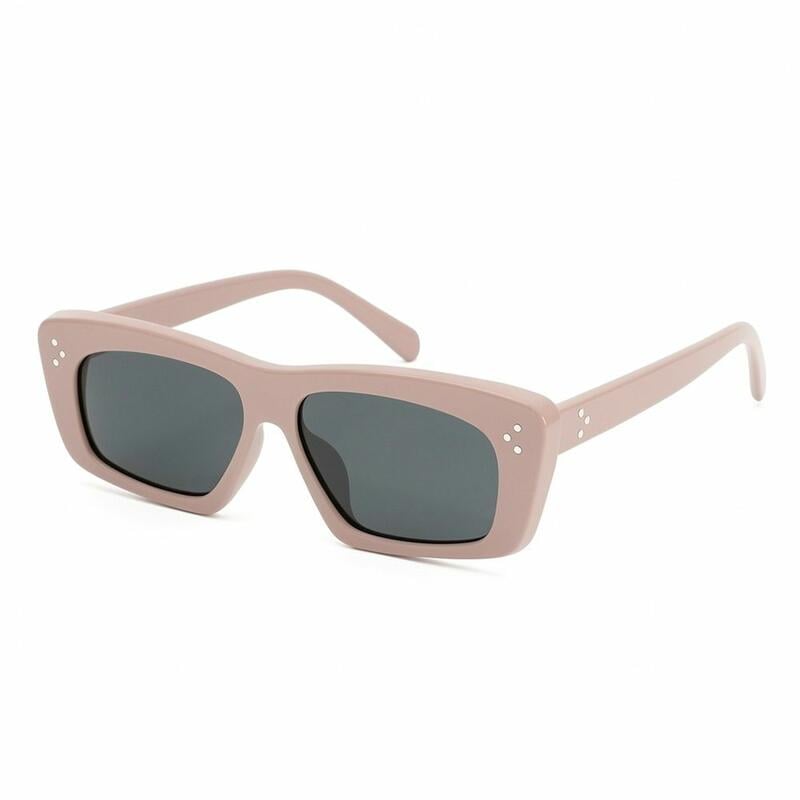
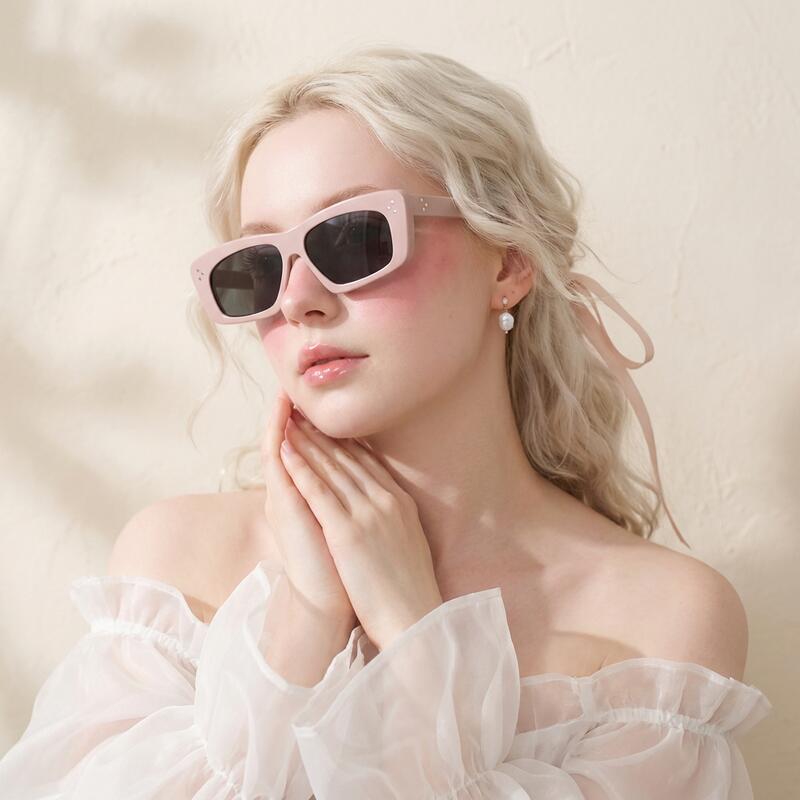
Mauve / dusty rose — pink with grey or brown muddied into it. The most universally flattering of the bunch, because the muting keeps it from competing with your skin.
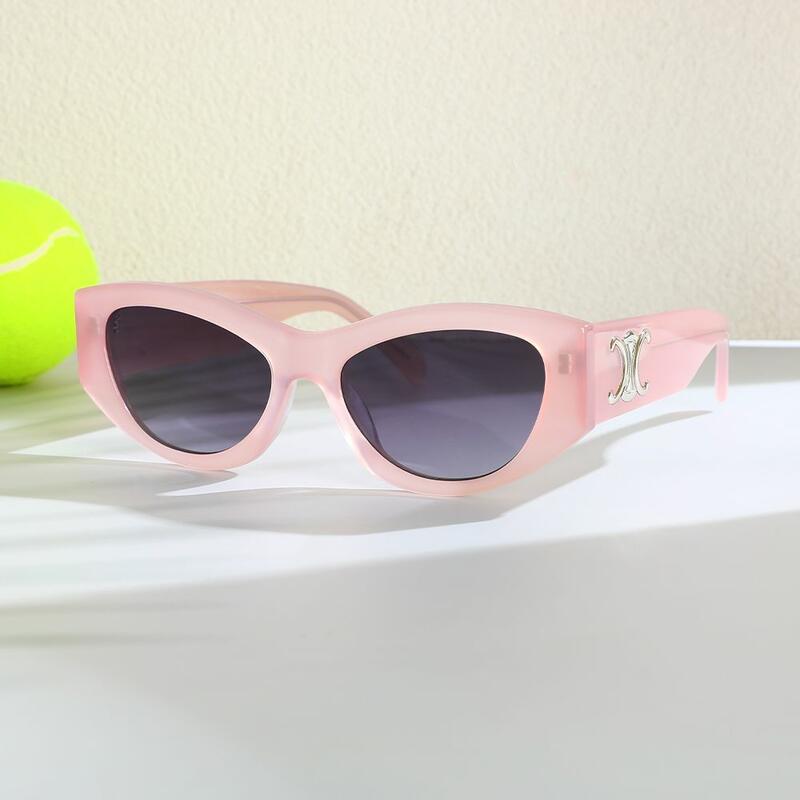
Crystal / translucent pink — pink you can see through, lit by the light behind it. Modern and airy; reads young without reading cheap.
Coral / warm pink — pink leaning toward orange. Lively and summery, and it loves a tan.
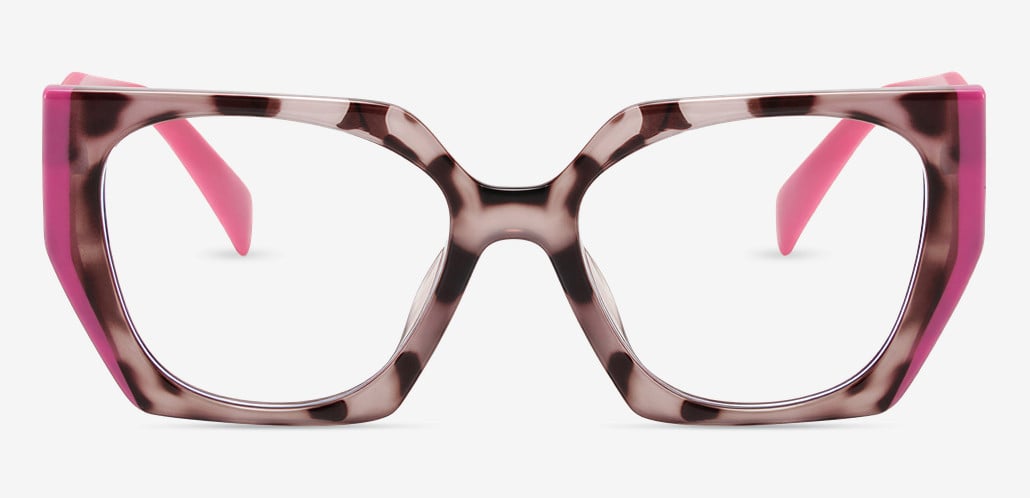
Hot pink / fuchsia — the statement. Saturated and unmissable, the shade that either makes the outfit or hijacks it.
The mistake is rarely picking a loud pink. It's picking a loud pink for a moment that needed a quiet one — or assuming "pink" meant blush when the box held fuchsia.
Shape sets the volume
The same pink behaves differently depending on the frame shape, because the shape controls how much attention the color is already pulling.
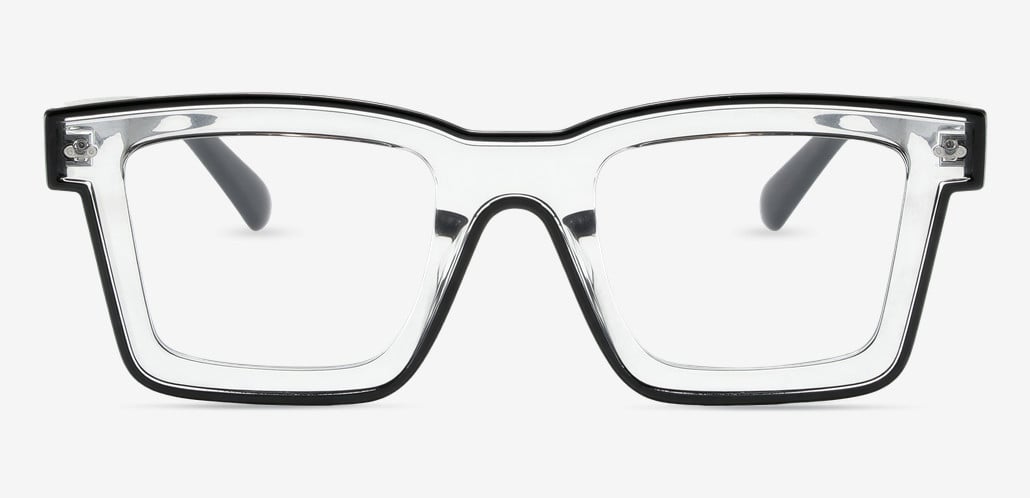
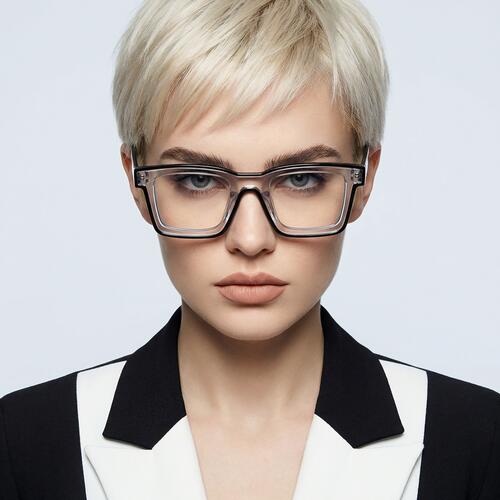
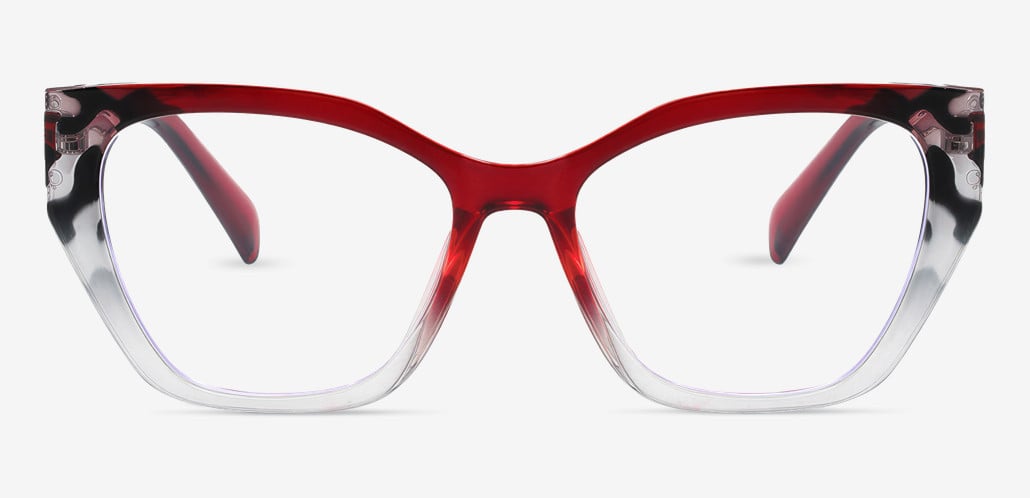
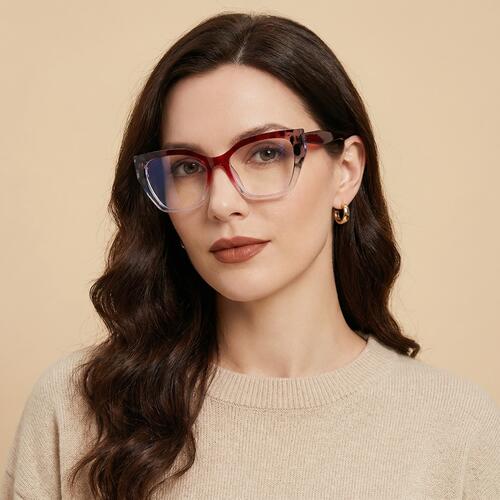
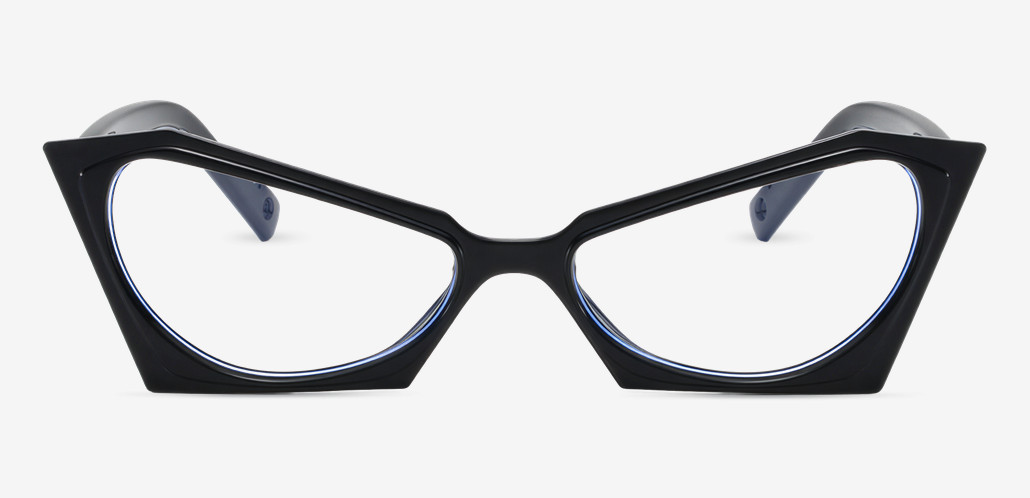
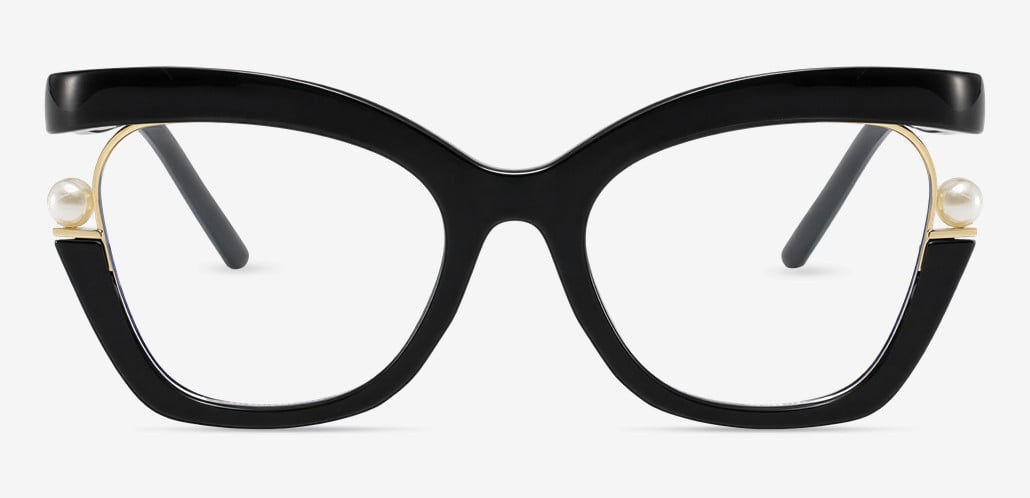
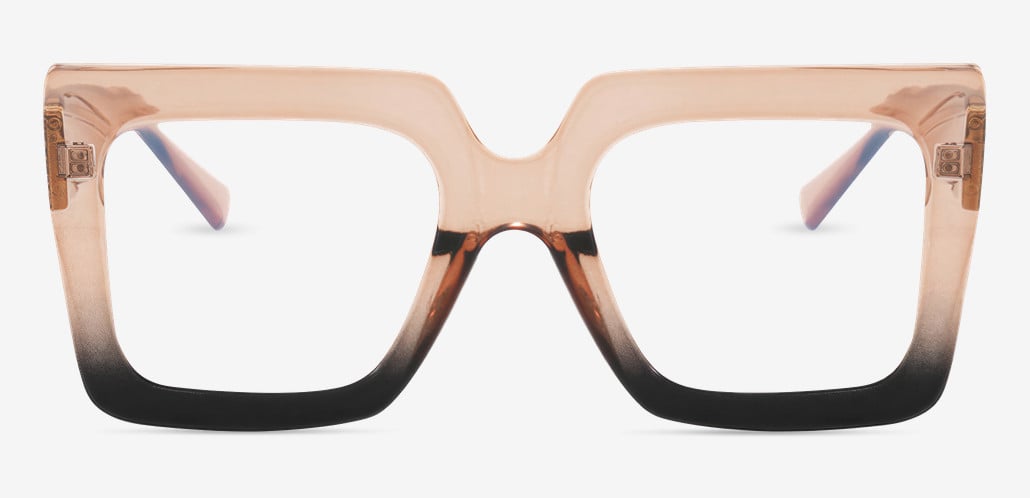
Cat-eye amplifies. An upswept cat-eye is expressive on its own, so pink on a cat-eye is the most overtly playful, feminine combination there is — perfect if that's the goal, a lot if it isn't. Round frames push pink retro and soft. Rectangle and square frames are the quiet carriers: their straight lines mute the sweetness, which is why a dusty-pink rectangle can read sharp, even unisex, rather than girly. Oval sits in the gentle middle. Angular and geometric shapes make a bright pink look design-forward instead of cutesy.
The practical takeaway: if you love a bold shade but want it dialed down, put it in a structured shape. If you want maximum pink, a cat-eye or round will hand it to you.
Match the pink to your undertone, not your favorite color
This is the step that separates "flattering" from merely "fine," and it's the one most people skip. The pink that suits you depends less on which pink you like and more on your skin's undertone.
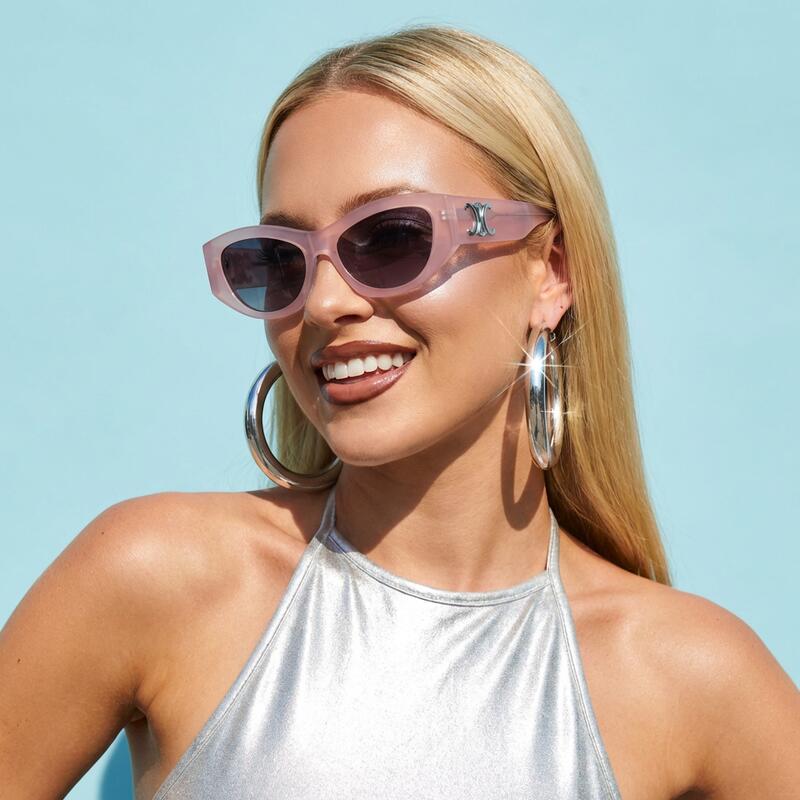
A quick read: look at the veins on your inner wrist in natural light. Bluish or purple veins usually point to a cool undertone; greenish veins to a warm one; genuinely hard to tell often means neutral. Jewelry is another tell — if silver flatters you more than gold, you probably lean cool; if gold wins, warm.
Cool undertones tend to glow beside true pinks, mauve, blush, and cooler fuchsia. Warm undertones come alive with coral and peachy pinks and warmer rose. Neutral undertones get the easy life and can wear most of the range. None of this is a hard law — it's a starting point that stacks the odds in your favor. The fastest way to settle it is to see the actual shade against your actual face, which is what virtual try-on is for: tap Try On on any frame and you'll know within about thirty seconds whether a shade lifts your complexion or fights it.
Yes, pink is for men too
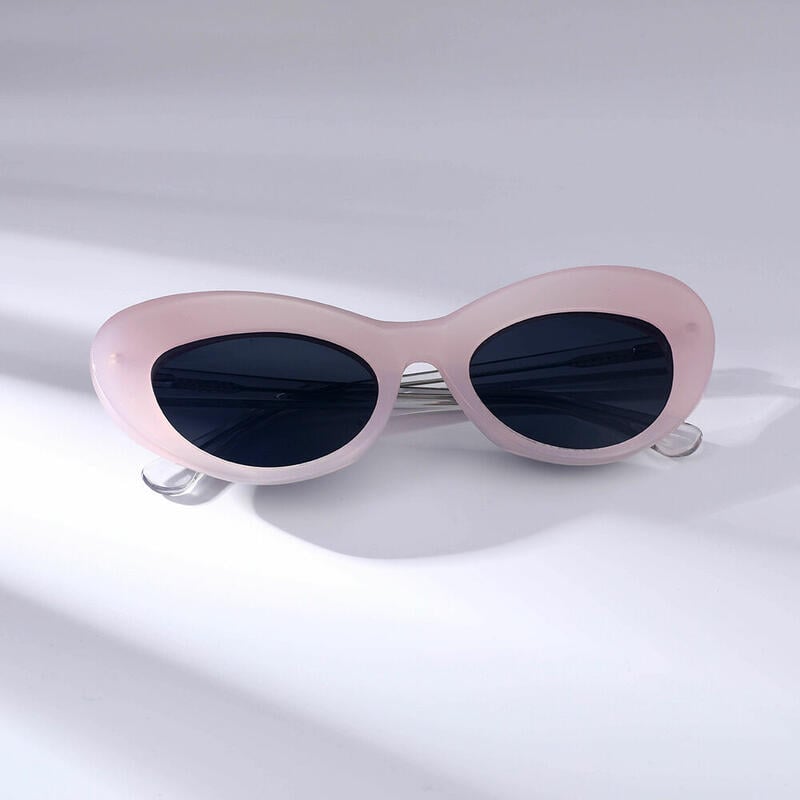
Pink reads feminine by default in the US, but that's habit, not rule. The men's-friendly path runs along the muted end of the spectrum — dusty rose, mauve, and pink-on-tortoise frames that add warmth without announcing themselves, especially in square and rectangle shapes and in wider, medium-to-large sizing. A man in a muted pink frame usually reads as someone with taste rather than someone in costume, which, honestly, is the whole game with pink no matter who's wearing it.
Why some pink sunglasses look cheap — and how to avoid it
When a pink pair reads costume, it's rarely the color's fault. Usually it's one of three things.
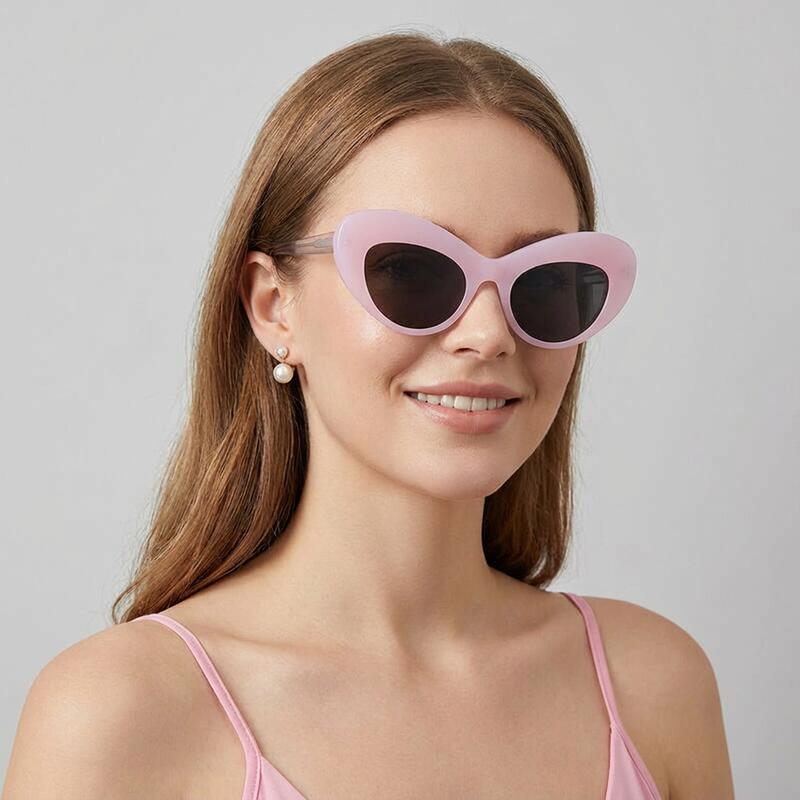
Finish. A flat, plasticky, slightly chalky pink looks like a toy. A pink with depth — a touch of translucency, a quality acetate gloss, a subtle gradient — looks like an object someone designed. Material and finish do more work here than the hue itself.
Fit. A frame that's too small, sits crooked, or pinches makes anything look cheap, and pink shows it faster because it's already drawing the eye. The right width for your face matters more than the shade does.
Shade-to-undertone mismatch. A lovely pink fighting your complexion reads as "wrong," and the brain quietly translates "wrong" into "cheap." Match the undertone and the same frame suddenly looks deliberate.
This is the reasoning behind every frame in our collection being optician-verified before it goes live, and behind our preference for letting you try a pair on your own face instead of gambling on a thumbnail. Premium pink isn't a price point. It's the absence of those three mistakes.
A few honest answers before you buy
Will pink date? Some shades are trend-bound — neon fuchsia rises and falls with whatever "core" is having its year. Blush, mauve, and dusty rose behave like neutrals and don't really go out of style. Want one pink pair to keep? Go muted. Want a fashion moment? Go bright and enjoy it for the season.
Can you get pink sunglasses in a prescription? Yes — and most pink sunglasses sold as fashion accessories can't, which is exactly why it's worth saying. Nearly every frame here can be made single-vision, bifocal, or progressive, so a pink pair can be your real everyday eyewear instead of a prop you swap in for photos.
Are they okay for driving? A pink frame with a neutral lens is fine for any driving. A pink-tinted lens is best kept light if you'll drive in it, and it earns its keep in low or changing light more than in blazing midday sun. Deeper colored tints can shift how you read traffic colors, so keep driving lenses on the lighter side and check your state's rules if you're unsure.
Find the pink that reads like you meant it
Pink sunglasses stop being a gamble the moment you stop treating "pink" as one thing. Decide whether the frame or the lens should carry it. Pick a shade that meets your undertone instead of fighting it. Put it in a shape that sets the volume where you want it. Do that, and the only step left is seeing it on your own face.
Browse the full pink sunglasses collection, tap Try On on anything that catches your eye, and find the pink that looks intentional — not costume.