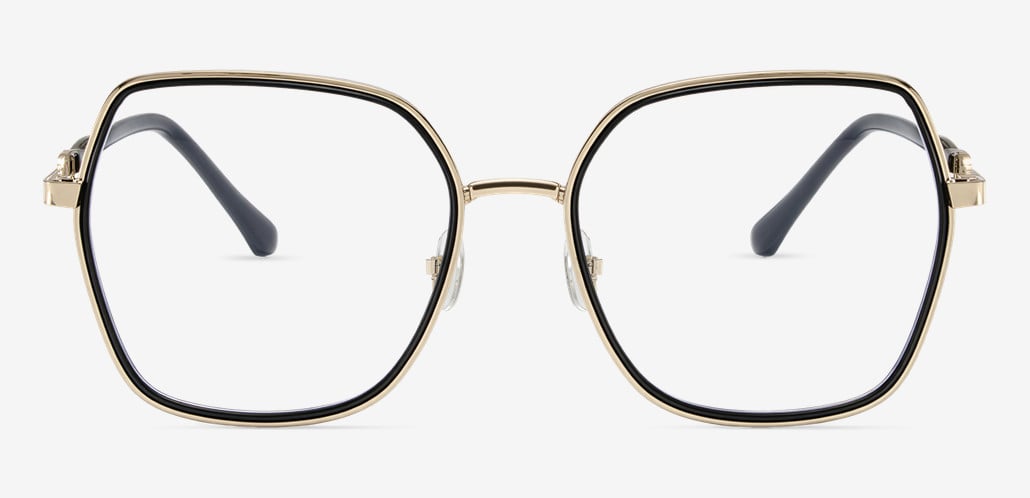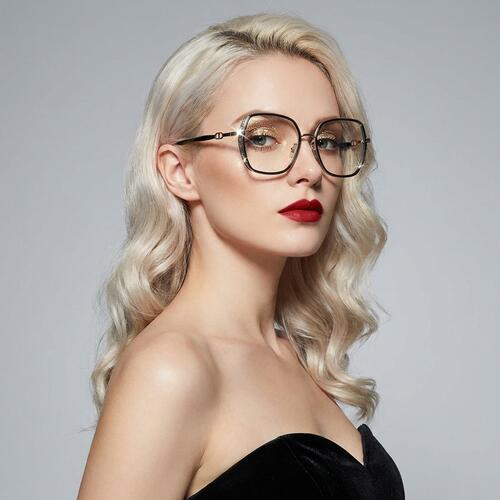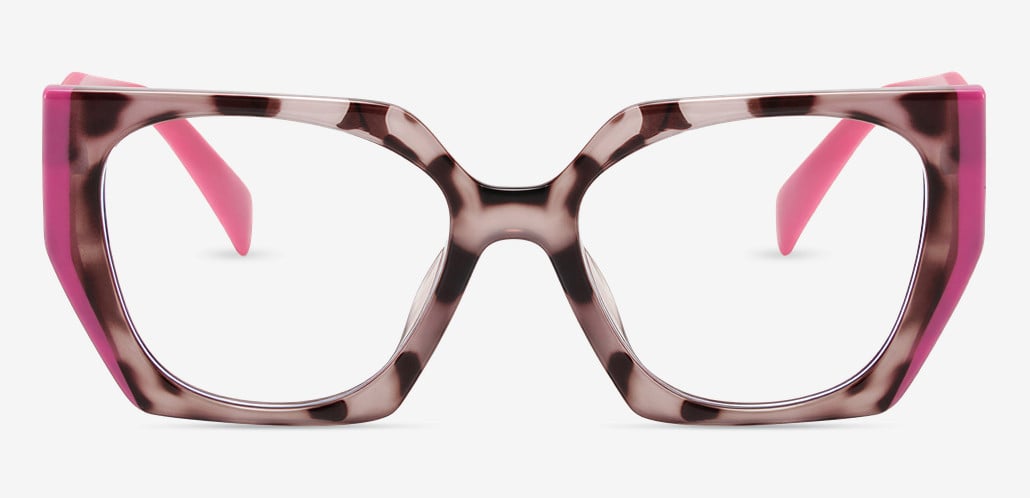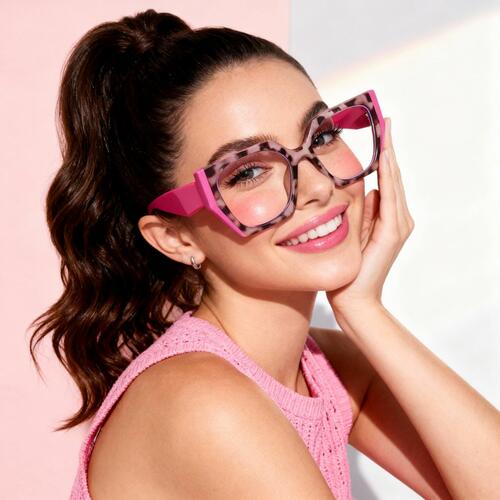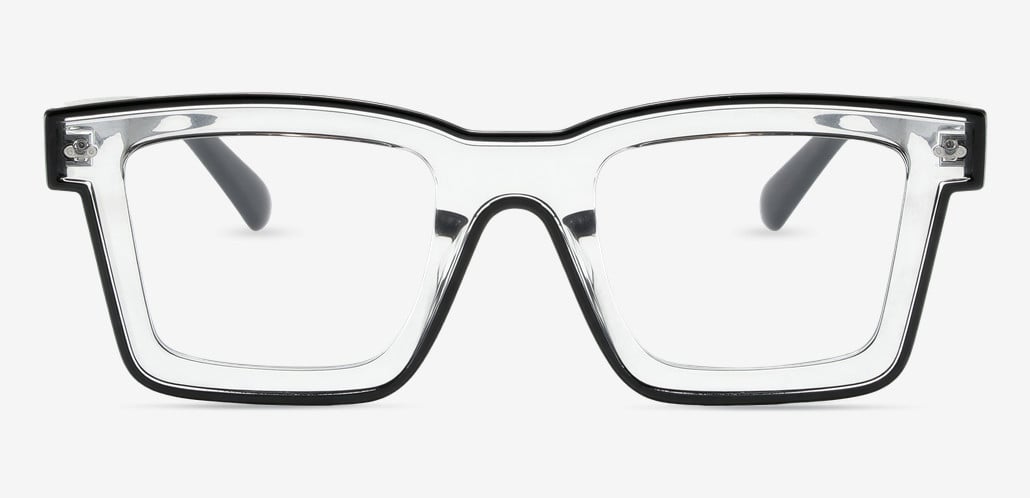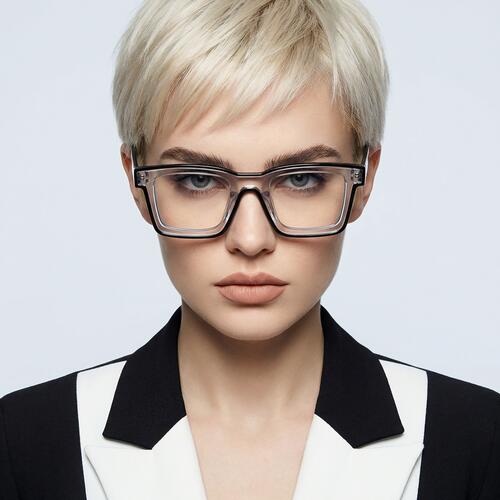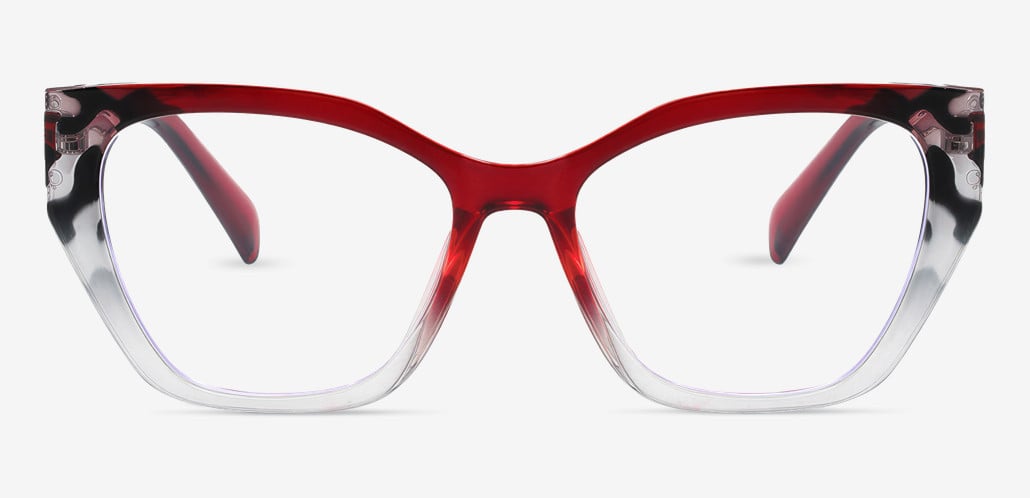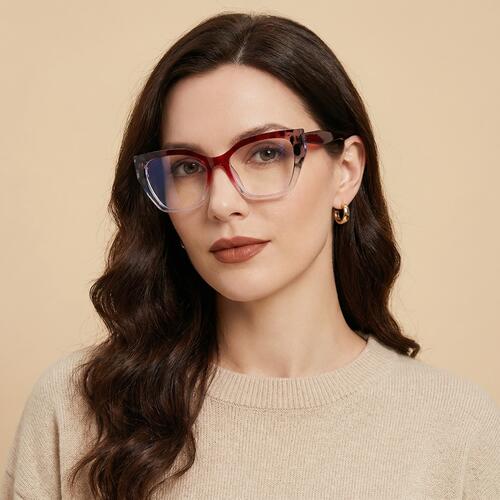

What a cat-eye is actually doing to your face
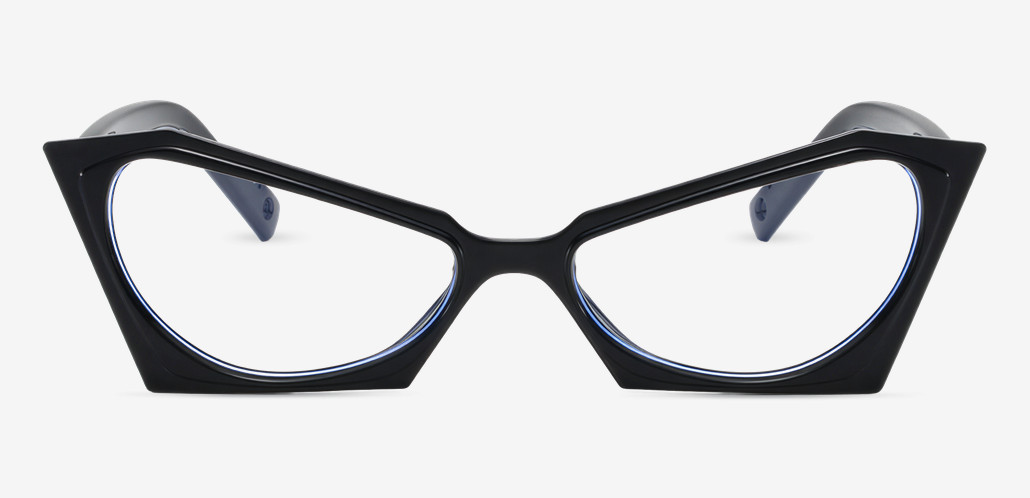
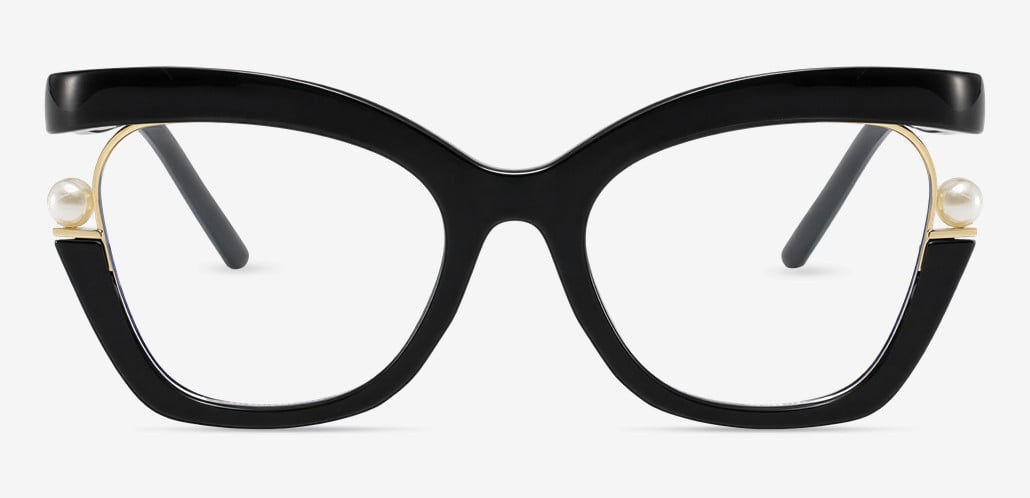
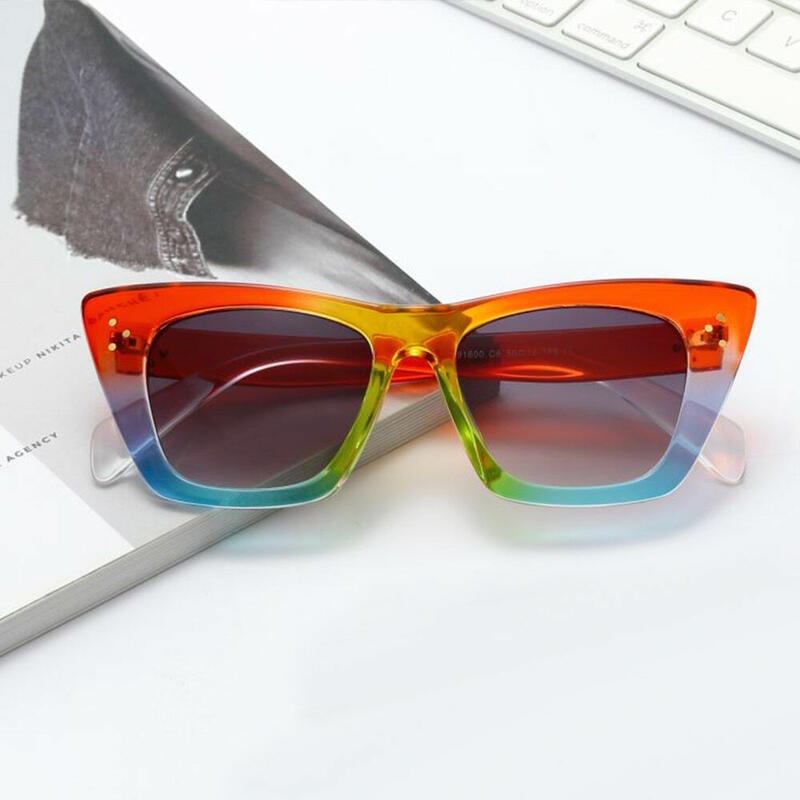
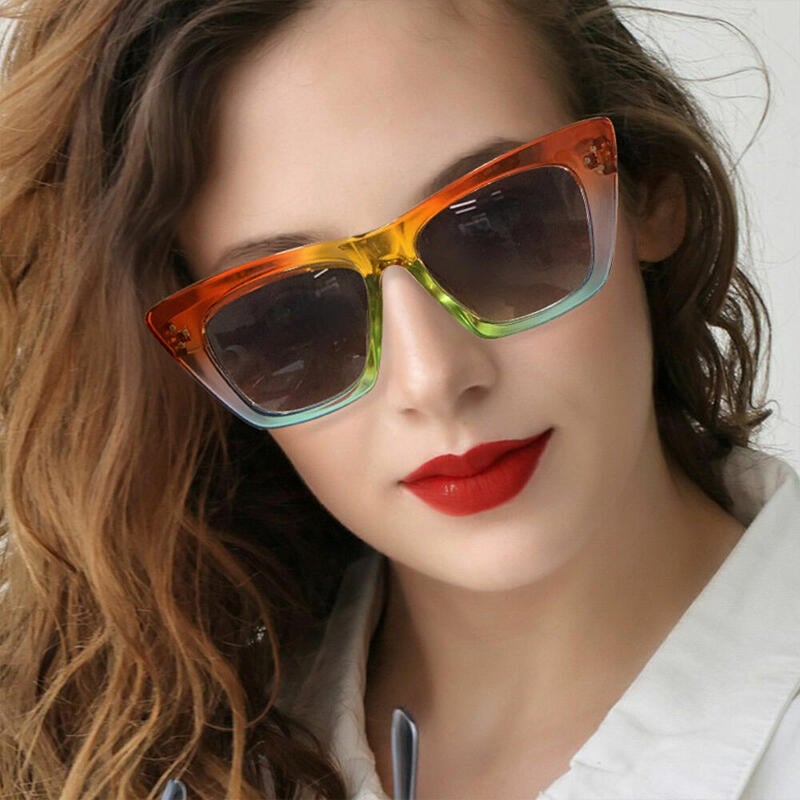
Every cat-eye is built around one move: the upswept outer corners. That sweep pulls your eye line diagonally up and out. It does two jobs at once. It lifts, which counteracts heaviness or softness in the lower half of the face. And it widens the upper third, drawing attention toward your brows and cheekbones.
So the first question is not "what is my face shape." It is: does my face want more lift and width up top, or does it already have plenty? Once you know that, three features of the frame decide the rest.
The sweep is how high and how sharply the outer corners rise. An aggressive sweep gives a strong, obvious lift. A soft sweep is barely-there and subtle.
The width is how wide the frame front is compared with your face. This is where most people go wrong, and it has nothing to do with face shape categories.
The depth is the top-to-bottom size of the lenses, which controls how much of your face the frame covers.
Get those three matched to your proportions and the frame works. Get the right "shape" but the wrong width, and it doesn't.
Read your proportions, not your label
Most people cannot reliably name their own face shape, and honestly, the labels blur. Plenty of faces are round-leaning square, or oval that runs a little long. For picking a cat-eye you don't need the label at all. You need three readings, and you can get all of them from a straight-on phone photo with your hair pulled back.
First, length against width. Is your face noticeably longer than it is wide, roughly equal, or shorter and wider?
Second, your widest point. Look at where your face is broadest: the forehead, the cheekbones, or the jaw?
Third, your jaw and chin. Soft and rounded, or angular and defined?
Those three answers point you straight at what the sweep, width, and depth should do. Here is how to translate them, framed as what the frame needs to accomplish rather than a frame-per-face checklist.
If your face is widest at the jaw, or carries weight in the lower half, a cat-eye is doing its most natural job for you. Lean into a higher, more lifted sweep, since that pulls attention up and away from the jaw. Keep the frame at least as wide as your cheekbones so it doesn't shrink your upper face and leave the bottom looking heavier by comparison.
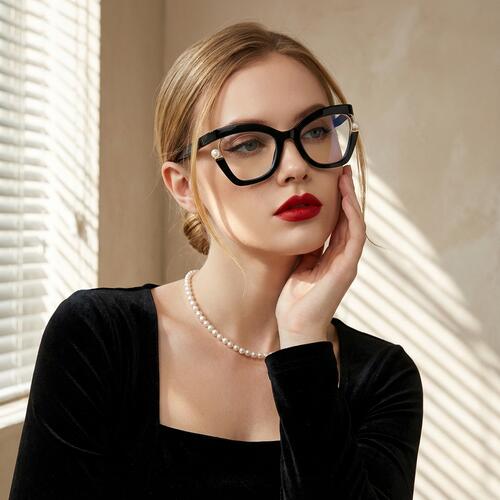
If your face reads balanced, roughly equal in length and width, with soft features, you have the most freedom of anyone. The one thing to watch is width. A frame much wider than your face will overwhelm it, and one that's too narrow will pinch and slide. Soft-rounded and slim cat-eyes usually sit best here.
If your face is long, with the distance from forehead to chin clearly greater than its width, your enemy is added vertical length. Skip the tall, deep frames and the dramatic high sweep. Reach for a wider, shallower cat-eye with a moderate rise, which adds a horizontal line that balances the length.
If you are widest at the forehead with a narrower chin, be careful with the cat-eye's upper-third emphasis, because it can exaggerate a broad forehead. Soften the sweep and let a frame with a bit of visual weight along the bottom edge do the balancing. An oversized soft-rounded style tends to work better here than a sharp, narrow point.
Notice that none of these is a single answer. Two people with completely different "face shapes" can land on the same frame, and one face shape can suit several different cat-eyes depending on the sweep and width. That flexibility is the whole point, and it's why the lookup tables fall apart in practice.
The fit details that wreck a cat-eye
This is the part the style guides leave out, and it's where the real failures happen.
Frame width versus face width is the number one mistake. The front of the frame should end at, or just slightly past, the widest part of your face. Most of the "this looks too small" and "it keeps sliding" complaints come from a frame that's narrower than the face it's sitting on. The fix is almost embarrassingly simple: look at the inside of a pair you already own and wear comfortably. There's usually a set of numbers printed there. The temple-to-temple measurement is the one you want to match. Carrying that single number into your next purchase prevents the most common reason cat-eyes get returned.
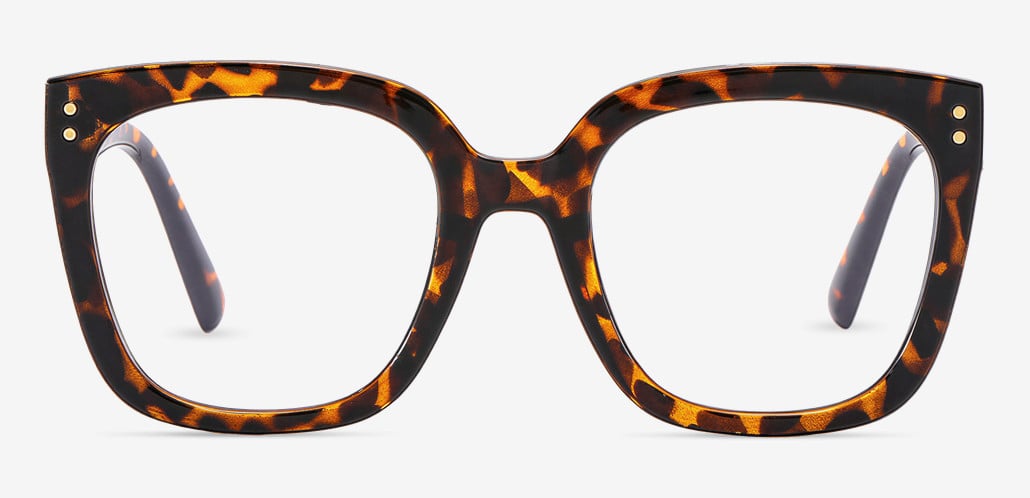
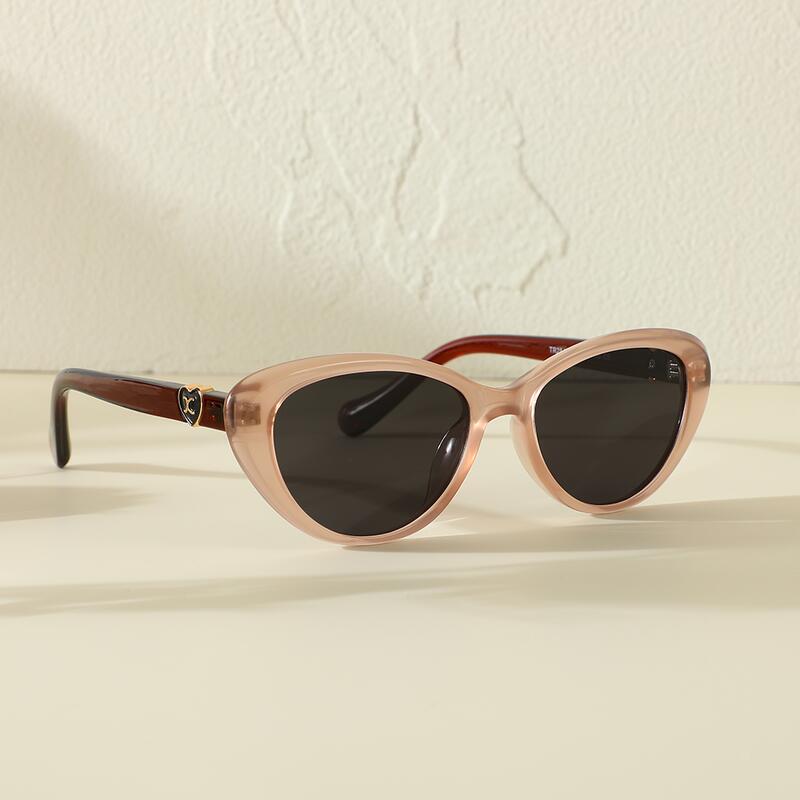
Temple placement decides whether it even reads as a cat-eye. On a true cat-eye, the arms attach high, up near the top outer corner. If the hinge sits low on the frame front, the lift collapses and the whole thing just looks like a rectangle with delusions. It's worth zooming in on a product photo to check where the arm meets the front before you buy.
The bridge is why cat-eyes slide. Because the weight and the upsweep both sit high, cat-eyes are notorious creepers. If you have a low or flat nose bridge, a standard fit will drift down your nose, and as it drops, the corners droop and the lift disappears. Look for adjustable nose pads or a lower-bridge fit. It's the difference between a frame that holds its position all day and one you're pushing up every five minutes.
A small face gets eaten by an oversized frame. Big, dramatic cat-eyes are everywhere right now, but on a genuinely small face the corners poke out past the brow line and the frame reads like it was borrowed from someone else. If your features are petite, a medium width with moderate depth keeps the proportion honest while still giving you the shape.
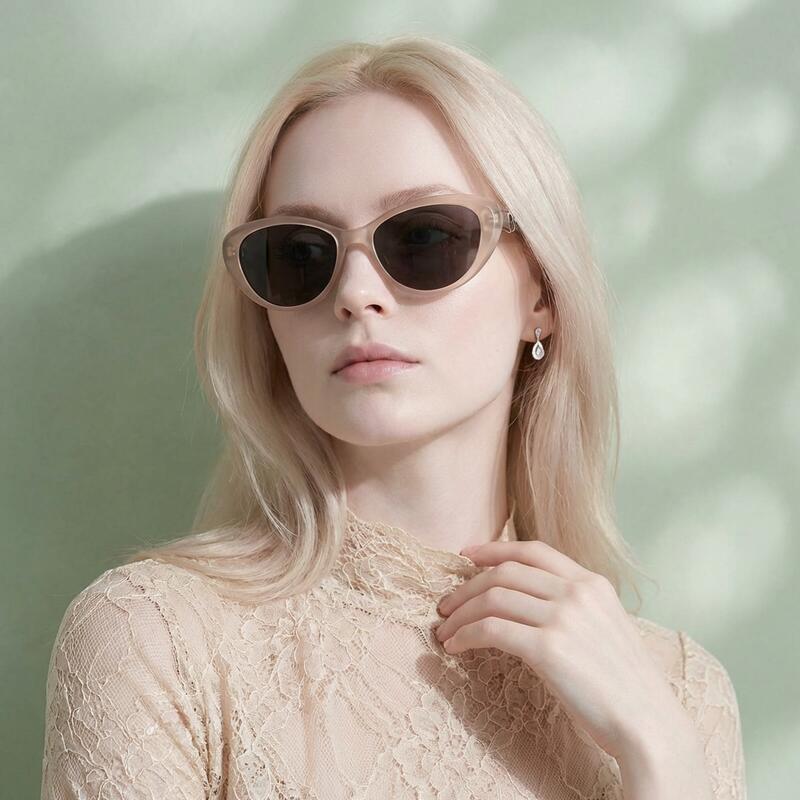
When to ignore all of this
Balance is one aesthetic goal. It is not a rule of law. The whole logic above assumes you want your frame to even out your proportions, and that's a fine default, but it isn't the only reason to wear something.
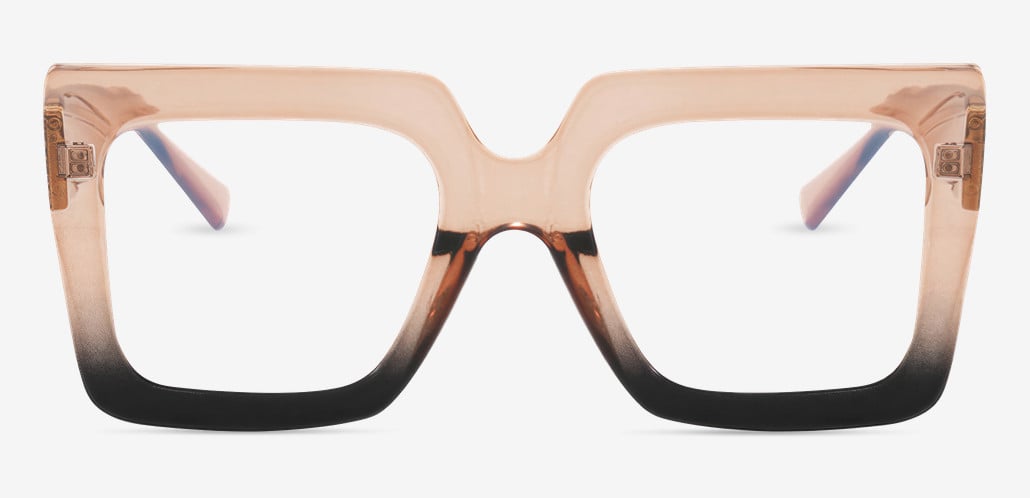
Oversized cat-eyes have been worn flat across every face shape for years now as a deliberate, knowing look, proportion advice be damned. If a frame makes you stand a little straighter when you catch your reflection, that beats a "technically flattering" pair you leave in a drawer. Use the proportions to understand the tradeoff you're making, then make whatever call you want. The point of knowing the rules is being able to break them on purpose.
Test it before you commit
Three things make the difference between guessing and knowing.
Use virtual try-on if it's available, which on our site it is for the full cat-eye range. Seeing the sweep on your own face, and checking whether the frame front reaches your temples, settles most of the questions above in a few seconds.
Take the straight-on mirror photo and run the three-reading check: length versus width, widest point, jaw. It takes longer to read about than to actually do.
And if you're buying online, compare the frame's listed width in millimeters against a pair you already wear comfortably. That one comparison catches the sizing mismatch that causes most returns.
One more thing if you wear glasses already: you don't have to give up the shape to keep your prescription. Most cat-eye frames can be made into prescription sunglasses, so the only adjustment is being a little more thoughtful about depth, since very tall or very wide lenses with a strong prescription get heavier. Factor that into your pick and you keep both the look and your vision.
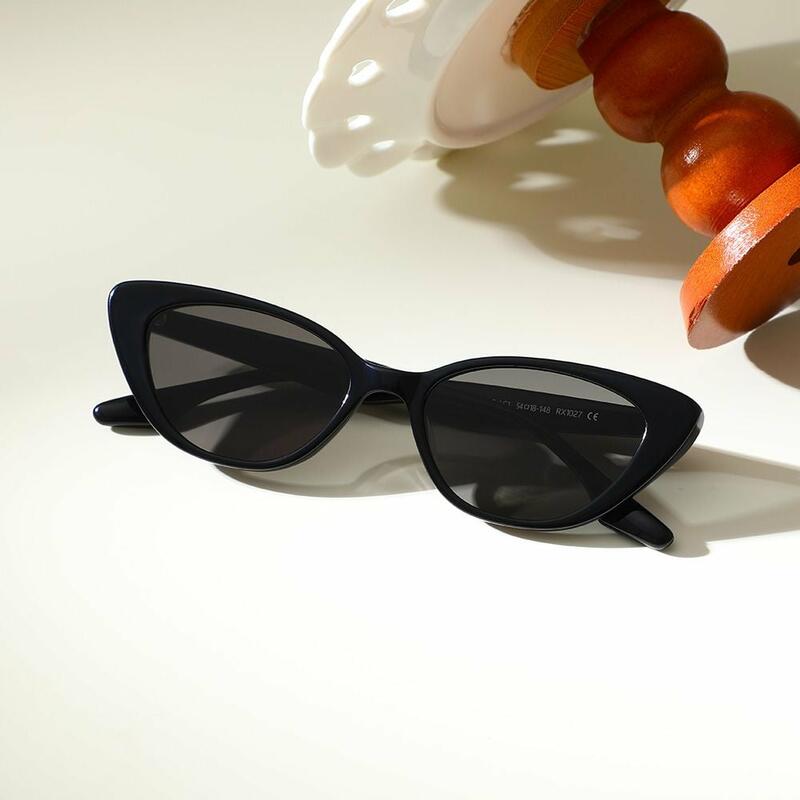
If you remember only three things
Match the sweep to your jaw: stronger lift when the lower face needs lifting, softer when it doesn't. Match the width to the widest part of your face, never narrower. And check the bridge if you're prone to sliding. Everything else is preference, and preference is allowed to win.
Ready to see how the shape reads on you? Browse the full cat eye sunglasses collection and use Try On to test the sweep and width against your own face before you decide.
Frequently asked questions
Do cat eye sunglasses look good on round faces?
They tend to, yes. A round face usually benefits from the lift and the slight angularity the upswept corners add. Go for a more defined sweep and keep the frame at least as wide as your cheekbones so it adds structure rather than getting lost.
What if I don't know my face shape?
You don't need to. Take a straight-on photo with your hair back and read three things: whether your face is longer than it is wide, where it's widest, and whether your jaw is soft or angular. Those answers tell you what the frame should do, which is more useful than a label anyway.
Can cat eye sunglasses work on a long face?
Yes, with the right proportions. Avoid tall, deep frames and very high sweeps, since both add vertical length. A wider, shallower cat-eye with a moderate rise adds a horizontal line that balances a long face.
Why do my cat eye sunglasses keep sliding down?
Usually the bridge fit. Cat-eyes carry their weight high, so a low or flat nose bridge lets them drift. Look for adjustable nose pads or a lower-bridge fit, and double-check that the frame isn't too narrow for your face, which also causes slipping.
Can men wear cat eye sunglasses?
Of course. Slimmer, lower-sweep metal frames and darker acetates read sharper and more angular, which suits a more understated look. The same proportion logic applies: match the width to your face and the sweep to your jaw.