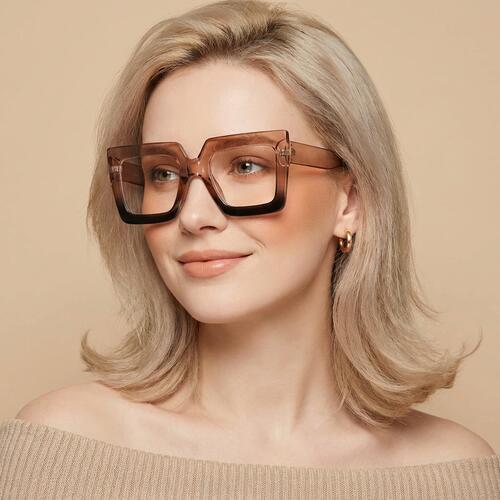

Two Bad Reasons People Avoid Round Glasses
There are really only two things keeping most Americans from trying a round frame, and both of them are wrong.
The first is the costume problem. Say "round glasses" out loud and a lot of people picture exactly two faces: John Lennon in 1968 and Harry Potter at eleven. The shape got so attached to those images that it started to feel like a costume piece instead of an everyday frame — something you'd wear as a reference, not just because it looks good.
The second is the rule. Somewhere along the way, nearly every face-shape chart on the internet decided that round faces must wear angular glasses and round glasses are "for square or angular faces only." Repeated enough times, that hardened into a flat ban: if your face is round, hands off the round frames.
Both of these are oversimplifications, and once you set them aside, round glasses turn out to be one of the most useful, most underrated shapes you can put on your face. There's even a practical reason an optician might steer you toward a round frame that has nothing to do with fashion — more on that below, because it's the part almost nobody talks about.
Here's the honest version of all of it.
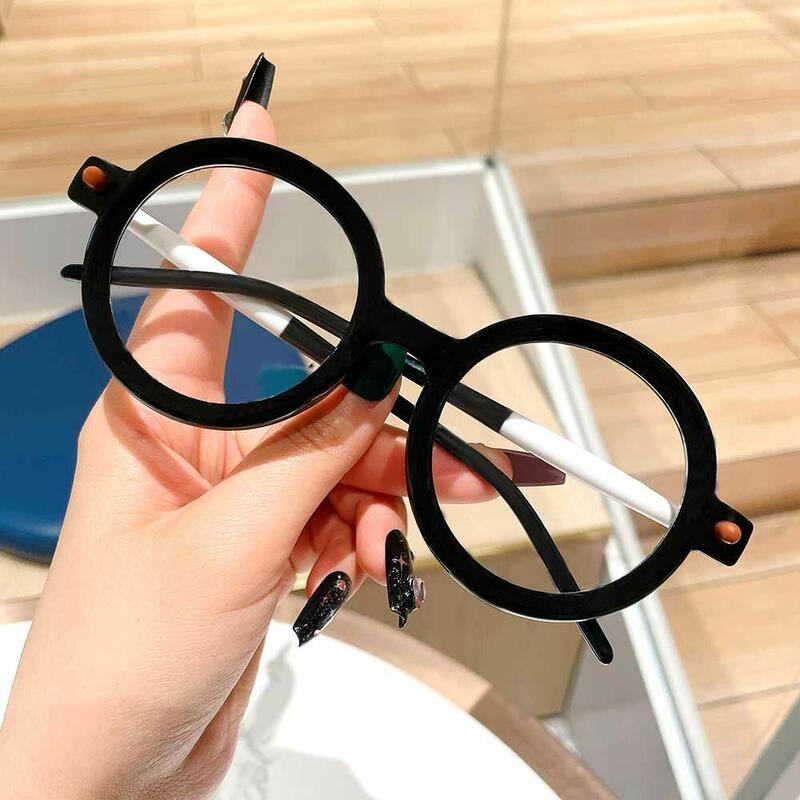
The Short Answer, If You're in a Hurry
Are round glasses in style in 2026? Yes. Round frames came back strong in 2025 and held their place into 2026, partly on the back of the broader "intellectual" or quiet-academic look that's been driving softer, rounder silhouettes. The newest twist is the modern oval — a slightly stretched round that reads a touch more grown-up.
Do they only suit angular faces? No. That rule is half-true at best. What actually matters is the proportion of the frame and how much contrast it creates with your features, not a yes/no based on your face shape.
What do they "say" about you? Across eyewear and first-impression research, round and oval shapes consistently read as warmer, calmer, more creative, and more approachable than sharp angular frames. That's a tool you can use on purpose.
The sleeper benefit: For a stronger nearsighted (minus) prescription, a smaller, rounder frame is one of the most effective ways to keep your lenses looking thin. This is genuinely an optician's trick.
Now the longer version.
What a Round Frame Actually Signals
People form an impression of your face — and your eyewear — in a fraction of a second, before you've said a word. Glasses are part of that snap judgment, and the shape of the frame does a surprising amount of the talking.
The pattern is consistent across the people who study this. Angular frames — squares, rectangles, sharp geometrics — tend to read as structured, decisive, and authoritative. They're the "boardroom" frames. Round and oval shapes pull in the opposite direction: they come across as softer, calmer, more open, and more creative. It's why round frames are stereotypically the architect's glasses, the design-studio glasses, the "I read for fun" glasses. The Optical Journal sums up the round as one of eyewear's purest forms — classic, artistic, and endlessly adaptable, where a thin wire version feels understated and intellectual while a chunky acetate version turns bold and fashion-forward.
This isn't fortune-telling. It's a styling lever. If your work or your wardrobe already runs sharp — tailored, minimal, lots of straight lines — a round frame adds the warmth those things can lack. If you want to look more approachable in a field where people read you as intense, a round frame quietly does that work. And if you want the opposite, you now know to skip it. The point is to choose the signal on purpose instead of defaulting to a rectangle because it felt "safe."
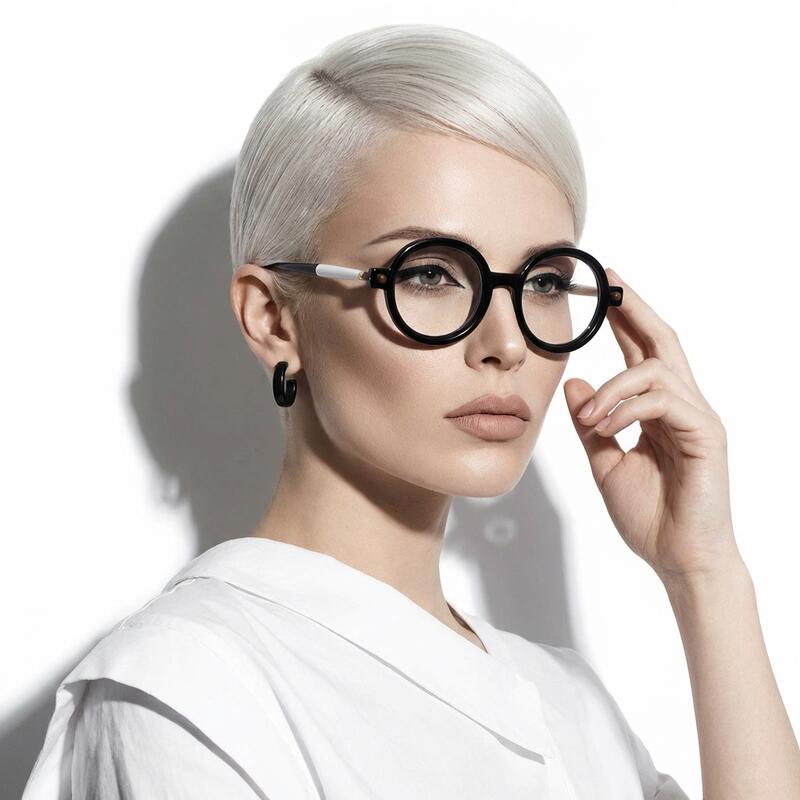
The Optician's Reason to Love Round (Almost Nobody Mentions This)
Here's the part that has nothing to do with vibes.
If you're nearsighted, your lenses are minus lenses: thin in the middle, thicker toward the edge. The stronger your prescription in diopters, the thicker that outer edge gets. And here's the geometry that matters — your finished lens is cut out of a big round lens "blank" that's thinnest at its center and thickest at its rim. The bigger and wider the frame, the more of that thick outer rim ends up inside your glasses. That's why a strong prescription can look thin in the lab and then look like a soda-bottle bottom once it's dropped into a big, wide frame.
A small, round frame does two helpful things at once. It keeps the overall lens diameter down, so the lab can cut your shape from the thinner inner part of the blank. And the round outline avoids the sharp corners where wide rectangular frames trap the thickest material. The result is a noticeably thinner-looking edge for the same prescription. This isn't a fringe theory — it's standard dispensing advice. Warby Parker's own lens guidance notes that smaller, rounder frames keep the lens diameter down and help limit edge buildup, and labs that work in high prescriptions echo it directly: one optician's rule of thumb, citing optometry-school material, is to aim for a lens ("eye size") width under about 52 mm once you're past roughly -3.00, and under 50 mm — even 48 mm — for prescriptions stronger than -5.00.
Round frames naturally tend to come in those smaller, well-centered sizes. So if your prescription is on the stronger side and you've been frustrated by thick, ringed edges, a round frame paired with a high-index lens (1.67 or 1.74) is one of the best-looking combinations you can choose. It's the rare case where the most flattering style move and the smartest optical move are the same frame. If you're not sure where your prescription falls, open a support ticket and our optical team will tell you straight whether a round shape will work for your numbers.
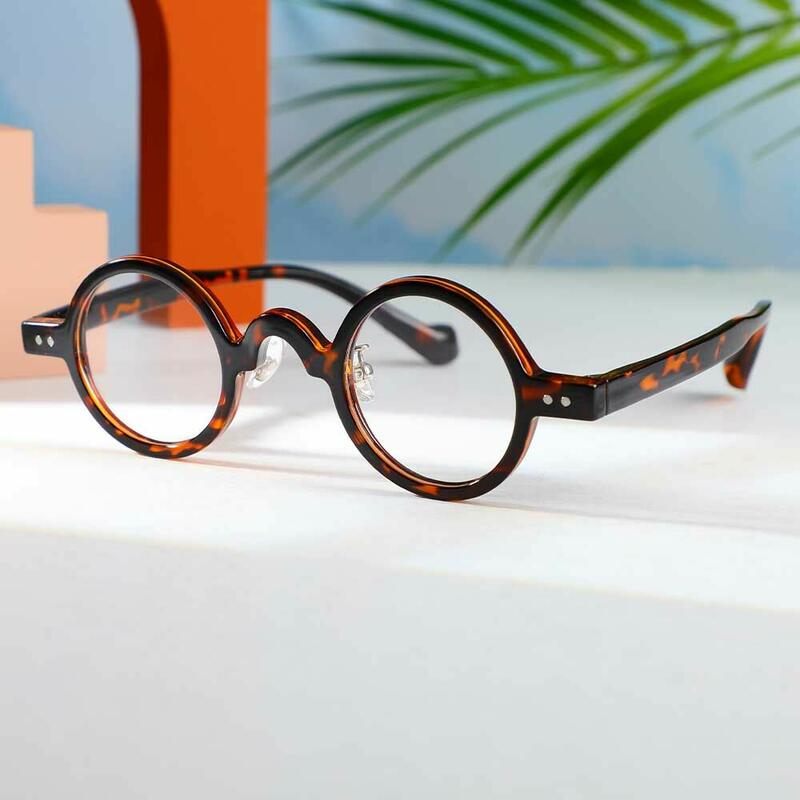
About That "Round Faces Can't Wear Round Glasses" Rule
Let's deal with the rule properly, because the blanket version of it is doing real damage.
The kernel of truth: glasses create contrast or echo with your face, and a frame that simply repeats your strongest feature can flatten the effect. A perfectly circular, soft-edged frame on a very round, soft face can read as a little same-y. That's the legitimate concern hiding inside the rule.
But "round face → never round glasses" throws out far too much. What actually decides whether the shape works is two things:
1.Proportion and definition. A round frame with a clear, defined rim — a crisp metal wire, or an acetate with a little structure — adds enough of its own line that it stops blending into a softer face. The frames that get round faces in trouble are usually oversized and edgeless, not round per se.
2.The modern oval shortcut. This is the 2026-friendly answer. A gently stretched round — the oval, or the so-called P3 shape that's slightly shorter top-to-bottom than it is wide — keeps almost all of the round frame's warmth while adding just enough length to balance a rounder face. If a true circle feels like too much, the oval is the move, and it's exactly the direction the trend is heading anyway.
So the honest guidance is: round faces aren't banned from round glasses — they just do best in defined or slightly elongated rounds rather than big, soft, perfectly circular ones. Everyone else — square, oval, heart, longer faces — has even more room to play, because the round shape's curves naturally soften a strong jaw or sharp cheekbones. If you want to see it on your own face before deciding, use the virtual try-on on any round frame at Aoolia rather than trusting a generic chart.
Metal, Acetate, and How Big to Go
A round frame can feel like two completely different objects depending on what it's made of and how big it is — so this is worth getting right.
Thin metal rounds are the understated, intellectual end of the range. Gold, silver, gunmetal, and rose-gold wire frames are the lightest-looking option and the most "office-safe." They're also the version most people picture when round glasses look effortless rather than costumey.
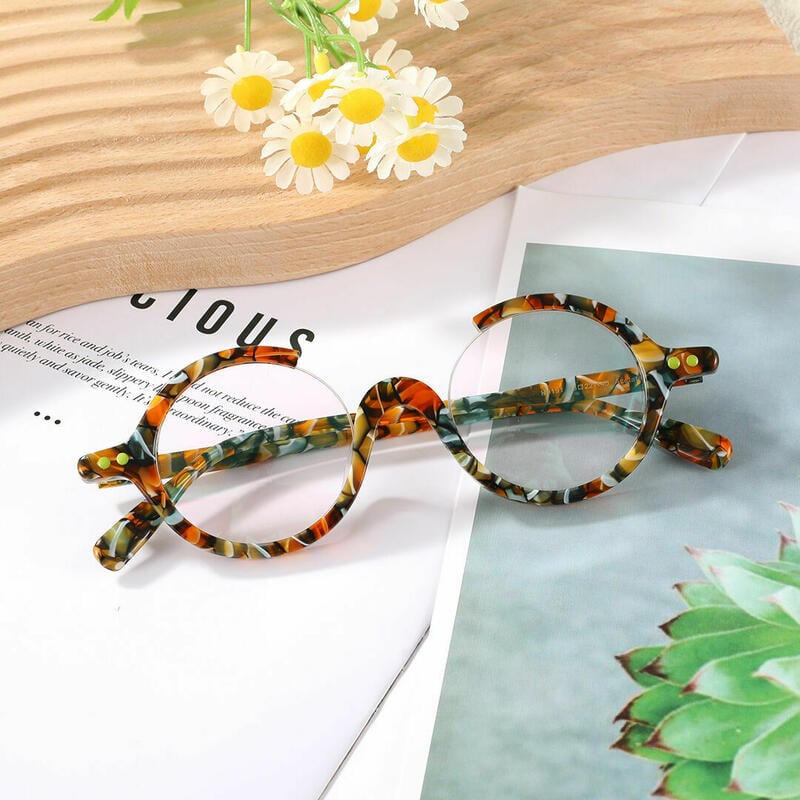
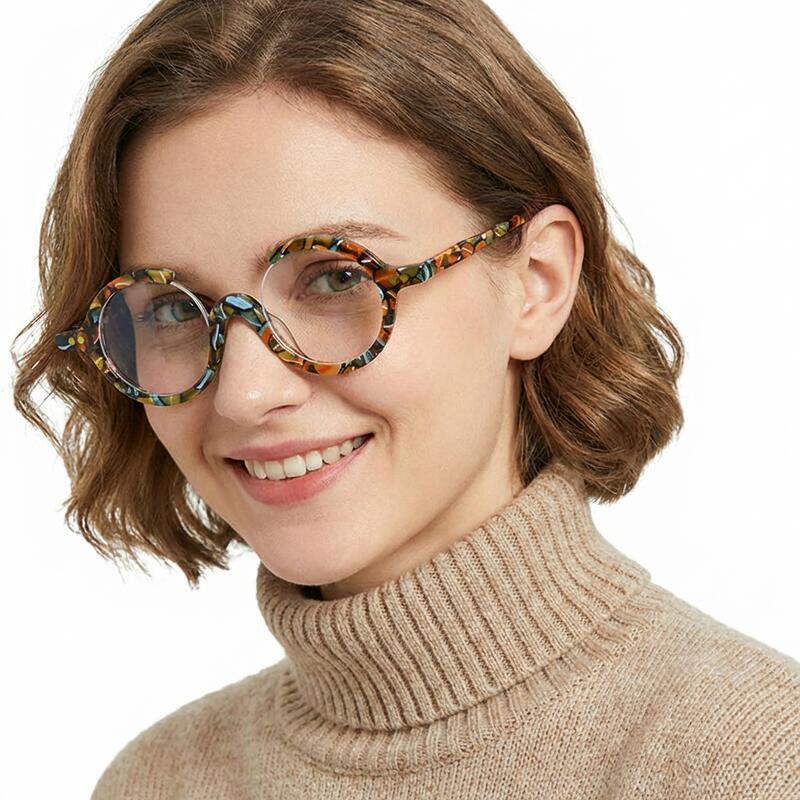
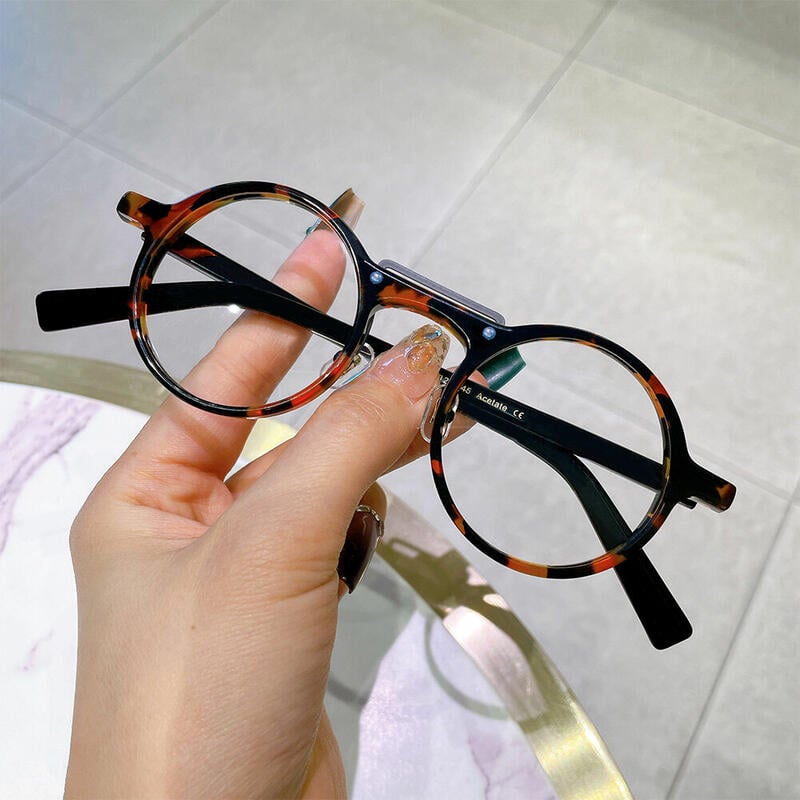
Acetate rounds are the bolder, more fashion-forward end. A round in black, tortoise, or a warm transparent acetate has presence and reads as a deliberate style choice. Acetate also happens to be the friendlier material for stronger prescriptions, because a slightly thicker rim can hide the edge of a high-index lens that a delicate wire frame would leave exposed.
On size: the single biggest mistake is going too big. The charm of a round frame lives in restraint. Oversized rounds drift quickly into either the hippie-throwback or the cartoon-owl zone, and — as covered above — they make a strong prescription look thicker. When in doubt, size down. Check the frame's lens width and bridge measurements against a pair you already own and like; a difference of even a few millimeters changes the whole effect.
Round Glasses for Men
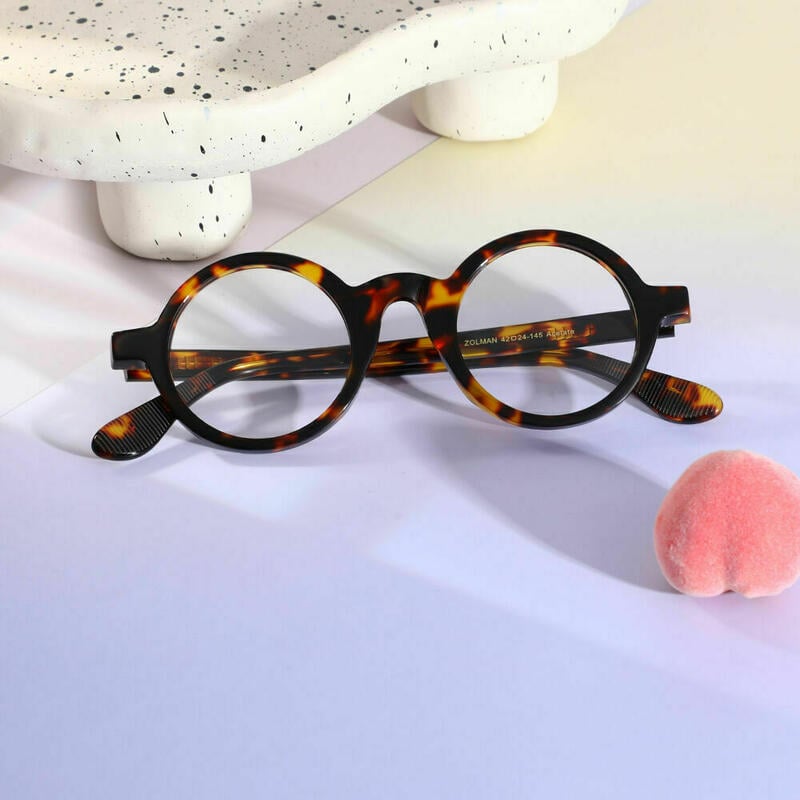
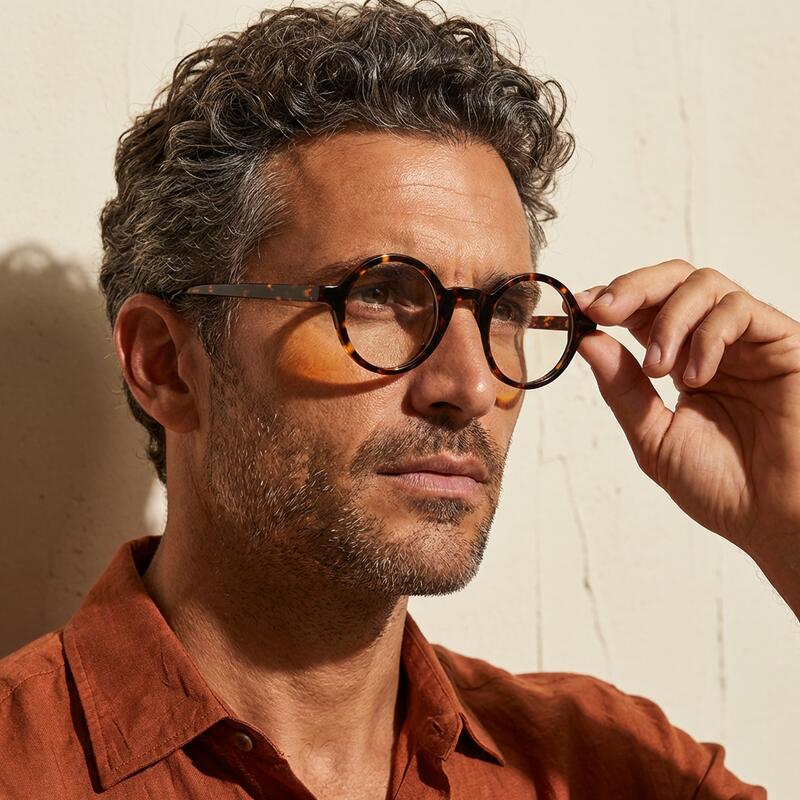
Round frames are not a women's-only shape, and treating them like one is leaving a great option on the table. On men, a thin metal round in a small-to-medium size reads as considered and a little creative — the difference between "guy who picked the default rectangle" and "guy who thought about it." Keep the proportions modest and the color neutral (black, gunmetal, dark tortoise) and a round frame sits comfortably in an office without announcing itself. The men who get it wrong almost always went too large or too perfectly circular; a slightly squared-off round, or a modern oval, is the safer entry point.
How to Wear Round Glasses Without Looking Like a Costume
This is the section the trend pieces skip, and it's the one that actually decides whether you'll wear the things.
Let the rest of the outfit be plain. Round frames already carry a point of view. Pair them with simple, modern clothes and the glasses read as intentional. Pair them with a vest, a pocket watch, and a band tee and you've built a costume.
Mind the color story. A round metal frame in gold or silver is timeless. A round frame in a loud color plus a vintage hairstyle plus a retro outfit is where the reference becomes a disguise. Change one of those variables.
Pick crisp over flimsy. A clean, well-made rim — metal or acetate — looks current. A thin, slightly bent wire frame is what tips the whole look toward "borrowed from a museum gift shop."
When unsure, go oval. Every time a true circle feels like a stretch, the modern oval gives you 90% of the effect with none of the costume risk.
Round glasses look best when the shape is the only loud thing you're doing. Get that balance and they stop being a reference to someone else and start just being yours.
A Few Honest Caveats
No frame is perfect, and pretending otherwise is how you end up with glasses you don't wear.
Progressive and bifocal wearers, take note. Round and especially very small round frames have limited vertical height. Progressive lenses need a minimum amount of height to fit the distance, intermediate, and reading zones comfortably. A tiny round can be too short for a good progressive. If you wear progressives, lean toward a slightly larger round or a taller oval, and confirm the frame height before you buy — or ask us.
Very wide faces may find a small round looks undersized. The fix is a medium round or an oval, not abandoning the shape.
Strong prescriptions in thin wire frames can leave the lens edge a little exposed. As above, acetate hides it better than delicate metal.
 、
、
Browse Round Eyeglasses at Aoolia
Aoolia stocks round glasses across the full range that makes this shape work — thin metal and bold acetate, small classic circles and the easier-to-wear modern ovals, in black, tortoise, clear, gold, silver, and more, with frames starting at budget-friendly prices and prescription, blue-light, and high-index lens options available on checkout. Every prescription order is reviewed by a licensed optician before the lenses are cut, so if a round frame isn't right for your numbers, you'll hear about it before it ships. Browse the full round eyeglasses collection and use the virtual try-on to see the shape on your own face.
Frequently Asked Questions
Can I get round glasses in a strong prescription without thick edges?
Often, yes — and round is actually one of the better shapes for it. A small, round frame keeps the lens diameter down and avoids the corners where wide frames trap thick material, so the edge looks thinner. Pair it with a high-index lens (1.67 or 1.74) for the best result. The stronger your prescription, the more it helps to keep the frame small.
Are round glasses good for progressive lenses?
Sometimes, but check the height first. Progressives need a minimum vertical lens height to fit all the focal zones, and very small round frames can be too short. If you wear progressives, choose a larger round or a taller oval, or ask an optician to confirm the frame is tall enough.
Do round glasses suit men?
Yes. A thin metal round or a slightly squared-off round in a neutral color (black, gunmetal, dark tortoise) reads as considered and creative on men, and works fine in professional settings. Keep the size modest — oversized perfectly-circular frames are where men's round glasses go wrong.
What's the difference between round and oval glasses?
A round frame is close to a true circle; an oval is stretched wider than it is tall. Ovals keep most of the round frame's softness but add length, which balances rounder or fuller faces more easily. If a true circle feels like too much, an oval is the gentler version of the same look.
How do I avoid looking like Harry Potter or a 1960s throwback?
Keep everything else simple, choose a crisp well-made rim over a flimsy thin wire, and don't stack the round frames on top of a vintage outfit or hairstyle. Round glasses look modern when the shape is the only statement you're making.