
Where Glasses Actually Get Damaged
Before comparing cases, it helps to understand the three ways glasses die off your face. Every case type is a trade-off between protecting against these.
Scratching. Ordinary dust and grit contain quartz particles, which sit around 7 on the Mohs hardness scale — harder than glass and far harder than the anti-reflective coatings and polycarbonate that modern lenses are made of. Glasses tossed loose into a purse next to keys, coins, and zipper pulls are being slowly sanded. The damage is cumulative and invisible at first: micro-scratches scatter light, which is why an older pair produces halos and glare at night even when the prescription hasn't changed. And unlike a scratched car panel, a coated lens can't be polished or buffed. Once the coating is scored, the only fix is new lenses.
Crushing. Sat on, stepped on, flattened under a laptop in a backpack, compressed at the bottom of an overhead bin. Crush damage bends frames out of adjustment, tears hinges out of acetate, and pops or chips lenses. It's the most expensive failure mode and the only one that hard cases exist to prevent.
Heat. This one surprises people. A study published in the journal Temperature measured parked cars on hot days and found cabin air climbing past 115°F within an hour, with dashboard surfaces approaching 160°F. That's above the softening point of cellulose acetate, the material most quality frames are made from — which is why glasses left in a summer car come back subtly warped, with nose pads and temple bends that no longer sit right. Heat is also the main cause of coating "crazing," the fine spiderweb cracking that appears in anti-reflective layers when the coating and the lens beneath it expand at different rates. Crazing, like scratching, is permanent.
There's a quieter fourth killer worth naming: hinge stress. Forcing glasses into a case that's slightly too small, or closing a lid that presses on the temples, loads the hinges every single day. Spring hinges tolerate this better than rigid ones, but the cheapest way to extend hinge life is simply a case with room to spare.
Hard, Soft, or Folding: What Each One Actually Protects Against
Case marketing tends to blur these categories together. The differences are real and worth being blunt about.
Hard clamshell cases are the only type that protects against all three failure modes at once — crush, scratch, and heat (briefly; more on that in the car section). The shell can be aluminum, molded ABS plastic, or compression-molded EVA foam with a fabric skin, and honestly the material matters less than the construction: a $8 molded clamshell with a solid hinge protects better than a $40 leather case wrapped around a flimsy core. The trade-off is bulk. A standard clamshell occupies roughly the volume of a soda can lying on its side, which is exactly why so many people abandon them. If your glasses ride in a backpack, a shared tote, checked or carry-on luggage, or anywhere weight can land on them, a hard case is non-negotiable.
Soft pouches — the microfiber sleeves and squeeze-top leather slips — protect against scratching and nothing else. Zero crush protection. That doesn't make them useless; it makes them situational. A pouch is a legitimate choice when the glasses live in a dedicated pocket where nothing else goes: a shirt pocket, a purse's separate sunglass compartment, a car door pocket used for nothing else. Microfiber pouches have a bonus function as a cleaning cloth, with one important caveat covered in the care section below. If your "pocket" is actually the bottom of a bag that also holds a water bottle and a charger, a pouch is a false economy.
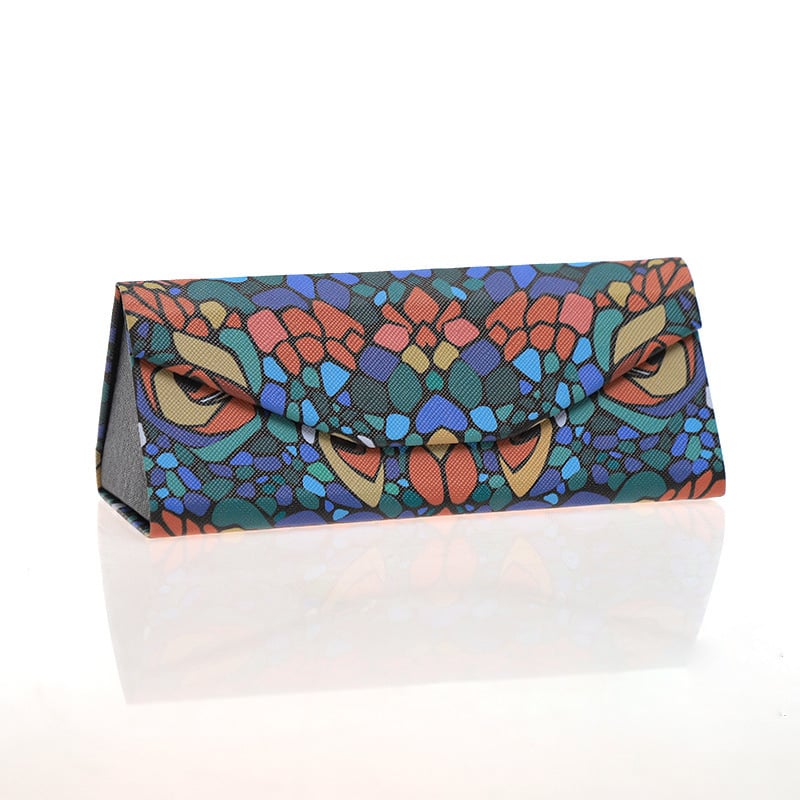
Flat-folding magnetic cases are the category that has genuinely changed in the last few years, and the main reason a 2026 guide reads differently from a 2020 one. These fold completely flat when empty — solving the classic complaint that the case takes up more room than the glasses — then snap into a rigid triangular or rectangular shell with magnets when in use. Protection lands between a pouch and a full clamshell: excellent scratch protection, good resistance to everyday bag pressure, but not built for a suitcase or a heavy load. For commuters and anyone who resents carrying an empty case around all day, it's often the option that finally gets used consistently. Aoolia's own tri-fold magnetic case works this way, as do dozens of similar designs across the market.
A fair rule of thumb: match the case to the worst thing that regularly happens to your bag, not the best. If your backpack ever gets tossed, stacked, or sat on, the answer is hard. If your glasses genuinely never leave a protected pocket, a pouch is fine. Everyone in between is who the folding case was invented for.
The Parts That Matter More Than the Outside
Two cases can look identical on a shelf and behave completely differently after three months. The differences hide in four places.
The hinge. On budget hard cases, this is almost always the first failure point. Look for a metal pin hinge or a full-length fabric hinge; avoid thin "living hinges" of molded plastic, which fatigue and snap. A case with a broken hinge doesn't just stop protecting — it becomes a loose hard object rattling around the same bag as your lenses.
The lining. Microfiber and flocked linings both work. What to check is the stitching and edges: exposed seams, staples, or a lining that's starting to peel will eventually put something abrasive or hard in contact with your lenses. If a lining sheds fuzz when new, that fuzz ends up on your lenses every time you open the case.
The closure. Spring-loaded clamshells and magnetic closures are both reliable. Zippers deserve one specific caution: if the case goes to the beach, sand works into the zipper coil, and a zipper full of grit sits half an inch from your lens every time you open it. For pool, beach, and trail use, prefer a zipperless design or be religious about shaking the case out.
The footprint when open. Minor but real: a case you'll use on a nightstand or desk should sit flat and stay open on its own. Cases that snap shut on your hand or tip over get abandoned, and an abandoned case protects nothing.
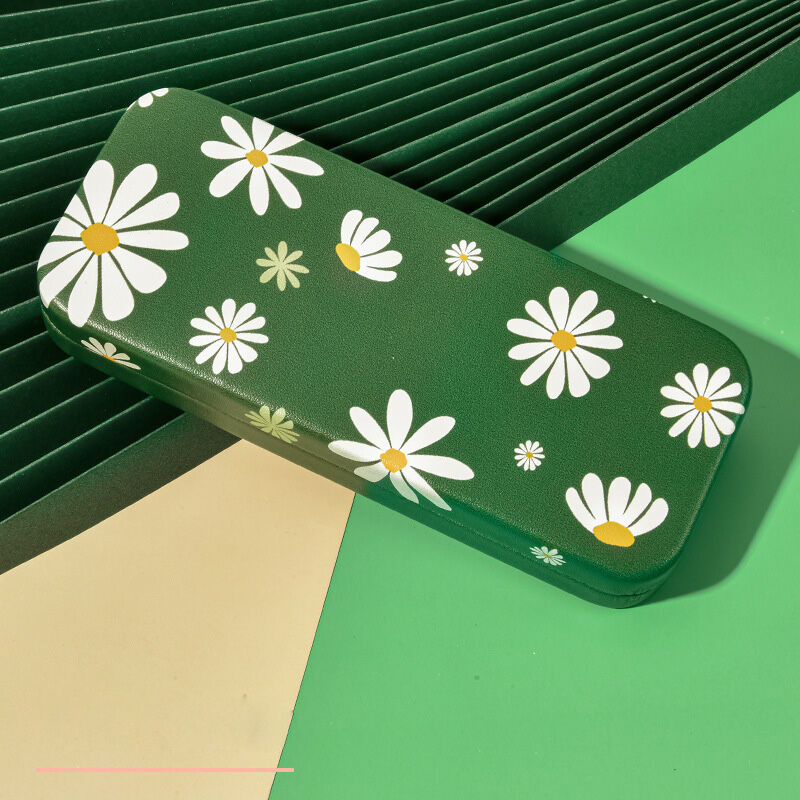
What doesn't matter much: whether the outside is aluminum, PU leather, printed fabric, or cork. That's an aesthetic and sustainability choice — recycled-plastic and cork shells have become common in 2026 and perform fine — but protection comes from the rigidity of the core and the quality of the hinge, not the skin.
Getting the Size Right
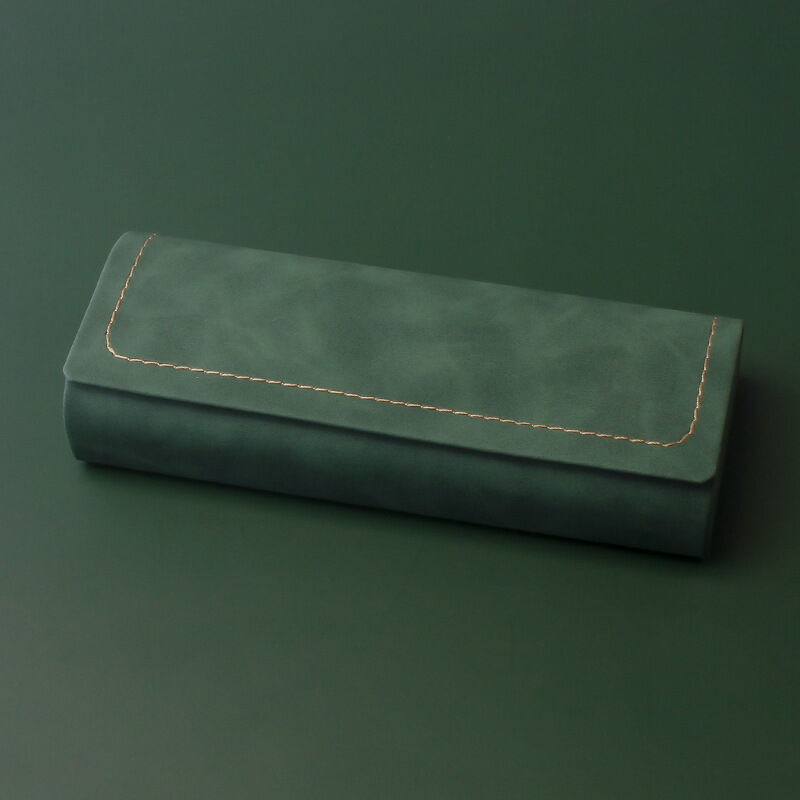
More case regret comes from sizing than from quality. The industry sells "universal" cases, and universal is roughly true for standard rectangular eyeglasses — and roughly false for everything else.
Start with your frame's printed measurements, usually found on the inside of the left temple arm in a format like 52□18 145: lens width, bridge width, and temple length in millimeters. Frame total width (usually 125–150mm) and lens height — the vertical measurement, which matters enormously for cat-eye, oversized, and aviator styles — determine whether a case closes without pressing on anything. Depth is the sneaky one: high-wrap sports frames and thick acetate frames stack taller when folded than slim metal frames do.
The fit test, if you're buying in person or checking a delivery: the glasses should drop in without force and the lid should close without you feeling it touch the frame. A slight rattle is acceptable; lid pressure on the lenses or temples is not, because that pressure transfers straight into the hinges and coating every time the bag gets bumped. When in doubt, size up — a case one size too big is a minor annoyance, and one size too small is a hinge-killer.
Match the Case to How You Actually Carry Your Glasses
The best case on paper is the one that fits your worst habit. A few honest scenarios:
The bag commuter. Glasses or sunglasses ride in a purse, tote, or backpack alongside everything else. This is the highest-risk carry pattern there is, and it wants a hard or folding magnetic case, full stop. If bag space is the objection, the flat-fold style removes the excuse: it's a coaster when empty.
The car. The single most damaging habit in American eyewear is leaving sunglasses on the dashboard or in the glovebox through a summer afternoon. No case insulates against 150°F+ for hours — the fix is behavioral, not equipment. Keep a case clipped to the visor or in the console for short stops, and take the glasses with you when the car will sit in the sun. If a pair has already spent a hot day in a closed car, check the fit before assuming it survived; warping is often subtle.
The traveler. Two rules. First, glasses fly in the carry-on, never checked — checked bags get compressed by hundreds of pounds of other luggage, and a lost bag means a lost prescription. Second, anyone traveling with both prescription glasses and sunglasses needs protection for whichever pair is off the face at any moment, which in practice means either two cases or a two-slot travel organizer. The roll-up and hanging multi-pair organizers that have proliferated recently are genuinely useful here rather than gimmicks.
The gym and the trail. Sweat and sunscreen are mild solvents; a pouch that absorbs them and then rubs against lenses is doing slow chemical and abrasive damage at once. For active use, a rigid ventilated case in the gym bag beats a soaked pouch, and rinsing sunscreen residue off frames before casing them costs ten seconds.
Kids. Every parent learns the same lesson: the best kids' case is the one the kid will actually use. That means one-handed opening (stiff clamshells get abandoned by small hands), genuinely crush-proof construction (backpacks get thrown), and a design the child likes enough to feel ownership of — the reason cases shaped like animals and unicorns exist is retention, not decoration. A second identical case left at school covers the inevitable.
The readers-everywhere household. Anyone who keeps reading glasses in four rooms doesn't need one excellent case; they need four adequate ones, stationed where the glasses live. At under $10 for a solid molded clamshell, casing every pair costs less than replacing one scratched set of lenses.
How Much to Spend
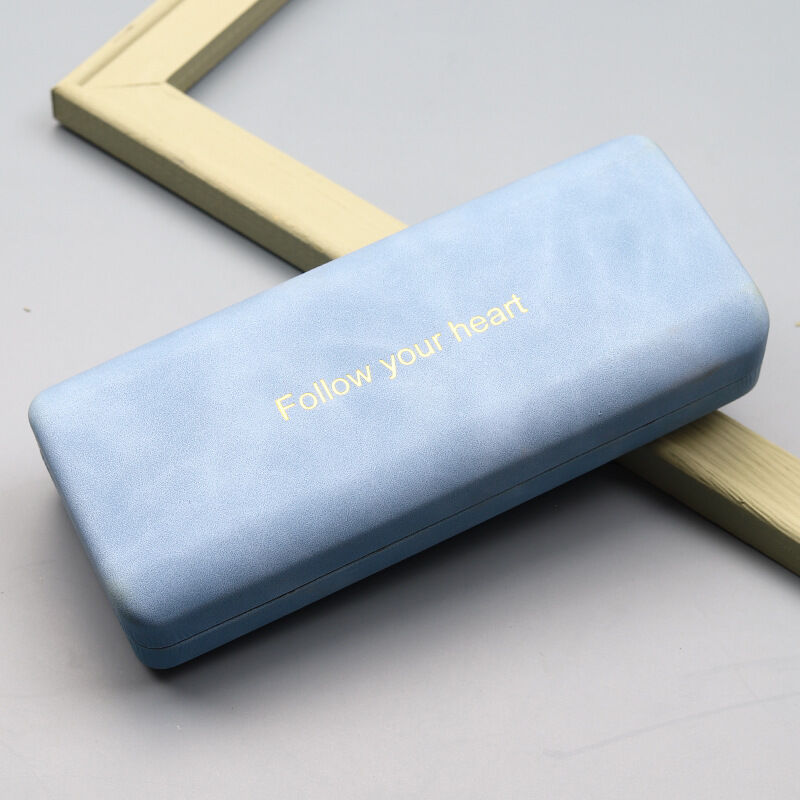
Less than the category's marketing suggests. Genuinely protective molded clamshells exist from about $5–10 — Aoolia's own cases sit around the $10 mark — and that price band already buys crush protection, a decent hinge, and a clean lining, which is 90% of the job. The $15–30 band adds the things that change daily behavior rather than protection: magnetic flat-folding designs, aluminum shells, multi-pair travel organizers, tracker pockets sized for an AirTag (a small 2026 trend that's surprisingly practical for chronic misplacers). Above $50 you're shopping for leather goods, not lens protection — a fine thing to want, as long as you check that there's a rigid core under the leather.
One purchase-adjacent note: the free case that ships with new frames varies wildly, from excellent to decorative. Judge it against the hinge-lining-closure checklist above rather than assuming free means flimsy or included means adequate.
Keeping the Case From Becoming the Problem
A case is only a safe environment if it stays cleaner than the outside world. Three habits cover it.
Wash soft pouches. A microfiber pouch that has spent six months collecting pocket grit is functionally sandpaper with a drawstring, and it touches your lenses on every insertion. Hand-wash in mild soap, air-dry, and never use fabric softener, which coats the fibers and ruins their cleaning ability.
Shake out hard cases monthly and wipe the lining with a barely damp cloth. Anything gritty that gets in stays in until you remove it.
Retire a case when the hinge cracks, the shell develops a soft spot, the lining tears enough to expose the shell, or a magnetic closure weakens to the point that it opens in a bag. A degraded case gives the feeling of protection while delivering less of it, which is arguably worse than no case, because it changes how carelessly the bag gets handled.
And one sequencing habit: if you rinse your glasses before storing them — good practice — dry them fully first. A damp, sealed case is how linings mildew and metal frame parts corrode.
The Short Version
Match the case to the worst thing that regularly happens to your bag: hard clamshell for backpacks, luggage, kids, and shared totes; flat-folding magnetic for commuters who won't carry bulk; soft pouch only for glasses that live in a dedicated pocket. Check the hinge and lining before the exterior. Size against your frame's printed measurements, especially lens height on oversized styles. Never leave any pair in a hot car, cased or not. And keep the case itself clean, because a gritty case scratches lenses as efficiently as no case at all.
If your current case fails any of those tests, replacing it costs about as much as a sandwich — which is a reasonable price to protect a few hundred dollars of prescription optics. Aoolia's glasses case collection covers hard, folding, and kids' styles, and every Aoolia frame ships with a case and microfiber cloth included.