
Clock one: what the runways decided
The spring 2026 collections made two moves that matter for orange, and neither of them was subtle.
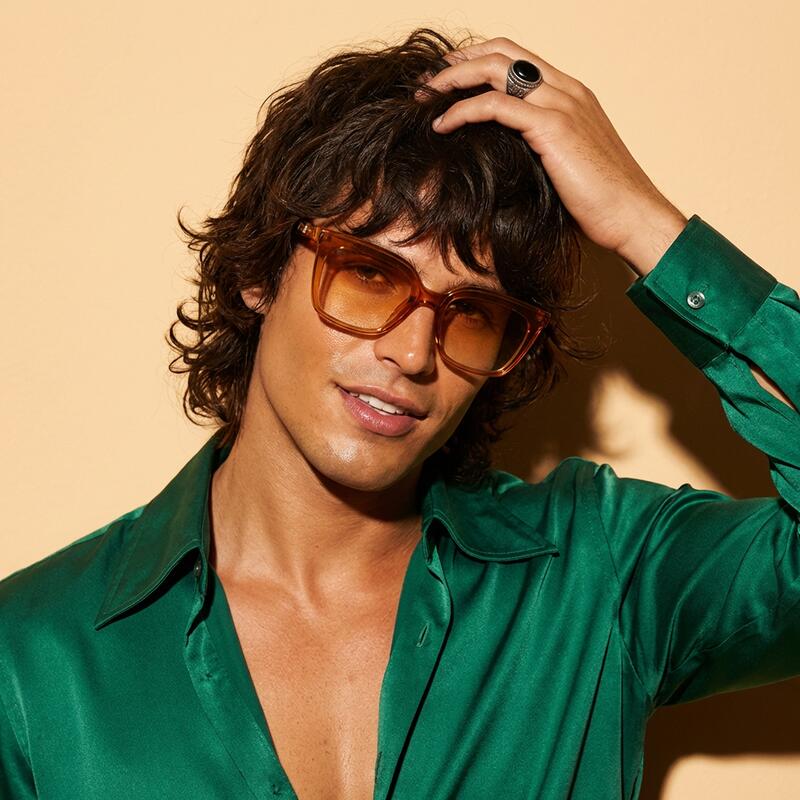
The first came through frames. Miu Miu — a house with a long record of calling accessory trends early — built its runway eyewear around sporty frames in loud, saturated colors, and fashion press covering the season read that as a preview of the color range sunglasses will ship in through 2026. Orange lives squarely inside that palette: it's the warmest color in the sport-frame family, and sport-inflected shapes are exactly where a hot color looks most at home.
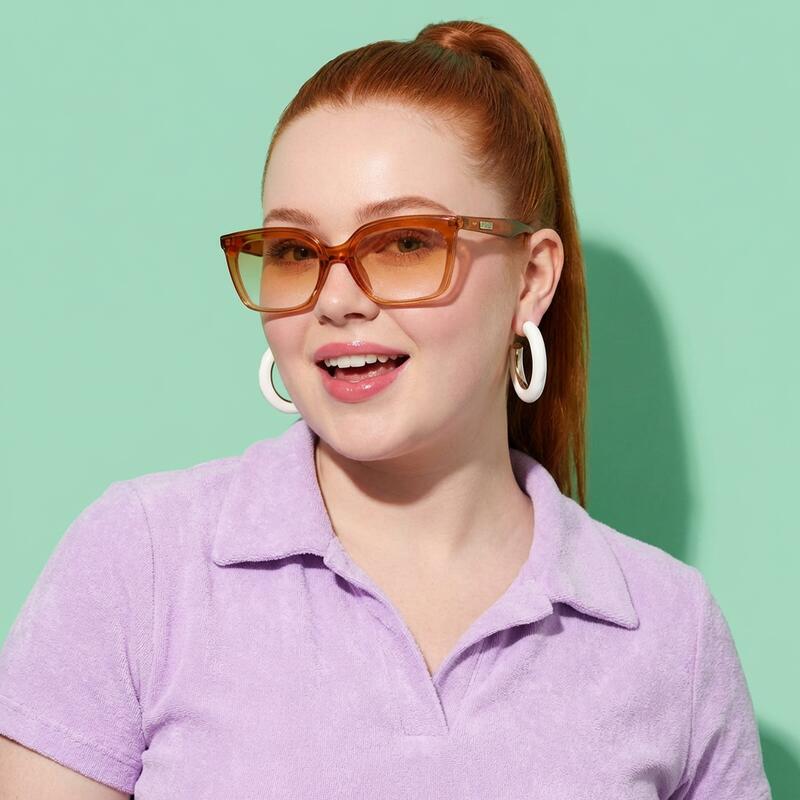
The second move came through lenses. Trend coverage of the 2026 season flagged tinted lenses as one of its defining eyewear directions, with orange-toned tints appearing at Celine and warm amber repeatedly named among the shades to know. That matters even if you never buy a colored lens, because lens tints are how a color auditions for frame status. A shade that people will look through is a shade they've stopped being afraid of — and frames usually follow a season or two behind.
So the runway clock reads: orange is arriving, not leaving. It's showing up through two doors at once — sporty colored frames and warm tinted lenses — which is a stronger signal than either alone.
Clock two: what stores are actually stocking
Now the reality check, because runways have declared colors "back" plenty of times while shelves stayed beige.
The odd hero of orange's 2026 case is, of all things, white. Pantone's Color of the Year for 2026 is Cloud Dancer — the first white in the program's history — and Pantone itself frames it as a structural, canvas-like neutral meant to let other colors do the talking. Independent trend forecasting for eyewear points the same direction: 2026 palettes built on cream, bone, and soft neutrals rather than hard black.
That combination produces a predictable and well-documented pattern: when clothing goes quiet, color migrates to accessories. A neutral-canvas year doesn't suppress color — it relocates it to the smallest, lowest-commitment items a person owns. Sunglasses sit at the very top of that list. Against a cream and white wardrobe, an orange frame isn't competing with your outfit; it's the one warm object in the frame, doing the work a printed shirt used to do.
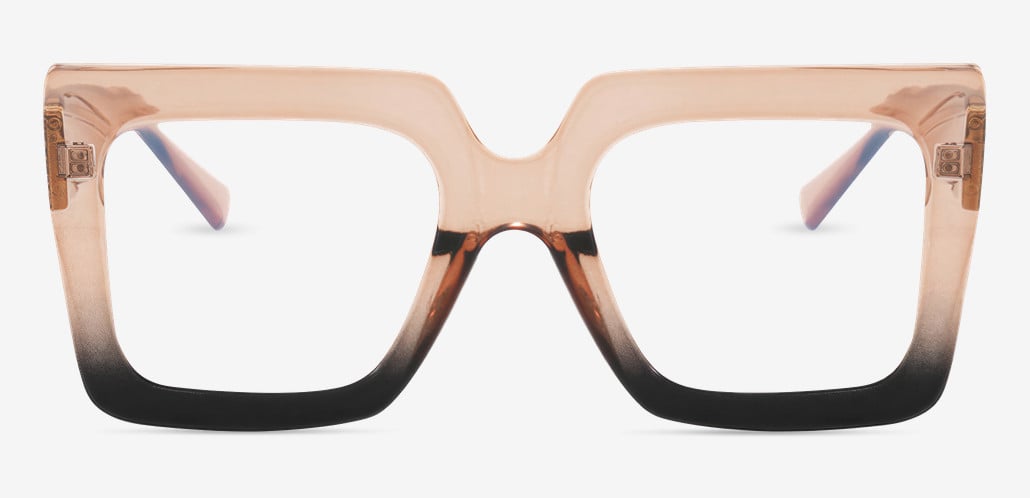
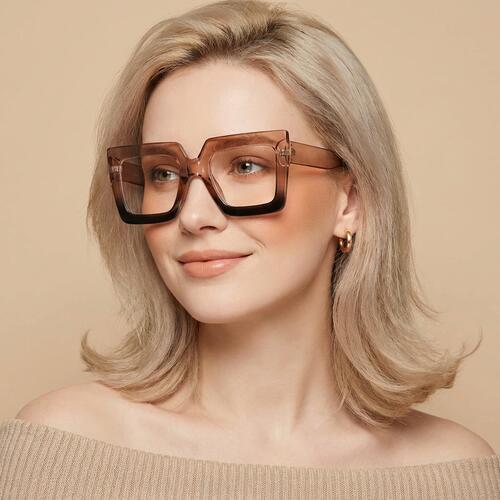
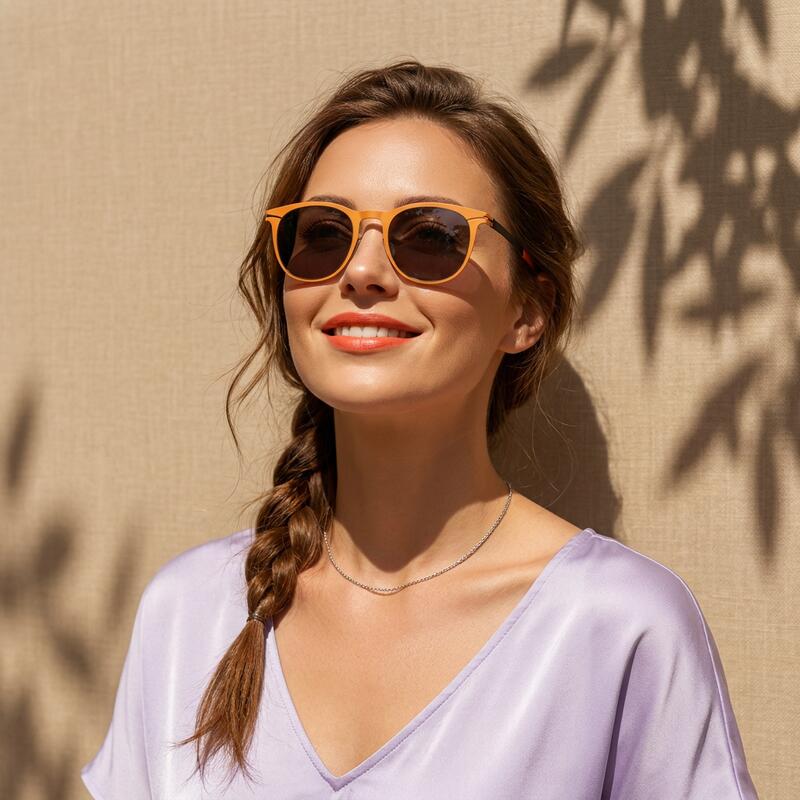
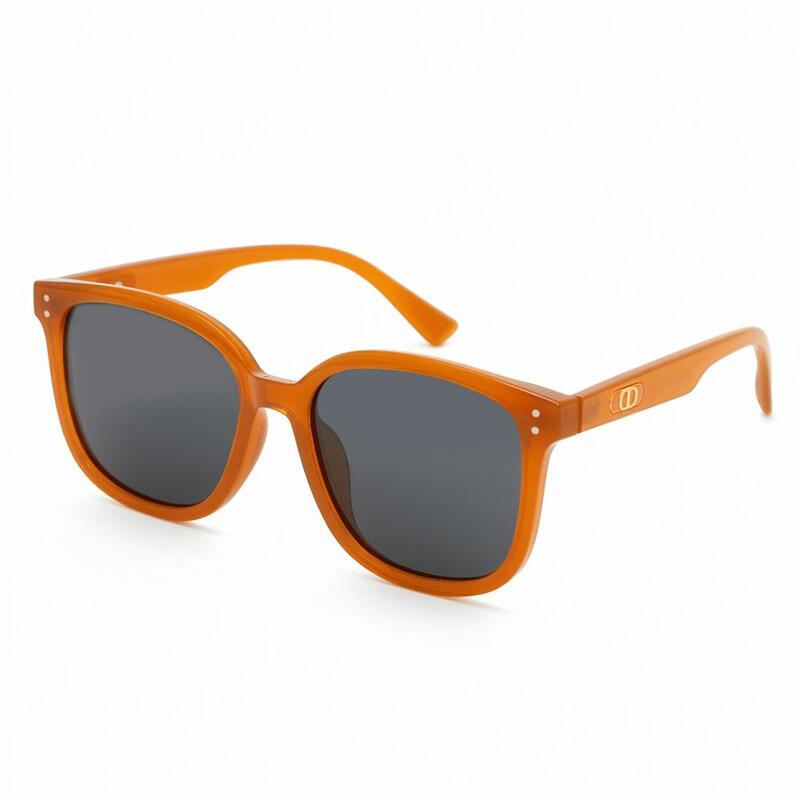
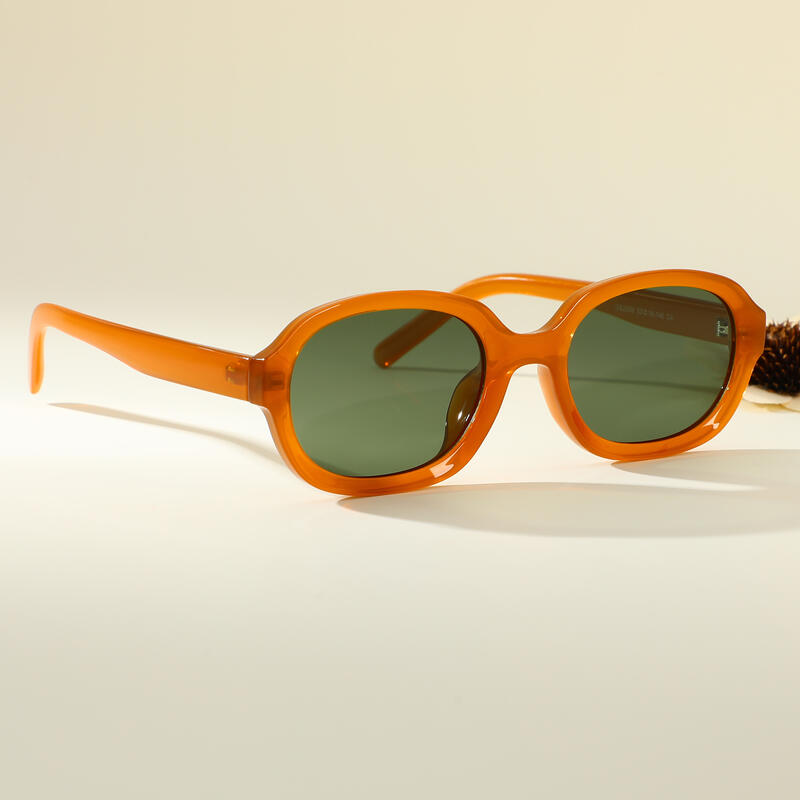
And retail has quietly repositioned orange to match. A few years ago, orange sunglasses at most online retailers meant novelty shapes — festival props, heart lenses, party favors. Look at assortments now, ours included: the center of gravity has moved to structured squares and rectangles, with rounds and cat-eyes around the edges. That's not how stores stock a joke color. Structured shapes are how a color gets stocked when buyers expect people to wear it repeatedly, in daylight, with normal clothes.
The store clock reads: normalized and available — a real option, not yet an oversaturated one. Orange remains a minority color on the shelf, which cuts both ways: you won't see yourself coming and going, and you're not late.
Clock three: how an orange pair ages in your closet
This is the clock nobody writes about, and it's the one that decides whether this purchase feels smart in 2028.
Here's the honest mechanics of it: "orange" is not one trend. It's at least three shades aging at three speeds.
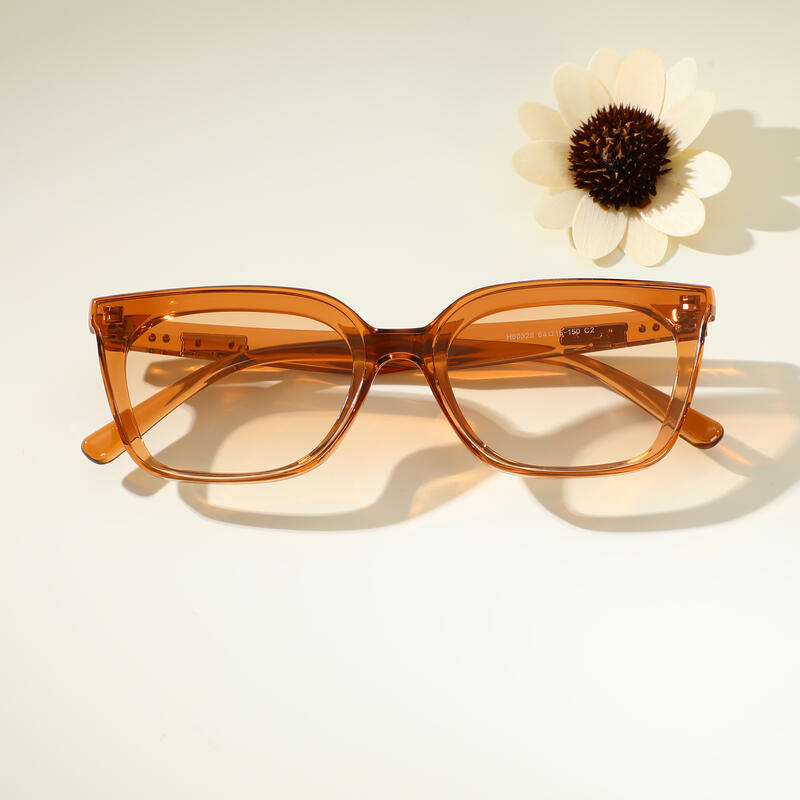
Burnt orange, rust, and amber age slowly. These shades have enough brown in them to behave like relatives of tortoise — and tortoise never dates. A burnt-orange frame in a clean square shape sits close enough to the permanent warm-neutral family that it survives trend turnover the way a camel coat does. If the 2026 moment passed tomorrow, this version wouldn't notice.
Coral and tangerine age at trend speed. Pinker, brighter, more photogenic — and more tied to whatever season crowned them. A coral pair will look great for the two or three summers the warm-color cycle runs, then read as "a few years ago" the way millennial pink eventually did. That's not a reason to skip it; it's a reason to know what you're buying.
Neon and traffic-cone orange age in real time. This is the of-the-moment version — maximum reward now, shortest shelf life. It photographs brilliantly, reads as fully intentional, and will date the fastest, because fluorescents always do.
Shape moves the clock hands too. The same shade ages slower in a structured square or rectangle than in a novelty silhouette, because the shape underneath stays in style even when the color's moment cools. This is why the smart-money version of this trend is a slow shade in a slow shape — and why the fast version is worth buying only at a price you can enjoy for two summers without regret.
The wardrobe clock reads: you set the speed. Orange isn't inherently a fast trend or a slow one — the shade and shape you choose decide which trend you actually bought.
All three clocks, one answer
Put the readings side by side:
• Runways: orange is inbound through both colored sport frames and warm tinted lenses — early-to-mid arc, not peak.
• Stores: stocked in serious shapes, normalized, still a minority color — available without being everywhere.
• Wardrobe: aging speed is a choice, from tortoise-slow (burnt) to single-season (neon).\
That's about as good a position as a color trend gets for a buyer. You're past the point of looking experimental, well short of the point of looking like everyone else, and you have full control over how long the purchase stays wearable. The people who should hesitate aren't the ones worried it's "too much" — they're the ones who'd buy neon expecting it to last five years.
If you're in, the commitment ladder runs like this: an amber-gradient tint in a neutral frame is the toe-in-the-water version; a burnt-orange square is the keep-for-years version; neon is the this-summer version, and it knows it. All three are legitimate — they're just answers to different questions.
Questions people actually ask
How long will orange sunglasses stay in style?
The warm-color cycle driving 2026 typically runs several seasons, so expect bright and coral oranges to feel current through at least 2027. Burnt and amber shades operate outside that clock — they behave like warm neutrals and don't meaningfully expire. Buy neon for this summer, coral for the cycle, burnt for the decade.
Are orange sunglasses okay for men?
Yes, and 2026 is specifically friendly to it: the runway route for orange runs through sporty, structured frames, which is traditionally masculine territory. A burnt-orange rectangle or square reads closer to a vintage racing frame than to a fashion experiment. The versions men tend to regret are the very pink corals; the versions they keep are rust and amber.
Were orange sunglasses in style before, or is this new?
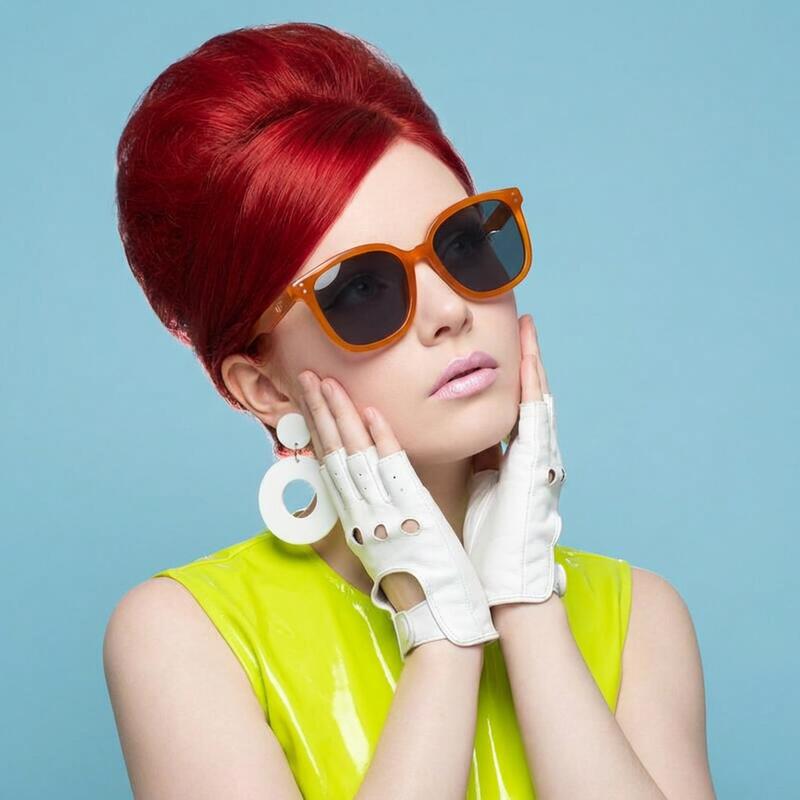
They've had moments — most famously in the 1970s, when amber and orange were core sunglass colors, and again in the Y2K era in glossier form. 2026's version borrows the '70s warmth more than the Y2K gloss, which is good news for longevity: revival trends anchored to a classic decade tend to outlast ones anchored to a novelty one.
Am I too old to wear orange sunglasses?
There's no age ceiling — there's a shade match. Burnt orange and amber are the most age-agnostic shades in the family precisely because they sit near tortoise, which no one has ever aged out of. If neon feels costume-y to you, that's a shade signal, not an age verdict. Try the same shape in rust and the question usually disappears.
Should I buy orange sunglasses now or wait?
Now is the buyer-friendly window: past experimental, before saturation. Waiting gains you nothing on the durable shades (burnt orange won't get more in style — it's already permanent) and costs you wearing time on the trend shades. The only good reason to wait is if you can't try shades against your own face — which is solvable in about thirty seconds with a virtual try-on.
The bottom line
Orange sunglasses are in style in 2026 — verifiably, on every clock that matters. Fashion committed to the color through two channels at once. Retail has moved it from the novelty bin to the serious shelf. And the wardrobe math is unusually kind, because the family includes shades that never expire.
The real question was never whether orange is in. It's which clock you want your pair to run on. Pick your speed, then see the full orange collection — square-led, prescription-ready, and try-on-able from your couch. If orange still feels like one step too far, its slower cousins are one click away: gold if you want the warmth in metal, red if you want the volume without the tan undertone.