
The Women's Eyeglasses Buying Guide for 2026: Frame Shapes, Lens Types, and What Opticians Actually Recommend
If you've spent more than ten minutes shopping for women's eyeglasses online, you already know the problem. Every site claims to have "the perfect frames for every face." Every product page reads like it was written by the same person. And somewhere between the 47th cat-eye thumbnail and the third pop-up asking for your email, you give up and close the tab.
This guide is the version we wish existed when our customers ask us, "Can you just tell me what to actually buy?"
It's organized the way our opticians think about a real prescription order: face shape first, then frame fit, then lens choice, then the trust questions you should be asking any online retailer (including us). We've kept the trend talk short and the practical advice long. Where the science is genuinely mixed — like the ongoing debate around blue light lenses — we'll say so, instead of pretending otherwise.
By the end, you'll be able to walk through any women's eyeglasses category page (ours or anyone else's) and filter the noise from what matters.

What's Actually Trending in Women's Eyeglasses for 2026
Before we get tactical, here's the honest read on what's moving this year — based on SS26 runway shows, retail data, and what our customers are reordering most often.
The five shapes that matter right now:
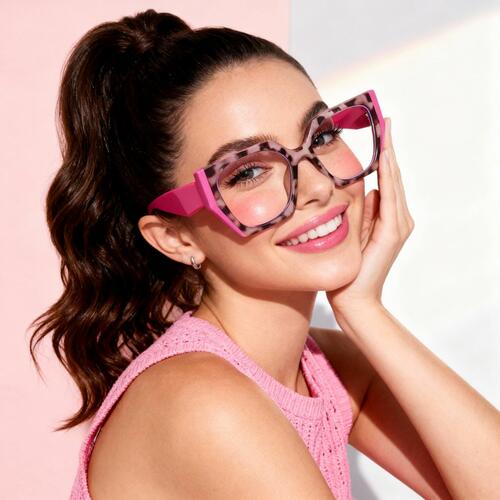
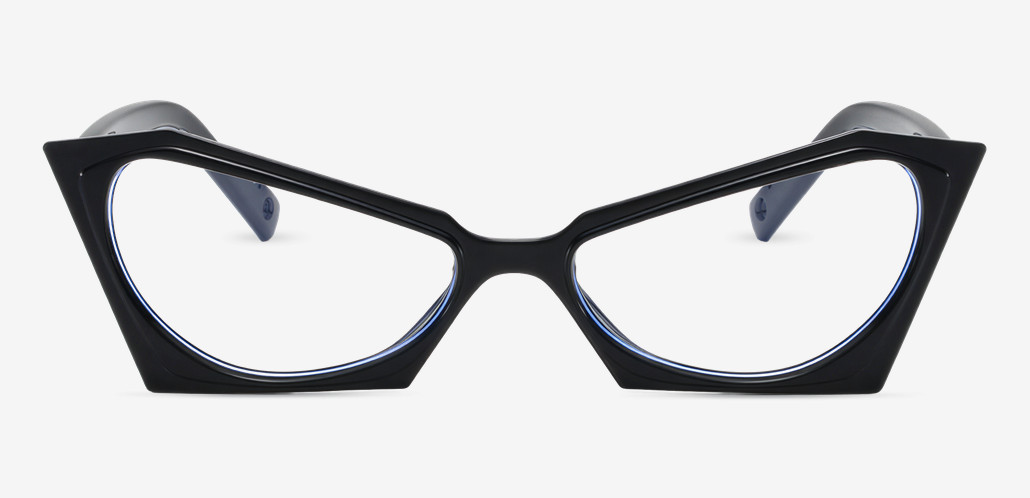
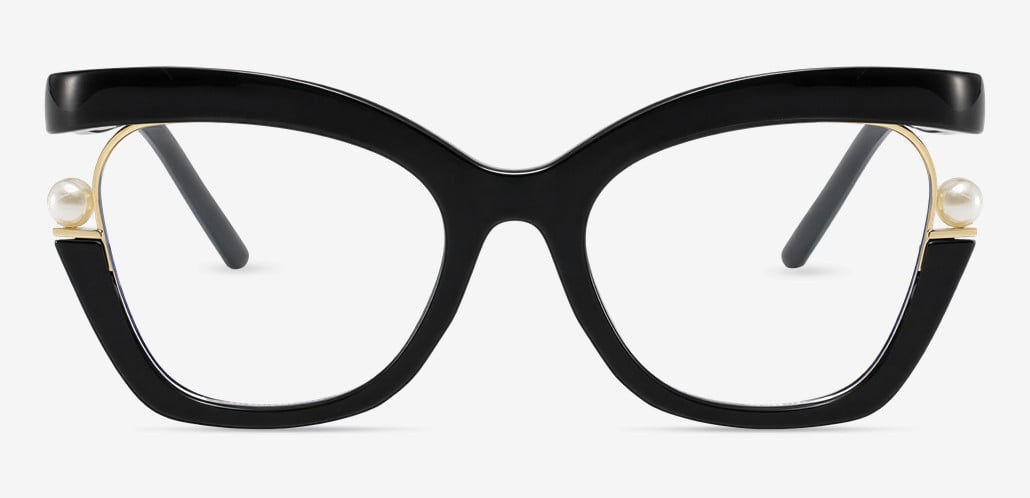
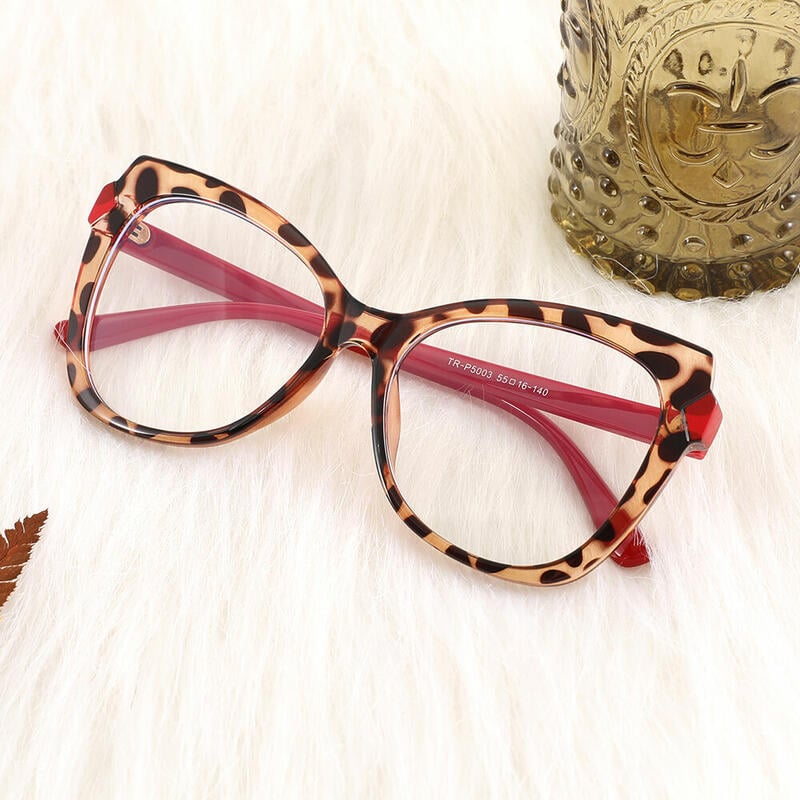
• Modern Cat-Eye. Less 1950s pin-up, more elongated and softened. Think Bottega Veneta and Stella McCartney's SS26 takes — the upsweep is subtler, the proportions calmer.
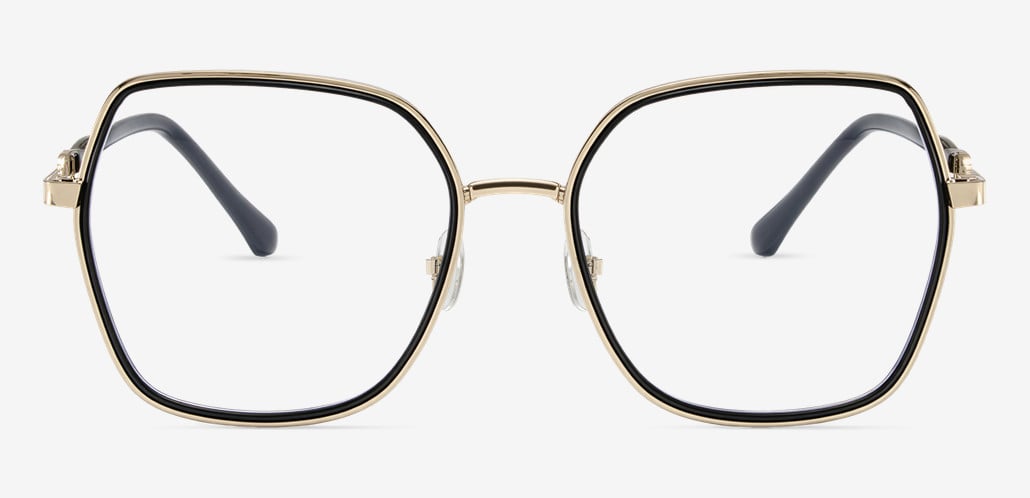
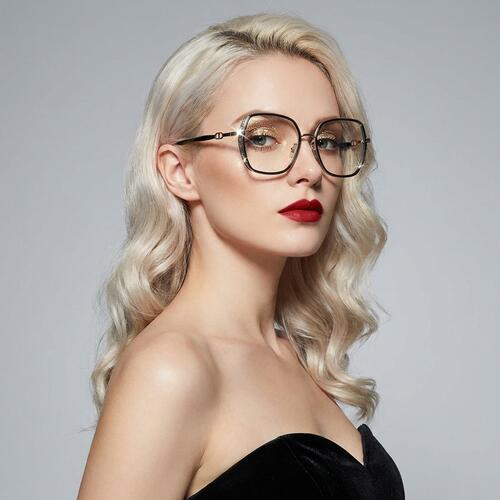
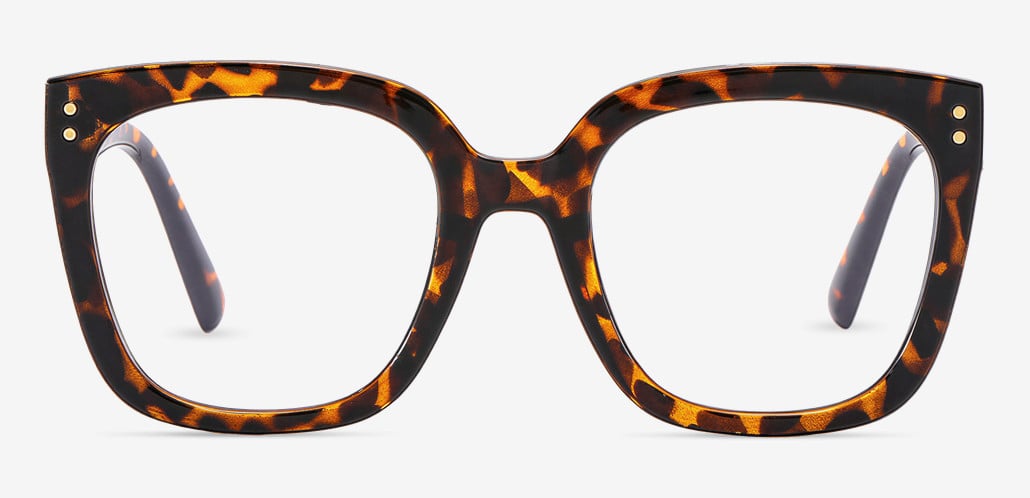
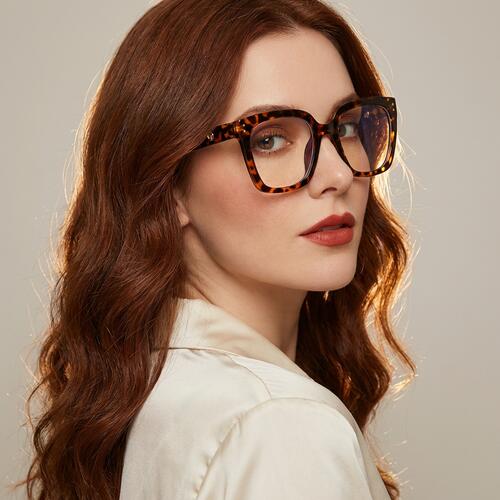
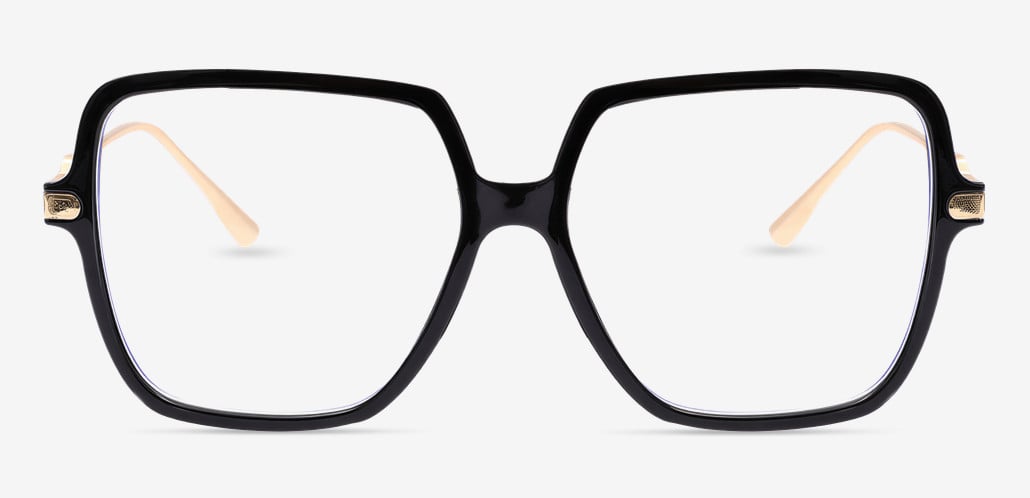
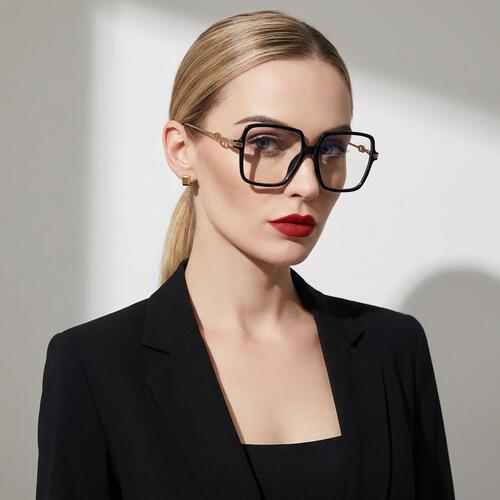
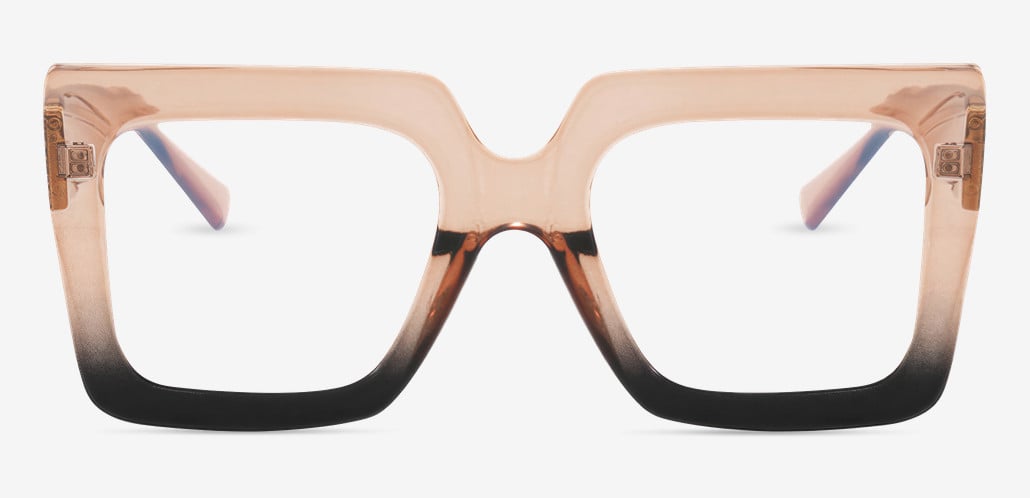
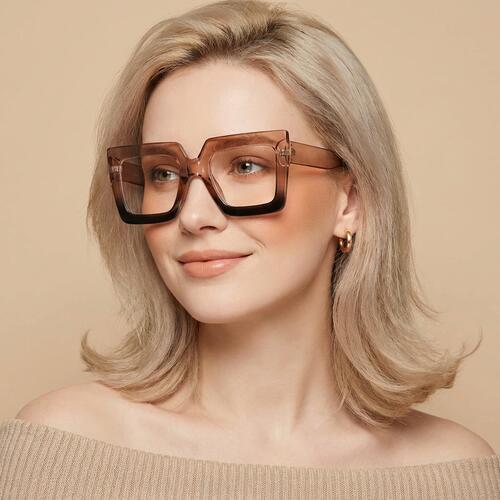
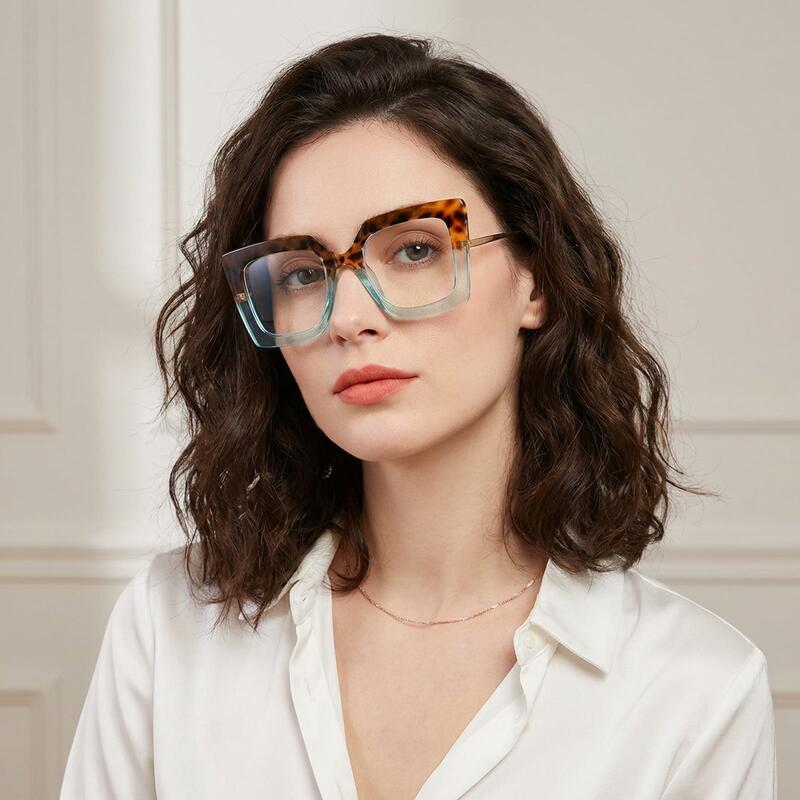
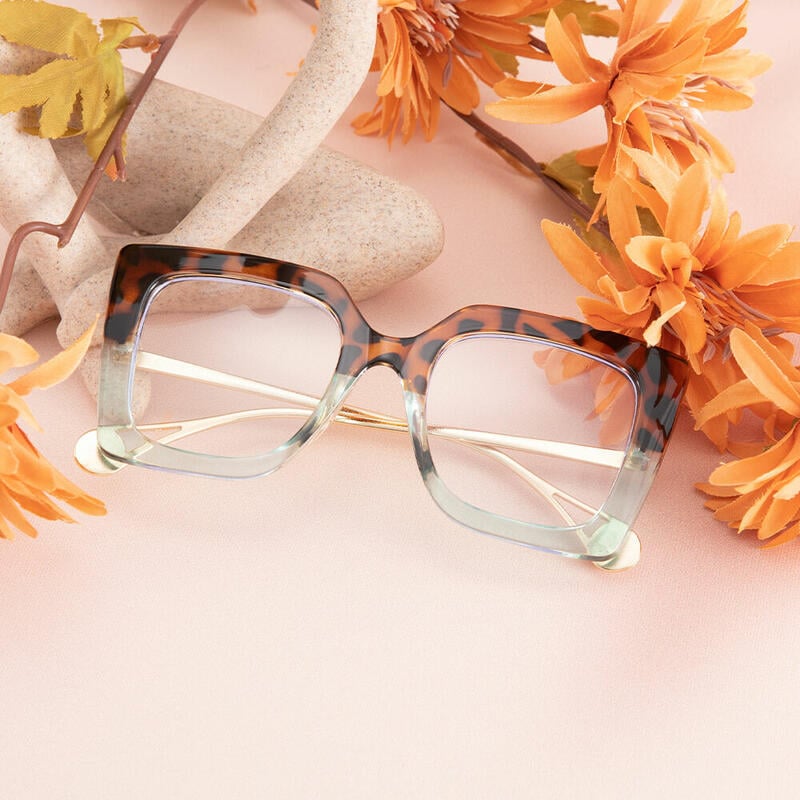
• Oversized Square. The "low-front square" Saint Laurent leaned into for SS26. Reads as decisive, professional, and surprisingly versatile across face shapes.
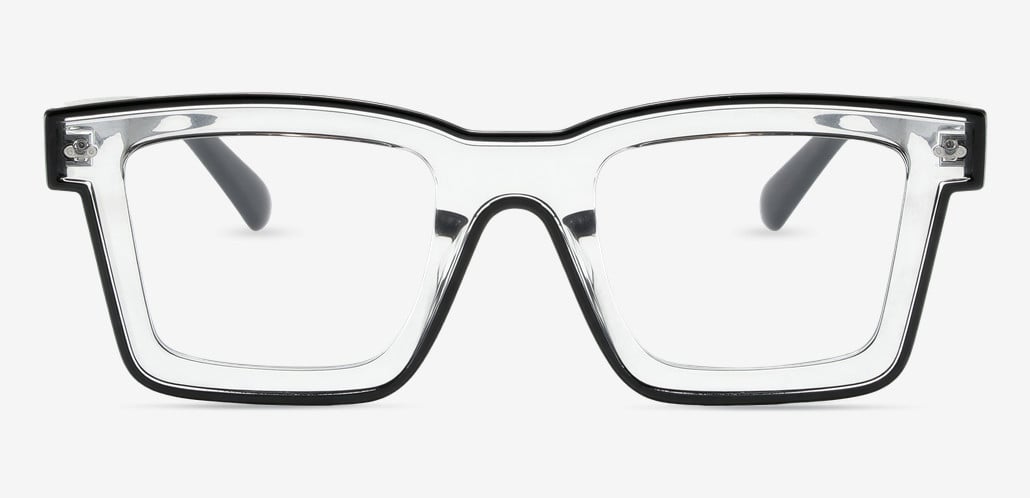
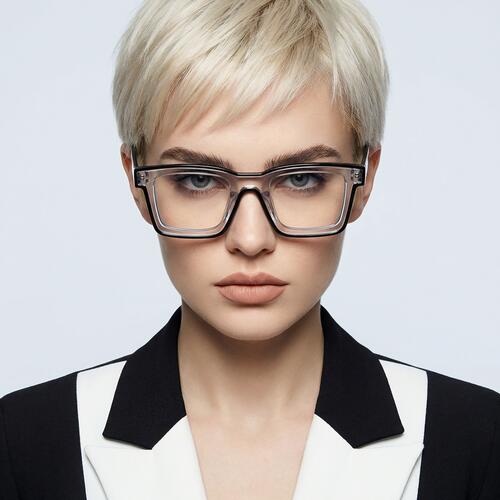
• Clear and Translucent Acetate. Crystal clear, smoky champagne, and pale rose are the colorways our buyers can't keep in stock. They photograph beautifully and pair with literally any outfit.
• Slim Wire Ovals. A direct callback to the late '90s. Thin metal rims, tiny bridges, very Gwyneth Paltrow circa 1998. Best on people who want their face to be the focal point, not the frame.
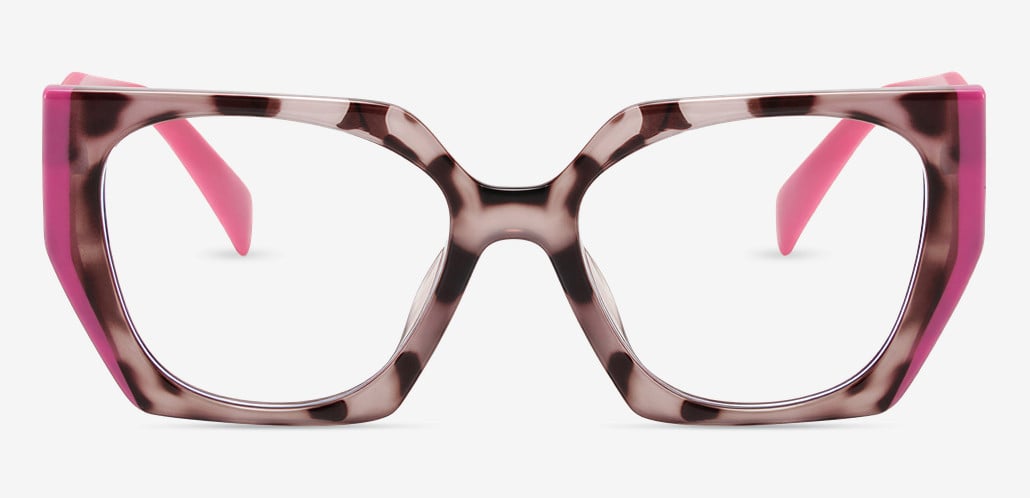
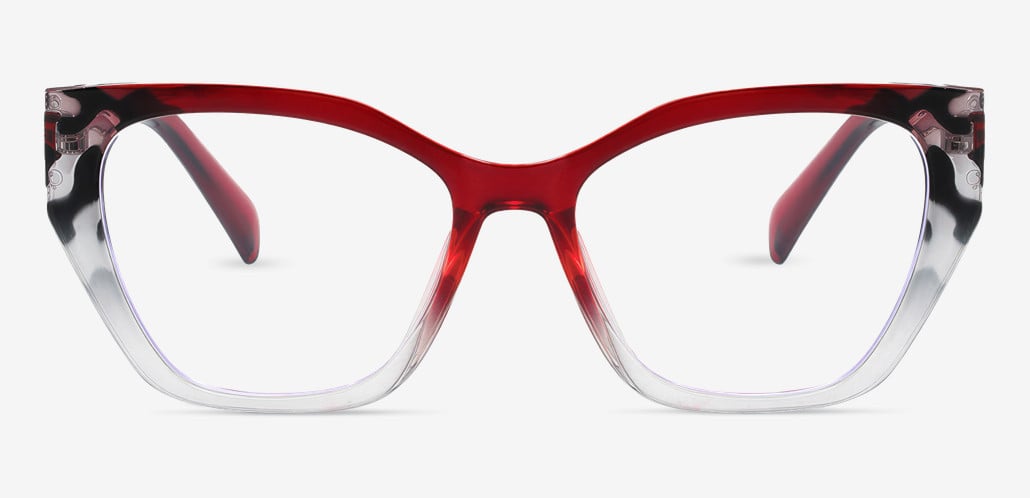
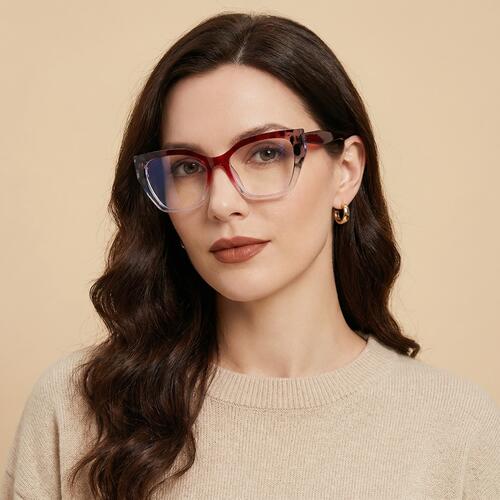
• Two-Tone Acetate. This is one of our own signature categories — frames where the front and temples are different colors, often a neutral paired with a pop. It's the easiest way to make a basic shape feel custom.
Colors of the year: Tortoiseshell (still), dusty rose, sage green, and a warm amber that fashion editors are calling "honey." Black isn't going anywhere, but if you already own a black pair, this is the year to add a second color.
What's losing momentum: Heavy plastic browline frames, super-narrow rimless rectangles (the early-2000s "office" look), and ultra-thick black geek-chic acetate. They still work for some faces, but they're no longer the default.
A note on trends, though: the best frames you'll own are the ones you'll still wear in three years. We've seen too many customers buy aggressively trendy shapes, wear them for a season, and quietly retire them. If you only own one or two pairs of glasses, lean classic with one trend element — a cat-eye uplift on a rectangle, a clear acetate finish on a square — rather than going full statement piece.
How to Read a Frame Before You Buy It
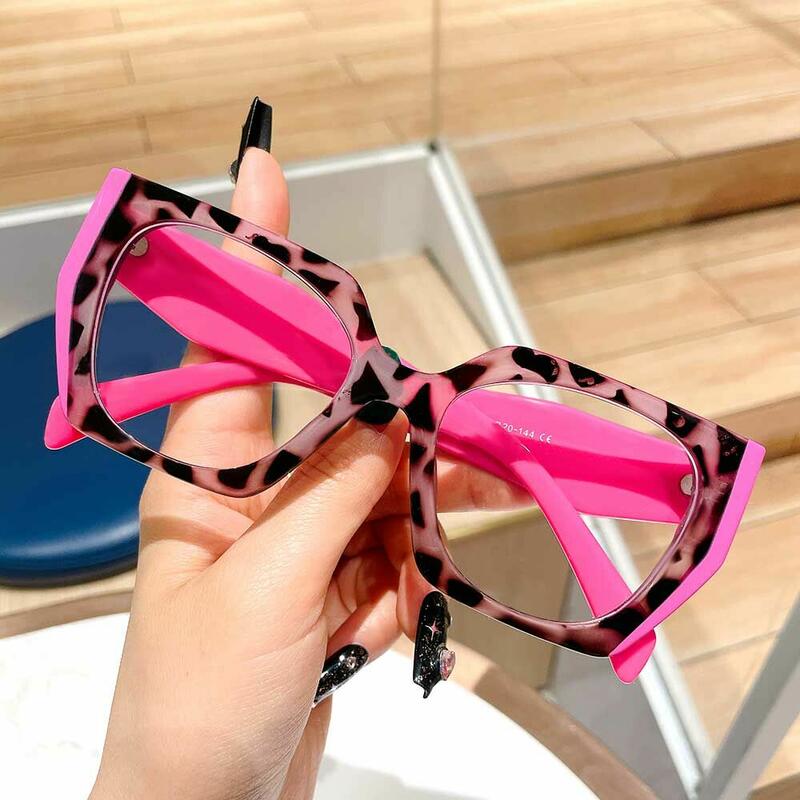
Every pair of eyeglasses has three numbers printed on the inside of the temple arm — usually something like 52-18-140. These aren't random. They're the difference between glasses that disappear on your face and glasses that slide down your nose all day.
Lens width (the first number, in millimeters) This is the horizontal width of one lens. Most women's frames fall between 48mm and 56mm. If you have a narrow face, look at 48–52mm. Wider face? 54–58mm.
Bridge width (the second number) The gap between the two lenses where the frame sits on your nose. Typical range: 14–20mm. Narrower bridges work for narrow noses; wider bridges prevent the frame from pinching.
Temple length (the third number) The length of the arm running from hinge to ear. 135mm and 140mm are standard for most adult women. Taller women or anyone with a larger head circumference often needs 145mm or 150mm.
The fastest way to find your size: pick up the eyeglasses you already own and read the numbers on the inside of the arm. Use those as your starting point. If your current pair fits well, anything within ±2mm of those numbers will fit too.
There's a fourth number you'll need if you're ordering prescription lenses: PD, or pupillary distance. That's the distance between your two pupils, measured in millimeters. Most adults fall between 54mm and 74mm. Your optometrist should print it on your prescription, but if they didn't, our PD measurement guide walks you through how to measure it at home with a ruler and a mirror in about 90 seconds.
Frame Shape by Face Shape: What Opticians Actually Recommend
The "rules" you've seen on Pinterest are mostly right, but they're missing context. Here's how our opticians think about it when they're advising a customer in real life.
The principle is simple: frames should contrast with your face shape, not echo it. Round face? Add angles. Square face? Soften with curves. Already balanced? Wear whatever you want.
If you have a round face
Soft, full cheeks. Forehead and jawline roughly the same width.
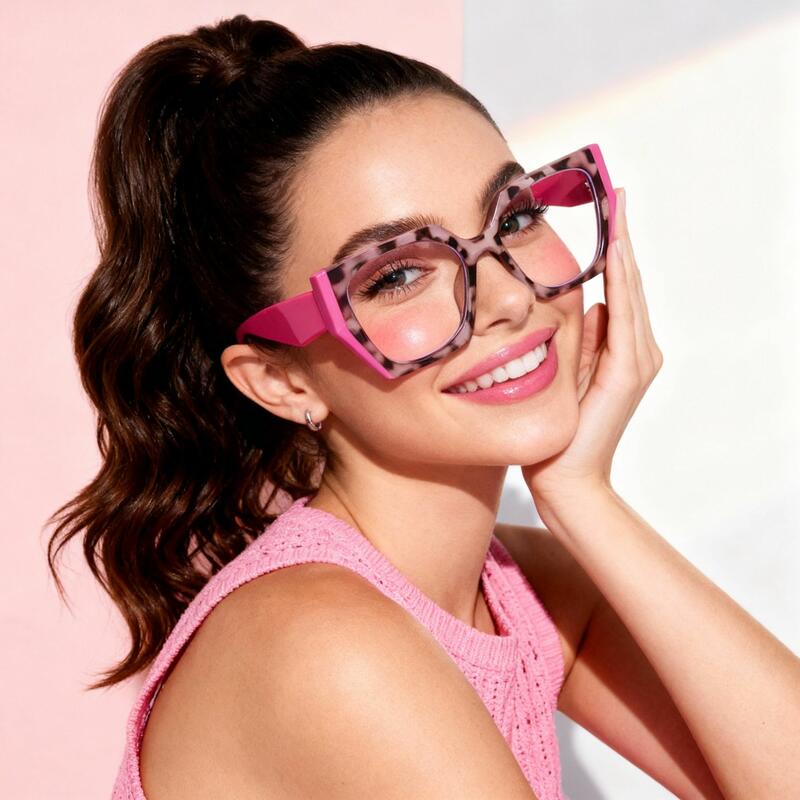
Try: Rectangular frames, sharp cat-eyes, oversized squares, geometric hexagons. The angles add structure your face doesn't have naturally. Avoid: Small round frames and circular wire rims. They double down on the curves and make the face look fuller.
If you have an oval face
Slightly longer than wide, with proportional features. The "easy mode" of face shapes.
Try: Almost anything. Oversized, rectangular, cat-eye, round, aviator — the world is your oyster. Avoid: Frames that are wider than the broadest part of your face. If anything, the only mistake is going too small.
If you have a heart-shaped face
Wider forehead, narrower chin. Can look like an inverted triangle.
Try: Bottom-heavy frames, soft round shapes, light-colored or rimless styles. Aviators work beautifully here. The goal is to add visual weight to the lower half of your face. Avoid: Top-heavy frames, dramatic cat-eyes with sharp upsweeps, and dark thick acetate at the brow line. They emphasize the wider forehead.
If you have a square face
Strong jawline, broad forehead, angular features.
Try: Round frames, soft ovals, slim cat-eyes with curved corners, thin metal rims. Curves soften the angles. Avoid: Sharp rectangles and angular geometric shapes. They mirror the jawline and can read severe.
If you have a diamond face
Narrow forehead and chin, wider cheekbones.
Try: Cat-eye, oval, and rimless frames. Anything with detail at the brow line — like a slight upsweep or a colored top bar — balances the narrow forehead. Avoid: Narrow rectangular frames that emphasize the cheekbone width.
One more thing about face shape rules: they're a tiebreaker, not a verdict. If you've fallen in love with a frame that supposedly "doesn't suit your face," try it on anyway. Personal style and confidence beat geometry nine times out of ten. This is exactly why we built Virtual Try-On into every product page — you can see how a frame actually looks on your face in about 30 seconds, no guessing required.
Lens Choices, Decoded
This is where most online eyewear sites lose people. The lens menu has fifteen options, half of them are upcharges, and nobody explains what they actually do. Here's the short version.
Single vision lenses
The default. Corrects vision at one distance — either near (reading) or far (driving, watching TV). If you only need glasses for one task, this is what you want, and it's almost always the cheapest option.
Progressive lenses
Three prescriptions in one lens — far at the top, intermediate in the middle, near at the bottom — with no visible line. If you need readers and distance correction, progressives mean you only need one pair of glasses instead of two.
The catch: there's a learning curve. Most people adapt within 1–2 weeks. A small minority never fully adjust, especially if their prescription is very strong. If you're new to progressives, our optical team strongly recommends starting with a wider, taller lens — narrow modern cat-eyes don't leave enough vertical space for a comfortable progressive transition.
Bifocals
Two prescriptions with a visible line. Mostly chosen for budget reasons or because someone has worn bifocals for decades and doesn't want to switch. Less common than progressives in 2026, but still available.
Blue light blocking lenses
Filter a portion of the high-energy blue wavelengths emitted by screens. The honest disclosure: the published science on whether they reduce digital eye strain is mixed — a 2021 controlled study found no significant difference between blue light filters and clear lenses for eye comfort. What they do clearly help with is melatonin disruption from screen use late at night, which is why we recommend them most often to people who work or scroll past 9 p.m.
If you're spending eight-plus hours a day on a screen, they're an inexpensive add-on (usually $10–20). If you're a casual screen user, you can skip them without missing much.
Photochromic lenses
Clear indoors, automatically darken in sunlight. The most common version is Transitions™. Convenient because one pair handles both indoor work and outdoor light, but they don't darken fully behind a windshield (UV is filtered by car glass), which is why people who drive a lot still buy a separate pair of prescription sunglasses.
Polarized lenses
For sunglasses only, not regular eyeglasses. Polarization cuts horizontal glare from water, snow, and wet roads. If you drive a lot or spend time near reflective surfaces, polarized prescription sunglasses are worth the upgrade.
One choice almost everyone should add: an anti-reflective (AR) coating. It eliminates the glare bouncing off the back of your lens that shows up in photos and on Zoom. Some retailers include it for free; some charge for it. Either way, it's the single most underrated lens upgrade.
How to Buy Women's Eyeglasses Online Without Regret
The reason people hesitate to buy prescription glasses online isn't price — it's risk. What if the frames look weird in person? What if the prescription is wrong? What if returns are a nightmare?
Here's the realistic checklist we'd give a friend, regardless of which retailer they ended up using.
1. Check that there's an actual optician in the loop. Some online retailers are fashion-first and outsource the lens work. Others, like Aoolia, have qualified opticians on staff who review every prescription order before it ships. The difference shows up when your prescription has a high cylinder, a very high SPH, or a complex progressive design — all situations where a trained eye can catch a measurement issue before the lenses get cut.
2. Confirm the return policy in writing. Look for: a clear return window (30 days is standard, 365 days is generous), free returns or a low restocking fee, and a defect warranty separate from the return policy. Aoolia gives you 30 days to return for any reason and covers manufacturing defects for 90 days after that.
3. Use Virtual Try-On — but use it correctly. Take the photo (or live-camera shot) in even, neutral lighting, holding the phone at eye level. Side angles can distort the fit. We've seen customers reject frames that would have looked great in person because the VTO photo was at a weird angle.
4. Always read the frame measurements, not just the photo. A "small" frame on a tall model in marketing photos can look enormous on you in real life. The 52-18-140 numbers on the product page are the ground truth.
5. Order one prescription pair to test the waters. If you're ordering from a new retailer for the first time, don't buy three pairs at once. Order one, evaluate the fit and the lens accuracy, then come back for a second. Most online eyewear shoppers underestimate how much fit varies between frame designs from the same brand.

Why Aoolia (Honestly)
We don't expect you to take our word for it, so here's the unvarnished version of where we fit in the women's eyeglasses market.
Aoolia is a direct-to-consumer optical brand — we design our own frames, run our own lab, and ship globally. Women's prescription frames start at $9.95 complete with single-vision lenses, which puts us in roughly the same price tier as Zenni and below EyeBuyDirect, but with a few specific things we do differently:
• Two-tone acetate frames and matching glasses chains. This is our signature. Most online retailers stock the same five shapes in three colors. Our two-tone collection lets you mix a tortoiseshell front with a colored temple, or pair any frame with a beaded or chain-link strap from our accessories category. It's the styling layer cheaper retailers skip.
• Optician review on every order. Every prescription order is checked by a qualified optician before lens cutting, not just by an automated system.
• Virtual Try-On built into every product page. No app download, no separate flow.
• Free shipping on orders over $79, 30-day returns, 90-day warranty. Trustpilot rating: 4.7 out of 5 across thousands of reviews.
We're not the cheapest option on the market (Zenni still wins on absolute floor price), and we're not a luxury brand (Warby is closer to that lane). What we're built for is the customer who wants real style and real optical quality without the markup of an in-store retailer or the mystery of a no-name marketplace seller.
Browse Women's Eyeglasses →
Frequently Asked Questions
What's the most flattering eyeglass shape for women in 2026?
Modern cat-eyes and oversized squares are the two shapes you'll see most often this year, but the most flattering frame is one that contrasts with your face shape rather than mirrors it. Use Aoolia's face shape filter on the women's eyeglasses category page to narrow your options in under a minute.
Can I buy prescription glasses online without seeing my optometrist?
You'll still need a current prescription (most US states require one issued within the past 1–2 years). Once you have it, the entire ordering process — uploading the prescription, picking frames, choosing lens type — happens online. Aoolia's opticians review the prescription details before lens cutting begins.
Are blue light blocking glasses worth buying for women who work on screens all day?
The evidence is mixed. Multiple controlled studies have not found that blue light filters significantly reduce daytime digital eye strain compared to clear lenses. Where they do show a measurable benefit is melatonin and sleep quality for people using screens late at night. If you're a heavy evening screen user, the $10–20 upgrade is reasonable. If you're not, you can skip it without missing much.
How do I measure my pupillary distance (PD) at home?
Stand 8 inches from a mirror, hold a millimeter ruler horizontally across your brow, close your right eye and align the zero with your left pupil center, then close your left eye and read the number under your right pupil. That's your PD. Repeat 2–3 times for accuracy. Adults usually measure between 54mm and 74mm.
What's the difference between single vision and progressive lenses for women?
Single vision corrects one distance (either near or far). Progressive lenses correct three distances seamlessly in one lens — distance at the top, intermediate in the middle, reading at the bottom — with no visible line. Choose progressives if you currently switch between two pairs of glasses, or if your eye doctor mentioned presbyopia.
How long does it take to receive prescription eyeglasses ordered online from Aoolia?
Standard production takes 5–7 business days for single-vision orders and 7–10 business days for progressives, plus shipping time. Free shipping kicks in at $79; expedited options are available at checkout.
What's Aoolia's return policy on prescription eyeglasses?
30 days for any-reason returns, plus a 90-day warranty against manufacturing defects. Because prescription lenses are custom-cut to your specifications, we recommend using the Virtual Try-On feature and double-checking your prescription details before submitting the order.
This guide was written and reviewed by the Aoolia in-house optical team. We update it twice a year to reflect current SS/FW collection trends, lens technology changes, and customer questions we hear most often. Last updated April 2026.
Have a question we didn't answer? Reach our optical team through the Help Center — average response time is under 12 hours, Monday through Friday.